
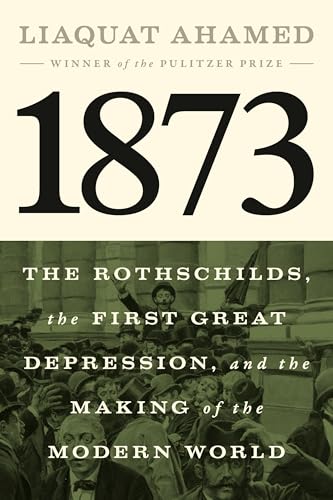
Based on your book
1873
by Ahamed, Liaquat
Ahamed turns his focus to the year 1873, a pivot point in global history that serves as a sobering reminder of how quickly prosperity can evaporate. The book tracks the sudden, violent collapse of the international financial order, tracing the ripple effects from Vienna to Wall Street. Rather than a dry recitation of dates and interest rates, this is a study of human fallibility and the fragile architecture of the global economy. The prose is steady and analytical, pulling you into the boardrooms and government offices where decisions were made with little foresight. It is a dense, thoughtful read that requires your full attention, perfect for those who want to understand the mechanics of systemic failure and the historical precedents for our own modern economic anxieties. You will walk away with a much clearer, albeit more cynical, view of how wealth and power actually function.
10 Books similar to '1873'
Since you appreciated the way Ahamed connects the dots between individual hubris and global market failure, these ten selections were chosen to expand on that specific brand of historical interrogation. We looked for authors who treat finance not just as math, but as a high-stakes human drama involving politics, psychology, and ego. Whether you are looking for the granular detail of the Morgan dynasty or the broader, sweeping analysis of financial evolution, these books share that same intellectual rigor. They are meant to help you contextualize the recurring cycles of greed and crisis throughout history.
As an Amazon Associate, we earn from qualifying purchases.

Since this is the author's magnum opus, fans of his analytical style in '1873' will find the same meticulous research and gripping narrative regarding the economic collapse of the 1920s. It offers a deeper dive into the interconnectedness of global finance and the powerful figures who shape history.

Like Ahamed's work, this biography provides an exhaustive look at how individual decisions at the highest levels of finance impact the global economy. It shares a similar tone of high-stakes historical analysis that makes complex economic theory feel like a suspenseful narrative.

This classic text is essential for anyone interested in the anatomy of financial panics, mirroring the themes of economic fragility found in Ahamed's writing. Galbraith's sharp, witty prose makes the history of market failure both accessible and deeply cautionary.

Ferguson provides a sweeping historical narrative that connects financial evolution to human civilization, much like Ahamed's focus on the pivotal moments of economic history. It is perfect for readers who enjoy understanding the 'why' behind historical events through a financial lens.

Not sure what they've already read?
Let them pick their next favorite with an Amazon Gift Card.
As an Amazon Associate, we earn from qualifying purchases.

This book explores the psychological and historical roots of market bubbles, offering the same 'big picture' perspective on economic history that Ahamed's readers appreciate. It is a compelling study of human nature and greed that feels both timeless and urgent.

by Ron Chernow
Chernow’s masterful chronicle of the J.P. Morgan dynasty provides the same level of granular detail and character-driven history found in Ahamed’s work. It effectively illustrates how private banking interests have historically steered the course of nations.

While more contemporary and journalistic, Lewis shares Ahamed's talent for making complex financial systems understandable and human. Readers who enjoy the narrative flair and 'behind the curtain' revelations in Ahamed's work will find Lewis equally engaging.

by James Grant
Grant provides a focused historical examination of a specific economic period, much like Ahamed's approach to the 1873 crisis. It is a rigorous, scholarly, yet readable analysis that challenges conventional wisdom about government intervention in markets.

This gripping account of a hedge fund collapse serves as a modern parable of financial hubris, resonating with the themes of systemic risk often explored by Ahamed. It reads like a thriller while maintaining the intellectual rigor of a historical text.
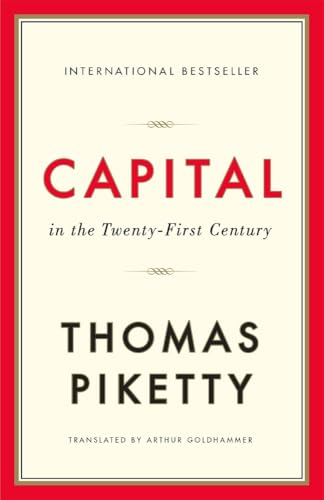
For readers who enjoyed the heavy intellectual lifting and broad historical scope of Ahamed's writing, Piketty offers a foundational analysis of wealth inequality. It is a dense but rewarding read that fundamentally changes how one views economic history.

Prefer to listen?
Try Audible and hear the story instead of reading it.
As an Amazon Associate, we earn from qualifying purchases.
As an Amazon Associate, we earn from qualifying purchases.