
Based on your book
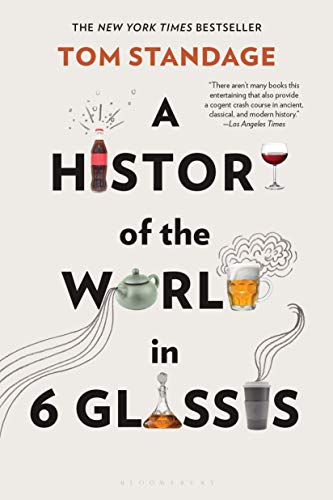
A History of the World in 6 Glasses
by Standage, Tom
Tom Standage flips the traditional textbook narrative on its head by tracing human civilization through the vessels we hold in our hands. He argues that beer, wine, spirits, coffee, tea, and cola are not merely beverages but essential engines of social change, trade, and political power. The writing is sharp and observational, turning the act of pouring a drink into a gateway for understanding the rise of agriculture, the age of exploration, and the dawn of industrial capitalism. You will find yourself looking at your morning coffee or evening glass of wine with a new sense of historical weight. This is the perfect pick for the curious reader who prefers their history served in bite-sized, thematic chunks rather than dense, chronological slogs. It is an intellectual curiosity that makes big-picture history feel surprisingly intimate and immediate.
10 Books similar to 'A History of the World in 6 Glasses'
If the idea of finding profound historical shifts hidden in everyday objects hooked you, these picks are your next logical step. We have curated a selection that shares the micro-history DNA of Standage’s work, focusing on how singular commodities like salt, fish, or even household tools act as catalysts for global transformation. Whether you are interested in the darker economic underpinnings of trade or the evolution of domestic habits, these books maintain that same analytical, conversational spirit. They prove that you do not need a battlefield to understand the true trajectory of human progress.
As an Amazon Associate, we earn from qualifying purchases.

Much like Standage's work, this book takes a singular, ubiquitous commodity and uses it as a lens to examine the sweep of human history, trade, and cultural development. It shares the same accessible, narrative-driven non-fiction style that turns a mundane object into a fascinating historical protagonist.

Fans of the 'history through a single subject' format will appreciate this deep dive into how a single species of fish shaped the economies and exploration patterns of the Western world. It mirrors Standage's ability to connect culinary history to major geopolitical shifts.

This book masterfully blends historical narrative with scientific discovery, focusing on how a cholera outbreak in London changed urban planning and public health forever. It shares Standage's talent for making complex historical processes feel like an engaging, fast-paced story.

by Bill Bryson
Bryson explores the history of human civilization by walking through the rooms of his own house, uncovering the origins of everyday objects and habits. It matches the witty, conversational tone of Standage while providing a comprehensive look at how domestic life has evolved over centuries.

Not sure what they've already read?
Let them pick their next favorite with an Amazon Gift Card.
As an Amazon Associate, we earn from qualifying purchases.

by Marc Aronson and Marina Budhos
This narrative history explores how sugar fueled the global economy, slavery, and the eventual abolitionist movements, much like how Standage tracks the social impact of beverages. It provides a similarly broad historical scope centered on a single, transformative commodity.

Focusing on New York City, this book uses the oyster as a focal point to explain the city's rise to global prominence, mirroring the 'micro-history' approach found in Standage's work. It is an excellent choice for readers who enjoy seeing how small details drive large-scale historical change.

by Bee Wilson
This book examines the history of human technology through the tools we use to eat, providing a fascinating parallel to Standage's focus on what we drink. It is deeply researched yet highly accessible, perfect for readers interested in the intersection of material culture and daily life.

by Roy Moxham
While Standage covers tea as one of his six glasses, Moxham provides a more focused, gritty, and critical examination of the industry's dark history. It appeals to readers who want to dig deeper into the political and economic implications of the beverages mentioned in Standage's book.

by Andrea Wulf
This biography of Alexander von Humboldt connects his scientific observations to the modern environmental movement, sharing Standage's gift for showing how individual ideas and discoveries fundamentally alter the course of human history. It is a sweeping, intellectual narrative that feels both epic and intimate.

Based on the British Museum's collection, this book uses 100 distinct items to tell the story of humanity, which is the perfect companion to Standage's '6 glasses' framework. It is structured, educational, and offers a broad, global perspective that fans of macro-history will adore.

Prefer to listen?
Try Audible and hear the story instead of reading it.
As an Amazon Associate, we earn from qualifying purchases.
As an Amazon Associate, we earn from qualifying purchases.