

Based on your book
A Maggot
by Fowles, John
A Maggot begins with a bizarre, disparate group of travelers moving through the English countryside in 1737, only for their journey to end in a shocking disappearance. John Fowles uses this premise as a springboard to explore how we construct history and truth. The narrative is fragmented, utilizing depositions, transcripts, and internal monologues to peel back layers of a mystery that is as much about spiritual upheaval as it is about a missing person. It is a dense, cerebral experience that requires patience, as the prose shifts between the gritty, physical reality of the eighteenth century and something far more metaphysical and surreal. This book is for the reader who enjoys being challenged by a labyrinthine structure and prefers fiction that demands active participation rather than passive consumption.
10 Books similar to 'A Maggot'
If the puzzle of A Maggot left you hungry for more, these selections mirror its penchant for historical displacement and the unreliability of the narrator. We chose these titles because they excel at blending meticulous period detail with the kind of meta-fictional experimentation that keeps a reader off-balance. Whether through the intellectual games of Eco and Pears, or the sprawling, hallucinatory histories crafted by Pynchon and Mitchell, these books share that same obsession with how we perceive reality. They are curated for readers who appreciate fiction that treats the past as a shifting, unstable landscape.
As an Amazon Associate, we earn from qualifying purchases.

by Umberto Eco
Like Fowles' work, this novel blends deep historical research with philosophical inquiry and a labyrinthine mystery. It demands an intellectual reader who enjoys dissecting signs, symbols, and the intersection of faith and reason.

by A.S. Byatt
This novel shares Fowles' penchant for meta-narrative and literary puzzles, weaving together past and present through academic discovery. It is a dense, rewarding read for those who appreciate complex prose and the excavation of historical secrets.

Pynchon matches Fowles in his ability to create a sprawling, hallucinatory version of the 18th century that feels both authentic and surreal. It captures the same sense of historical displacement and the tension between enlightenment science and mystical experience.

by John Fowles
If you enjoyed the narrative experimentation of 'A Maggot', you must explore Fowles' most famous work, which plays with the Victorian novel form in a similar subversive manner. It offers the same meta-fictional commentary on the nature of storytelling and authorial control.

Love to read on the go?
Explore Kindle e-readers and take your books with you.
As an Amazon Associate, we earn from qualifying purchases.
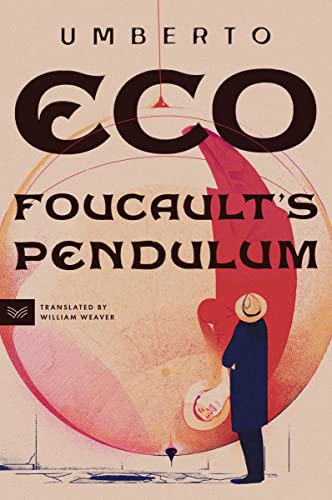
by Umberto Eco
This book dives deep into the obsession with hidden meanings and secret histories, much like the characters in Fowles' work who are obsessed with uncovering the truth behind a mysterious event. It is a challenging, cynical, and deeply analytical look at how we construct reality.

by Walter Moers
While tonally more whimsical, this book shares the 'maggot's' sense of the surreal and the transformative power of the journey. It creates an entirely immersive, strange world that challenges the reader's perception of reality and genre conventions.

Set in a historical period rendered with sensory precision, this novel explores the disturbing, obsessive nature of its protagonist. It shares the dark, atmospheric, and slightly grotesque quality found in the more unsettling passages of Fowles' writing.

Fans of Fowles' structural experimentation will appreciate the nested, shifting narratives of this novel. It connects disparate time periods and genres to explore the cyclical nature of human ambition and the search for truth.

by John Fowles
This is the quintessential Fowles experience, featuring a protagonist caught in an elaborate, reality-bending game orchestrated by a mysterious figure. It mirrors the 'maggot's' themes of manipulation, psychological testing, and the blurring of lines between truth and performance.
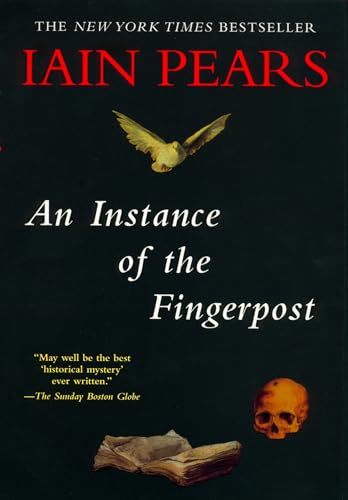
by Iain Pears
Set in 17th-century Oxford, this novel employs multiple, conflicting narrators to tell the story of a murder, forcing the reader to constantly re-evaluate the 'truth.' It perfectly matches the intellectual rigor and historical immersion of 'A Maggot'.

Not sure what they've already read?
Let them pick their next favorite with an Amazon Gift Card.
As an Amazon Associate, we earn from qualifying purchases.
As an Amazon Associate, we earn from qualifying purchases.