
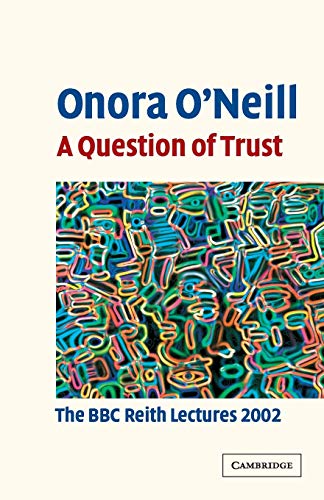
Based on your book
A Question of Trust
by Onora O'Neill
A Question of Trust by Onora O'Neill is a sharp, incisive exploration of one of society's most fundamental yet elusive concepts. O'Neill doesn't offer easy answers; instead, she invites you into a rigorous, philosophical inquiry into what trust truly means, why it's so fragile, and how our institutions both foster and betray it. This isn't a self-help guide to being more trusting, but a deep dive into the political, ethical, and cultural dimensions of trust and distrust in public life. Reading it feels like having a brilliant mind lay bare the complex machinery of power dynamics and social commentary that underpins our daily interactions. It's for readers who appreciate analytical rigor, who enjoy grappling with big ideas, and who want to understand the moral dilemmas shaping our world with clarity and intellectual honesty. If you're someone who often wonders why we seem to be losing faith in everything, O'Neill offers a framework to think through those anxieties.
10 Books similar to 'A Question of Trust'
If O'Neill's clear-eyed examination of trust, power, and societal integrity resonated with you, our curated list will offer further avenues for thought. We've gathered books that, like "A Question of Trust," dissect complex power dynamics, explore the fragility of institutions, and engage in vital social commentary. Whether through dystopian fiction like Orwell and Atwood, or the incisive non-fiction of Snyder and Zuboff, these titles collectively deepen the conversation around accountability, the erosion of public trust, and the moral dilemmas inherent in governing and being governed. They all prompt you to think critically about the hidden forces shaping our world.
As an Amazon Associate, we earn from qualifying purchases.

This dystopian classic explores a society where truth is systematically manipulated and trust is utterly destroyed by an authoritarian regime. Readers of O'Neill will find a fictional, yet chillingly relevant, examination of how power can erode accountability and transparency.

Atwood's novel vividly portrays a totalitarian society where individuals are stripped of agency and institutions are weaponized, leading to a profound breakdown of trust. It resonates with O'Neill's concerns about power dynamics, societal control, and the fragility of ethical governance.

Harari offers a sweeping historical and philosophical overview of how humans have organized societies and built shared fictions and cooperation on a grand scale. This provides a foundational context for understanding the collective trust that O'Neill examines in modern institutions.
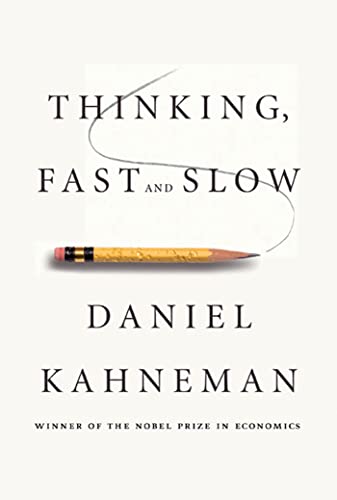
Kahneman's work delves into the cognitive biases that shape human judgment and decision-making, offering a psychological underpinning for why people trust or distrust. It complements O'Neill's philosophical inquiry by exploring the mental mechanisms behind our perceptions of credibility.

Not sure what they've already read?
Let them pick their next favorite with an Amazon Gift Card.
As an Amazon Associate, we earn from qualifying purchases.

Snyder provides a concise, urgent guide to understanding and resisting authoritarianism, directly addressing the fragility of democratic institutions and the importance of civic trust. It echoes O'Neill's concerns about maintaining societal integrity and accountability.

This novel presents a nuanced exploration of two contrasting societies – one anarchist, one capitalist – prompting readers to critically examine the nature of governance, freedom, and the social contracts that underpin trust, much like O'Neill's philosophical approach.

by Franz Kafka
Kafka's seminal work depicts an individual's struggle against an inscrutable and seemingly arbitrary legal system, powerfully illustrating the breakdown of trust between the individual and institutions, a core concern for O'Neill's analysis.

Haidt delves into the psychological roots of moral and political divisions, offering insights into how different moral foundations lead to distrust and polarization. This directly complements O'Neill's analysis of societal cohesion and the challenges to collective trust.

This allegorical novel vividly portrays the rapid collapse of social order and the brutal realities of human behavior when trust and societal structures disintegrate. It provides a stark fictional parallel to O'Neill's concerns about the fragility of social contracts.

Zuboff's groundbreaking analysis examines how digital platforms exploit personal data, fundamentally challenging our understanding of privacy, autonomy, and the erosion of trust in the digital age. This aligns perfectly with O'Neill's critical examination of modern societal challenges.

Prefer to listen?
Try Audible and hear the story instead of reading it.
As an Amazon Associate, we earn from qualifying purchases.
As an Amazon Associate, we earn from qualifying purchases.