
Based on your book
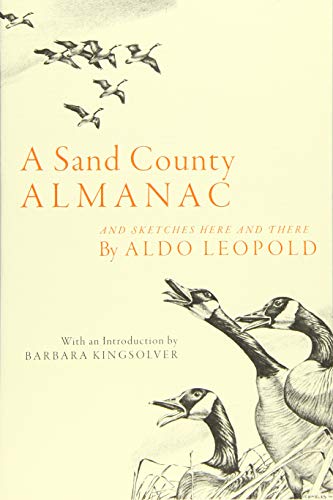
A Sand County Almanac
by Leopold, Aldo
Aldo Leopold spent years observing the seasonal shifts on his worn-out farm in Wisconsin, and this book is the quiet, luminous result. It is structured as a calendar, tracking the arrival of geese, the blooming of flowers, and the behavior of wolves, but it quickly evolves into a sophisticated argument for a land ethic. Leopold writes with the steady, unhurried hand of a man who has spent more time listening to the woods than to other people. The prose is sparse and unsentimental, yet it carries a weight that forces you to reconsider your own place in the ecosystem. This is not a frantic call to arms, but a slow, deliberate invitation to look closer at the dirt under your boots. It is essential reading for anyone who finds more clarity in a forest than in a city, and who wants to understand the moral responsibility we owe to the earth.
10 Books similar to 'A Sand County Almanac'
If the quiet introspection of Leopold's writing resonated with you, these selections expand on his philosophy of living in harmony with the natural world. We chose these titles because they mirror his specific brand of observational writing, where scientific curiosity meets a deep, spiritual reverence for the landscape. Whether through the lens of indigenous wisdom, environmental activism, or personal essay, these authors share his commitment to defending the wilderness against human encroachment. Each book captures that same fragile, essential bond between a person and the specific plot of earth they call home.
As an Amazon Associate, we earn from qualifying purchases.

Like Leopold's work, this foundational text bridges the gap between scientific observation and poetic prose to argue for the preservation of the natural world. It shares the same urgent, deeply researched, and morally conscious voice that defined the modern environmental movement.

This book is the spiritual ancestor to Leopold's almanac, offering a profound meditation on living simply and deliberately within the rhythms of nature. Readers will appreciate the same observant, contemplative tone and the deep connection to a specific landscape.

Ehrlich captures the stark, beautiful reality of life in the American West with a lyrical precision that mirrors Leopold's own descriptive powers. It is a deeply atmospheric collection of essays that explores the relationship between the human spirit and the rugged environment.

Dillard’s narrative voice is similarly rooted in the minute observation of the natural world, transforming the study of a single creek into a spiritual and philosophical journey. Fans of Leopold will recognize the blend of scientific curiosity and wonder at the complexity of wild ecosystems.

Love to read on the go?
Explore Kindle e-readers and take your books with you.
As an Amazon Associate, we earn from qualifying purchases.

by Edward Abbey
While Abbey’s voice is more rebellious and cynical than Leopold's, the core subject matter—a fierce defense of wilderness and a deep, immersive experience in nature—is perfectly aligned. It serves as a powerful, often humorous, companion piece to the conservationist ethos found in A Sand County Almanac.

Kimmerer weaves together indigenous wisdom and scientific knowledge in a way that echoes Leopold's 'land ethic,' emphasizing reciprocity with the earth. It is a beautifully written, hopeful, and deeply grounded exploration of our relationship with the living world.

Berry shares Leopold's concern for the health of the land and the communities that depend on it, offering a critique of industrial agriculture that feels like a natural extension of the almanac's philosophy. It is a vital, intellectual read for anyone interested in the intersection of ecology and human culture.

by Barry Lopez
Lopez combines natural history, geography, and human experience with a lyrical, observational style that matches the depth and reverence found in Leopold's writing. It is a masterful exploration of how a landscape shapes the people who inhabit it.

This book provides a fascinating, accessible look at the complex social networks of forests, appealing to the same sense of wonder and scientific curiosity that Leopold cultivated. It invites readers to view the natural world not as a resource, but as a community with its own intricate history.

Williams intertwines the rising waters of the Great Salt Lake with the personal tragedy of her mother’s illness, creating a narrative that is both intimate and ecologically significant. Like Leopold, she finds deep meaning in the patterns of the natural world and the resilience of life.

Not sure what they've already read?
Let them pick their next favorite with an Amazon Gift Card.
As an Amazon Associate, we earn from qualifying purchases.
As an Amazon Associate, we earn from qualifying purchases.