
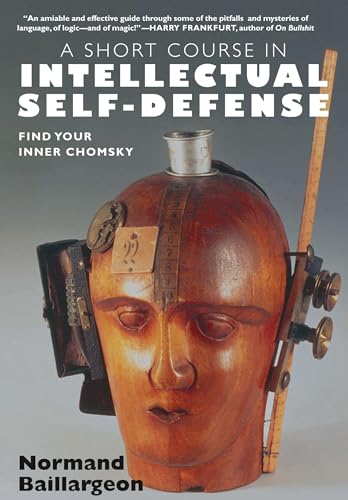
Based on your book
A Short Course in Intellectual Self-Defense
by Baillargeon, Normand
Normand Baillargeon offers a practical manual for navigating the noise of the modern information age. Instead of just teaching you what to think, this book focuses on how to deconstruct the arguments, media messaging, and logical traps that shape our daily perceptions. The reading experience is like sitting down with a patient, no-nonsense professor who respects your intelligence enough to hand you the tools for your own liberation. It moves at a measured, analytical pace, breaking down complex concepts into digestible, actionable lessons. You will find yourself constantly pausing to look at the news or your own habits in a new light. This is an essential read for anyone who has ever felt overwhelmed by public debate, tired of being manipulated by headlines, or simply wants to sharpen their ability to spot a bad argument before it takes root.
10 Books similar to 'A Short Course in Intellectual Self-Defense'
Once you have finished Baillargeon, you will likely want to deepen your understanding of why we think the way we do. We have curated a list that moves from the psychological roots of our biases in works by Kahneman and Haidt to the structural mechanics of media manipulation found in Chomsky and Bernays. These selections prioritize the same analytical rigor as the main text, helping you move past passive consumption toward active, critical engagement. Whether you want to explore the history of rhetoric or identify modern scientific fallacies, these books provide the perfect framework for further study.
As an Amazon Associate, we earn from qualifying purchases.

by Carl Sagan
Like Baillargeon's work, this book serves as a vital toolkit for critical thinking and skepticism in an age of misinformation. Sagan passionately defends the scientific method as the best defense against superstition, pseudoscience, and manipulation.

This concise philosophical essay provides a rigorous analysis of the nature of 'bullshit' and why it is more dangerous to truth than lying. It complements Baillargeon's focus on intellectual self-defense by helping readers identify and dismiss empty rhetoric.
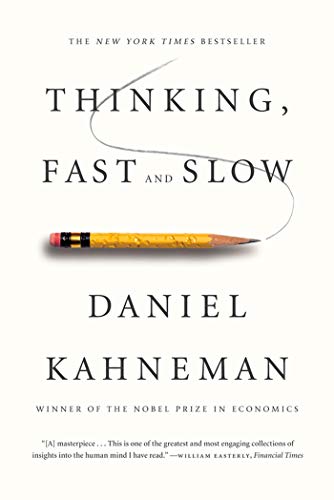
Kahneman explores the cognitive biases that distort our judgment and decision-making, providing the psychological foundation for the logical fallacies Baillargeon warns against. It is an essential read for understanding why our brains often fail us when we try to think critically.

by Edward S. Herman and Noam Chomsky
This is the definitive text on how media structures shape public opinion, a core theme in Baillargeon's book. It provides the heavy-duty analysis required to understand the propaganda models that intellectual self-defense seeks to expose.

Prefer to listen?
Try Audible and hear the story instead of reading it.
As an Amazon Associate, we earn from qualifying purchases.

by Aristotle
To defend oneself against manipulation, one must understand how persuasion works; Aristotle's foundational text is the ultimate guide to the mechanics of rhetoric. Readers of Baillargeon will appreciate tracing the roots of logical fallacies back to classical antiquity.

McRaney takes the complex psychological concepts of cognitive biases and makes them accessible and entertaining, much like Baillargeon's approachable guide. It is a perfect companion for anyone wanting to recognize their own delusions and logical errors.

Reading Bernays is essential for understanding the 'enemy' of intellectual self-defense; he explicitly lays out the techniques used to engineer public consent. It offers a chilling, behind-the-scenes look at the very forces Baillargeon teaches readers to resist.

by Ben Goldacre
Goldacre applies the principles of critical thinking to the world of medicine and media reporting, exposing how bad data and sensationalism are peddled as truth. It is a highly practical, often funny, and deeply analytical application of the skills Baillargeon advocates.
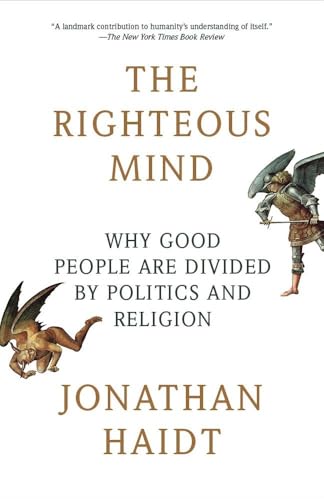
Haidt explores the moral foundations of our beliefs, explaining why we are so susceptible to bias and tribalism. It provides the necessary context for understanding the emotional resistance people feel when their worldview is challenged, a key hurdle in intellectual self-defense.

This book acts as a formal, academic counterpart to Baillargeon's guide, focusing on the structural analysis of arguments and logical fallacies. It is the perfect next step for readers who want to sharpen their ability to deconstruct complex debates.

Love to read on the go?
Explore Kindle e-readers and take your books with you.
As an Amazon Associate, we earn from qualifying purchases.
As an Amazon Associate, we earn from qualifying purchases.