

Based on your book
A Short History of Nearly Everything
by Bryson, Bill
Bill Bryson sets out to do something absurdly ambitious: explain the entire history of the universe and our place within it. He does not write like a dry academic; he writes like a curious friend who just spent a decade interviewing the world's most brilliant scientists and decided to translate their jargon into plain English. You will bounce from the Big Bang to the mechanics of subatomic particles and the history of geology, all while laughing at the sheer incompetence of early researchers. The pacing is breathless, shifting between existential awe and hilarious anecdotes about the eccentric geniuses who discovered our world. If you find yourself staring at the stars or wondering why things are the way they are, but you are intimidated by textbooks, this book is for you. It turns the heavy lifting of science into a conversational, witty, and deeply human adventure.
10 Books similar to 'A Short History of Nearly Everything'
Since you enjoyed the way Bryson blends rigorous research with a conversational, witty voice, these picks were chosen to keep that intellectual momentum going. We looked for authors who treat complex science as a narrative puzzle rather than a lecture, focusing on the human stories hidden behind big discoveries. Whether you are looking for more of that irreverent humor, a deeper dive into the environmental forces shaping our history, or simply more fascinating 'aha' moments about how the world works, this list leans into the same spirit of insatiable, wonder-filled curiosity.
As an Amazon Associate, we earn from qualifying purchases.

Like Bryson, Harari takes an incredibly complex and vast subject—human history—and distills it into an engaging, narrative-driven account. It shares the same ambition to explain 'everything' about our species with a thought-provoking, sweeping perspective.

This book masterfully blends rigorous scientific research with a deeply human story, mirroring Bryson's ability to make science accessible and personal. It explores the history of medical science through the lens of one woman's untold story, making it both informative and emotionally resonant.

by Carl Sagan
Sagan's classic work shares the same sense of wonder and curiosity about the universe that permeates Bryson's writing. It is a foundational text for anyone who loves having the mysteries of the physical world explained with clarity, passion, and a touch of the poetic.

by Mary Roach
If you enjoyed the humorous, slightly irreverent, and conversational tone of Bill Bryson, you will love Mary Roach. She explores the macabre subject of what happens to human bodies after death with the same wit, curiosity, and extensive research that Bryson brings to his topics.

Love to read on the go?
Explore Kindle e-readers and take your books with you.
As an Amazon Associate, we earn from qualifying purchases.

by Sam Kean
Kean treats the periodic table as a narrative device, much like Bryson treats the history of science, uncovering the bizarre and fascinating human stories behind the elements. It is highly accessible, educational, and filled with the same 'I never knew that!' moments as Bryson's work.

Fans of Bryson's 'big picture' approach to history and science will appreciate Diamond's attempt to explain the broad patterns of human civilization. It is an intellectual, comprehensive look at how environmental factors shaped the modern world, written for the curious layperson.

While the tone is more urgent and serious than Bryson's, Kolbert's book shares the same deep investigative spirit and ability to synthesize complex scientific concepts into a readable narrative. It is a vital read for those interested in the environmental history of our planet.

by Bill Bryson
Since you enjoyed Bryson's voice, reading his own travelogue is a natural next step. It captures his signature wit, self-deprecating humor, and observational style, applied here to the physical challenge of hiking the Appalachian Trail.
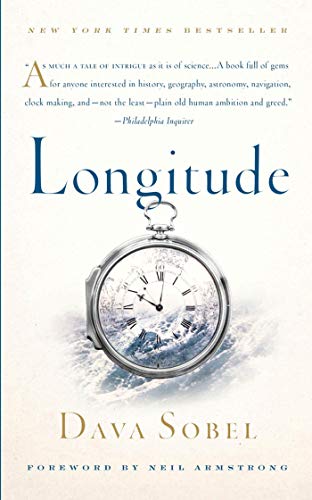
by Dava Sobel
Like Bryson, Sobel excels at focusing on a specific, pivotal moment in scientific history and expanding it into a gripping, accessible story. It is a perfect example of how historical science can be presented as a narrative-driven mystery.

Johnson shares Bryson's fascination with the interconnectedness of history and innovation, tracing the surprising origins of everyday things. The book is structured, informative, and written with a brisk, engaging pace that fans of popular science will find very satisfying.

Not sure what they've already read?
Let them pick their next favorite with an Amazon Gift Card.
As an Amazon Associate, we earn from qualifying purchases.
As an Amazon Associate, we earn from qualifying purchases.