

Based on your book
Abolition of Man
by C.S. Lewis
In this slender but formidable volume, Lewis argues that if we strip away our belief in objective value, we are not liberating humanity, but rather dismantling it. He examines the way modern education and scientism threaten to replace human nature with mere conditioning, leaving us as men without chests, stripped of the emotional and rational faculties that make us truly human. Reading this feels like sitting across from a sharp, calm professor who is methodically taking apart the foundations of your own era. The pacing is tight and the logic is relentless, demanding your full attention as he builds his case for the Tao, or the universal moral law. It is an ideal read for anyone who finds themselves uneasy with the direction of modern culture and wants a rigorous, clear-eyed framework to understand why.
10 Books similar to 'Abolition of Man'
If Lewis has sharpened your appetite for these questions, our list is curated to help you explore the fallout of a world that rejects objective truth. We have selected works by Chesterton and MacIntyre for those who want to dig deeper into the philosophical roots of our moral crisis, alongside dystopian classics like Brave New World and 1984 to show how these ideas play out in society. Whether through fiction or dense analysis, these books all grapple with the same central tension: the fight to preserve human dignity against the cold, encroaching tide of technocratic control.
As an Amazon Associate, we earn from qualifying purchases.
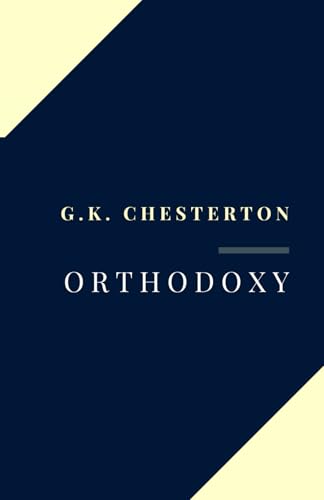
Like Lewis, Chesterton uses brilliant wit and paradox to defend traditional morality and objective truth against the encroaching skepticism of his time. It serves as a spiritual and intellectual companion piece that shares Lewis's passion for the 'Tao' or universal moral law.

This novel serves as the fictional realization of the warnings Lewis presents in 'The Abolition of Man,' depicting a society where objective human values have been sacrificed for technological control and conditioning. It is the perfect narrative counterpart to Lewis's philosophical critique of scientism.

This historical and philosophical survey challenges modern secularist assumptions about human history and the nature of man. Readers who appreciated Lewis's defense of objective human significance will find Chesterton's argument for the uniqueness of the human person deeply resonant.

by C.S. Lewis
This is the fictional conclusion to Lewis's 'Space Trilogy' and acts as a narrative dramatization of the very arguments made in 'The Abolition of Man.' It explores the terrifying consequences of a technocratic elite attempting to 'condition' humanity and abandon objective morality.

Prefer to listen?
Try Audible and hear the story instead of reading it.
As an Amazon Associate, we earn from qualifying purchases.

MacIntyre provides a rigorous academic analysis of the collapse of moral language in the modern world, which mirrors Lewis's concern about the loss of the 'Tao.' It is essential reading for anyone interested in the philosophical roots of the cultural shifts Lewis identified.

Orwell shares Lewis's deep concern regarding the manipulation of language and the destruction of objective truth by those in power. Both authors highlight how the erosion of shared reality is the first step toward the total subjugation of the human spirit.

by C.S. Lewis
This work explores the 'model' of the universe held by medieval thinkers, providing the context for the objective worldview Lewis defends in 'The Abolition of Man.' It is a masterful look at how our understanding of the cosmos shapes our understanding of morality.

by Allan Bloom
Bloom offers a scathing critique of modern education and the rise of moral relativism, echoing Lewis's warnings about the 'conditioners' of men. It is a powerful, albeit controversial, analysis of how the loss of objective values impacts the intellectual life of a civilization.

by C.S. Lewis
While written as a satirical correspondence, this book demonstrates the subtle, psychological erosion of human virtue that Lewis warns about in his non-fiction. It provides a unique, 'behind-the-scenes' look at the moral decay that occurs when objective truth is abandoned.

Jastrow, a scientist, explores the limits of scientific materialism and the implications of the origins of the universe, which aligns with Lewis's skepticism toward scientism. It appeals to readers who value the intersection of rigorous thought, science, and the search for objective meaning.

Love to read on the go?
Explore Kindle e-readers and take your books with you.
As an Amazon Associate, we earn from qualifying purchases.
As an Amazon Associate, we earn from qualifying purchases.