

Based on your book
Against the Gods
by Bernstein, Peter L.
Bernstein treats the concept of risk not as a dry financial metric, but as the engine of modern civilization. He traces our journey from a world governed by superstition and destiny to one defined by mathematical probability and calculated decision-making. You follow the intellectual pioneers who dared to quantify the uncertain, effectively taming the future. The prose is steady and contemplative, moving with the weight of history rather than the frantic pace of a market ticker. It feels less like a business textbook and more like a biography of a human idea. This is for the reader who wants to understand how we shifted from fearing the gods to trusting the numbers. If you appreciate long-form history that fundamentally alters how you perceive your own choices, this book is a necessary addition to your shelf.
10 Books similar to 'Against the Gods'
When you have finished the historical journey of Against the Gods, you likely want to explore the practical consequences of these theories in the modern world. We selected these titles because they bridge the gap between abstract mathematical probability and the messy, irrational reality of human behavior. Whether you are interested in the cognitive biases Kahneman explores, the speculative mania Chancellor chronicles, or the quantitative revolutions Zuckerman details, these books unpack the tension between fate and free will. They offer a deeper look at the same financial evolution that Bernstein masterfully introduced.
As an Amazon Associate, we earn from qualifying purchases.

Like Bernstein, Taleb explores the profound impact of unpredictable events on our world and the limitations of our ability to forecast them. It is an essential intellectual companion for anyone interested in probability and the fragility of human systems.

This classic text provides a comprehensive look at market efficiency and investment strategies, mirroring Bernstein's focus on how markets function over time. It offers a practical yet historically grounded perspective on the risks and rewards of financial decision-making.

Ferguson traces the evolution of financial systems much like Bernstein traces the evolution of risk, connecting historical events to modern economic reality. It provides a sweeping, narrative-driven account of how money and credit have shaped civilization.

This book delves into the human tendency to underestimate the role of luck in our successes and failures, a core theme in Bernstein's examination of risk. It challenges the reader to reconsider their understanding of skill versus chance in complex environments.

Love to read on the go?
Explore Kindle e-readers and take your books with you.
As an Amazon Associate, we earn from qualifying purchases.
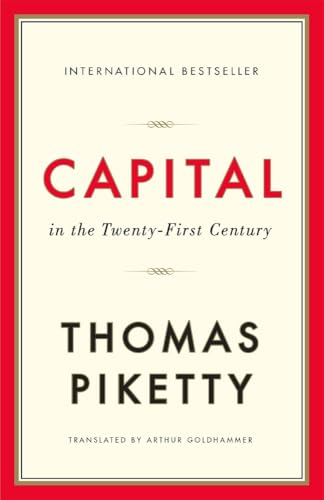
Piketty provides a massive, data-driven analysis of wealth inequality that complements Bernstein's historical approach to financial systems. It is a deep, scholarly dive into the long-term trends that govern economic power and stability.

This narrative biography explores the intersection of mathematics and finance, illustrating the practical application of the theories Bernstein discusses. It highlights the rise of quantitative analysis and the people who changed the nature of risk management forever.

Chancellor offers a fascinating history of speculative manias, providing a clear narrative thread that echoes Bernstein's interest in how human psychology interacts with financial markets. It is a cautionary tale about the recurring cycles of greed and fear.

While focused on psychology, this book is indispensable for understanding the cognitive biases that underpin the financial decision-making Bernstein writes about. It explains the 'why' behind the irrational behaviors that create risk in the first place.

Lewis provides an insider's view of the high-stakes world of bond trading, capturing the chaotic and risky atmosphere that Bernstein analyzes from a historical distance. It is a gripping, character-driven look at the culture of risk-taking.

by Sidney Homer and Richard Sylla
This is a seminal reference work that provides the quantitative foundation for much of the history Bernstein covers, making it a perfect companion for a deeper dive. It tracks the cost of borrowing across millennia, revealing the fundamental pulse of economic history.

Not sure what they've already read?
Let them pick their next favorite with an Amazon Gift Card.
As an Amazon Associate, we earn from qualifying purchases.
As an Amazon Associate, we earn from qualifying purchases.