
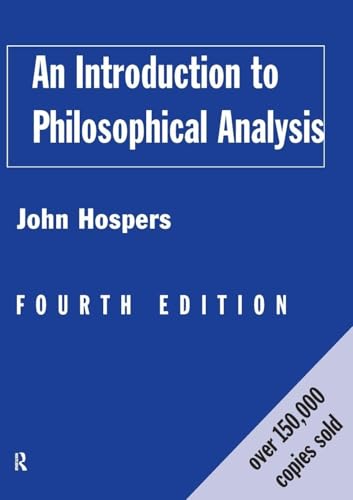
Based on your book
An Introduction to Philosophical Analysis
by Hospers, John
John Hospers treats philosophy not as a collection of dusty historical opinions, but as a toolkit for sharpening your own mind. The book systematically dismantles the big questions—knowledge, truth, free will, and moral value—by focusing on the precision of language and the validity of arguments. You will not find flowery prose or abstract mysticism here; instead, the experience is akin to a rigorous mental workout. The pacing is deliberate, forcing you to slow down and examine the architecture of your own beliefs. It is written for the reader who is tired of vague intellectualizing and wants to understand exactly what they mean when they claim to know something or make a moral judgment. If you value clarity over comfort and want to build a sturdy foundation for your own worldview, this is the place to start.
10 Books similar to 'An Introduction to Philosophical Analysis'
Since you appreciated the analytical rigor and the systematic approach to big questions in Hospers, our curated list focuses on authors who share that same commitment to conceptual clarity. We have selected these titles because they bridge the gap between abstract existential dilemmas and the logical tools required to solve them. Whether you are interested in the linguistic precision of Ryle or the meta-ethical challenges posed by Mackie, these books extend the analytical framework of the original text, helping you deepen your understanding of reality, mind, and the nature of moral truth.
As an Amazon Associate, we earn from qualifying purchases.

Like Hospers, Blackburn provides a masterclass in clear, analytical writing that guides the reader through the core questions of philosophy. It shares the same commitment to rigorous argumentation and accessibility for those new to the field.

This classic text is a foundational pillar of analytic philosophy, much like Hospers' work. It offers a concise, lucid exploration of epistemological and metaphysical problems that served as a primary inspiration for the analytical tradition.

Warburton excels at breaking down complex philosophical arguments into digestible, clear summaries, mirroring the pedagogical strength found in Hospers. It serves as an excellent companion for readers who appreciate structured, analytical overviews.
While more focused on thought experiments, this book shares the analytical spirit of Hospers by using logic and conceptual analysis to dissect ethical and metaphysical dilemmas. It is highly engaging and perfect for those who enjoy the problem-solving aspect of philosophy.

Love to read on the go?
Explore Kindle e-readers and take your books with you.
As an Amazon Associate, we earn from qualifying purchases.

For readers who enjoyed the metaphysical sections of Hospers, this book provides a deeper, yet still accessible, dive into the contemporary debates surrounding reality, time, and identity. It maintains the same academic rigor and clarity.

by J.L. Mackie
Mackie's work is a cornerstone of meta-ethics and shares the analytical, argumentative style found in Hospers' chapters on ethics. It challenges the reader to think critically about the foundations of moral values.

by A.J. Ayer
This book is a seminal text in the logical positivist tradition, which heavily influenced the analytical style Hospers employs. It is essential reading for understanding the historical context of the methods used in 'An Introduction to Philosophical Analysis'.

by Thomas Nagel
Nagel distills the most difficult philosophical questions into a very short, highly readable format without losing the analytical depth. Fans of Hospers will appreciate the direct, no-nonsense approach to the 'big questions'.
by John Heil
Heil provides a clear, structured introduction to the philosophy of mind that mirrors the systematic approach Hospers takes in his broader introduction. It is perfect for readers looking to specialize in a specific sub-field while maintaining an analytical framework.

by Gilbert Ryle
Ryle is a master of the linguistic analysis method that Hospers utilizes throughout his book. This text is a classic of the analytic tradition, focusing on how we talk about the mind, and is highly rewarding for those who enjoy conceptual clarity.

Not sure what they've already read?
Let them pick their next favorite with an Amazon Gift Card.
As an Amazon Associate, we earn from qualifying purchases.
As an Amazon Associate, we earn from qualifying purchases.