

Based on your book
Antifragile
by Taleb, Nassim Nicholas
Taleb argues that most of our modern systems are built to be fragile, shattering under the pressure of unexpected volatility. Instead of seeking stability, he proposes we embrace the concept of antifragility: the ability to actually thrive and improve when exposed to chaos, stress, and disorder. The writing is intentionally provocative and relentlessly argumentative, feeling less like a conventional business book and more like a long, intellectual sparring match with a brilliant but grumpy mentor. You will find yourself constantly challenged to rethink your relationship with risk, professional planning, and the way you view the world's most rigid structures. It is a dense, philosophical, and often humorous exploration of how to build a life that does not just survive the unexpected, but benefits from it. This is best for the reader who enjoys contrarian thinking and complex system analysis.
10 Books similar to 'Antifragile'
If the systems-thinking and biting skepticism of Antifragile resonated with you, these selections expand on those exact intellectual threads. We chose these titles because they bridge the gap between high-level theory and the practical realities of human judgment, probability, and power dynamics. Whether you are looking for the scientific bedrock of complex adaptive systems found in Complexity or the raw political pragmatism of The Dictator's Handbook, this collection reinforces the idea that understanding hidden patterns is the ultimate tool for navigating a volatile world. You will find that same analytical rigor across all these works.
As an Amazon Associate, we earn from qualifying purchases.

As the foundational text that precedes Antifragile, this book is essential for understanding Taleb's core philosophy regarding uncertainty and rare events. It provides the necessary theoretical framework for readers who want to dive deeper into the author's unique perspective on probability and risk.
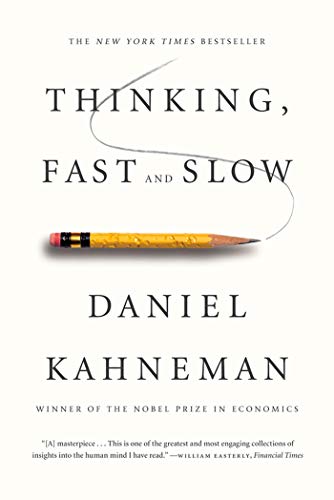
Kahneman's exploration of the two systems that drive our thoughts complements Taleb's work by explaining the cognitive biases that lead us to misjudge risk. It is a dense, rewarding read for anyone interested in decision-making and the fallibility of human judgment.

by Nate Silver
Silver bridges the gap between statistical theory and real-world application, much like Taleb, but with a focus on predictive modeling. Fans of Antifragile will appreciate the rigorous examination of how we can distinguish true signals from the chaotic noise of modern data.

This book serves as the practical application of the concepts introduced in Antifragile, focusing on the necessity of having personal stakes in one's decisions. It maintains the same sharp, contrarian tone and provides a moral dimension to the study of risk and systems.

Not sure what they've already read?
Let them pick their next favorite with an Amazon Gift Card.
As an Amazon Associate, we earn from qualifying purchases.

For readers fascinated by the systems-thinking aspect of Antifragile, this book offers an accessible yet deep dive into the science of complex adaptive systems. It explains how simple rules can lead to emergent, unpredictable, and robust behaviors in nature and technology.

This is the first book in Taleb's Incerto series and sets the stage for his later works by dissecting how we underestimate the role of luck in our successes and failures. It shares the same biting wit and skepticism toward experts that readers of Antifragile enjoy.

by James Dale Davidson and William Rees-Mogg
This book offers a grand, sweeping look at how technological shifts disrupt existing power structures, a theme that resonates deeply with Taleb's ideas on societal fragility. It is a provocative read that challenges conventional wisdom about the future of the nation-state.

West explores the mathematical patterns that govern growth and sustainability across vastly different scales, offering a scientific perspective that complements Taleb's philosophical approach. It is perfect for readers who enjoy understanding the underlying 'rules' of complex systems.

by Will Durant and Ariel Durant
This short, dense masterpiece distills thousands of years of human history into core patterns, mirroring Taleb's interest in historical data as a tool for understanding the present. It provides a timeless perspective on the cyclical nature of civilization and the fragility of empires.
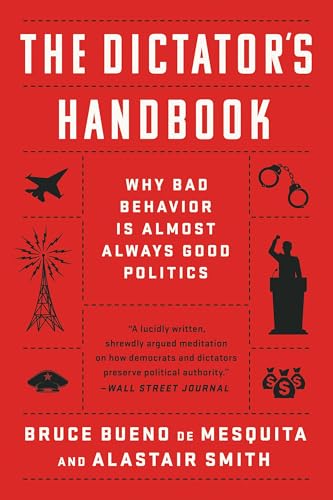
by Bruce Bueno de Mesquita and Alastair Smith
Applying rational choice theory to political power, this book provides a cynical, analytical look at how leaders maintain control, which aligns with Taleb's skepticism of political narratives. It reveals the cold, structural logic behind seemingly irrational political decisions.

Prefer to listen?
Try Audible and hear the story instead of reading it.
As an Amazon Associate, we earn from qualifying purchases.
As an Amazon Associate, we earn from qualifying purchases.