

Based on your book
Automation and the Future of Work
by Aaron Benanav
Aaron Benanav's "Automation and the Future of Work" isn't here to soothe anxieties about robots taking all our jobs; it's here to reframe the entire conversation. This book offers a deeply analytical look at why work feels increasingly precarious, arguing that the issue isn't so much runaway automation, but a deeper stagnation in global demand and overcapacity. Reading it feels like sitting down with a brilliant economist who's determined to peel back layers of conventional wisdom, revealing the complex political and economic forces at play. It's a challenging, intellectual journey that demands your full attention, rewarding you with a clearer, more nuanced understanding of our economic present and potential futures. If you appreciate rigorous social commentary and want to dissect the true power dynamics shaping labor today, this will be a profoundly thought-provoking read.
10 Books similar to 'Automation and the Future of Work'
If Aaron Benanav's "Automation and the Future of Work" resonated with your desire for a deeper understanding of our economy, then our curated list is for you. We've gathered books that continue its incisive social commentary, exploring the intricate power dynamics and structural changes shaping our world. Whether you're interested in the behind-the-scenes mechanics of capitalism, the cultural analysis of labor, or the rise and fall of economic paradigms, these recommendations offer further intellectual journeys into the future of work and society. They each provide a distinct, yet equally thought-provoking, lens on the challenges and possibilities ahead.
As an Amazon Associate, we earn from qualifying purchases.
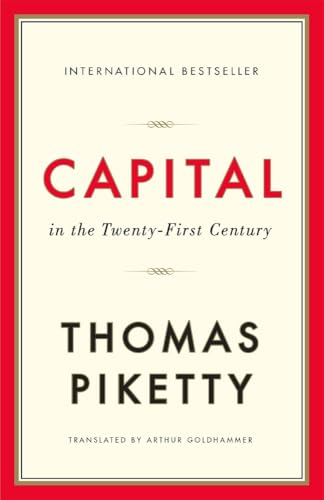
Piketty's monumental work offers a deep, data-driven analysis of wealth and income inequality under capitalism, providing a crucial historical and economic context that complements Benanav's critique of contemporary labor and automation. Readers will appreciate the rigorous analytical approach and the profound implications for the future of economic systems.

by Paul Mason
Mason explores how information technology is fundamentally changing capitalism and offers a vision for a post-capitalist future, echoing Benanav's engagement with the systemic transformations driven by technology and economic forces. It shares a similar blend of critical analysis and forward-looking speculation.

by Erik Brynjolfsson and Andrew McAfee
This book directly addresses the impact of digital technologies, AI, and automation on the economy and labor market, offering a comprehensive overview of the challenges and opportunities. Fans of Benanav will find a detailed, accessible exploration of the very forces shaping the future of work.

Graeber's provocative book critiques the proliferation of meaningless jobs in modern capitalist economies, offering a different but equally incisive look at the nature of work and its discontents. It provides a humanistic counterpoint to purely economic analyses, resonating with Benanav's concern for the quality of labor.

Prefer to listen?
Try Audible and hear the story instead of reading it.
As an Amazon Associate, we earn from qualifying purchases.

Bastani presents a radical, optimistic vision of a post-scarcity future enabled by automation and technological advancements, directly engaging with the possibilities and challenges discussed by Benanav. It offers a bold, theoretical framework for rethinking economic and social structures.

While fiction, this novel deeply explores the economic, political, and social transformations required to address climate change, often touching on labor, technological innovation, and systemic change in ways that resonate with Benanav's analytical approach to global challenges. It's a thought experiment in future societal organization.

by Nick Srnicek and Alex Williams
This book directly tackles the implications of automation and the potential for a post-work society, advocating for universal basic income and new political projects. It shares Benanav's critical perspective on capitalism and offers concrete proposals for navigating technological change.

Zuboff's seminal work dissects how digital technologies have created a new economic order that extracts and commodifies human experience, offering a powerful critique of modern capitalism's evolution. Readers will appreciate the deep dive into power dynamics and the future of human autonomy in a technologically advanced world.

by James Suzman
Suzman offers a sweeping historical and anthropological account of work, from hunter-gatherer societies to the present day, providing essential context for understanding the current debates around automation and the future of labor. It enriches Benanav's contemporary analysis with a profound historical perspective.

Graeber's expansive historical and anthropological exploration of debt's role in human societies offers a foundational understanding of economic systems and power structures that underpins many of the issues Benanav discusses. Its critical, interdisciplinary approach will appeal to readers interested in the deeper roots of economic problems.

Love to read on the go?
Explore Kindle e-readers and take your books with you.
As an Amazon Associate, we earn from qualifying purchases.
As an Amazon Associate, we earn from qualifying purchases.