

Based on your book
Beyond Nature and Culture
by Descola, Philippe
Philippe Descola challenges the bedrock of Western thought by questioning the very distinction between nature and culture. He argues that our habit of separating the human from the non-human is not a universal truth but a specific, localized perspective that blinds us to how other societies organize their reality. The reading experience is dense, rigorous, and deeply intellectual, demanding a slow pace as you untangle complex anthropological frameworks. It feels less like a traditional book and more like an expansive architectural project that rearranges your understanding of the world. This is for the reader who enjoys heavy, philosophical lifting and wants to dismantle the foundations of their own worldview. If you are interested in the structural mechanics of how we categorize existence and are willing to engage with demanding, high-level theory, this work will fundamentally shift how you perceive the environment.
10 Books similar to 'Beyond Nature and Culture'
Since this book invites you to rethink the boundary between humanity and the rest of the living world, these selections were chosen to expand that inquiry. If the structural analysis of Descola resonated with you, you will appreciate how authors like Bruno Latour and Eduardo Kohn tackle the same ontological crisis through different lenses. We have included works that bridge the gap between indigenous wisdom and academic inquiry to provide a more practical application of these ideas. These books collectively explore the tension between social structures and ecological reality, offering a broader landscape for your intellectual curiosity.
As an Amazon Associate, we earn from qualifying purchases.

Like Descola, Tsing challenges the traditional separation of human and non-human worlds by following the matsutake mushroom trade. It is a brilliant, ethnographic exploration of how multispecies landscapes thrive amidst ecological destruction.

by Bruno Latour
This foundational text deconstructs the modern obsession with separating nature from society, mirroring Descola's central thesis. It is essential reading for anyone interested in the ontological underpinnings of our current environmental crisis.

by Alain Corbin
Corbin provides a fascinating historical deep dive into how human perception of 'nature'—specifically the ocean—has evolved over centuries. It aligns perfectly with Descola's interest in how different cultures construct their relationship with the environment.

by Amitav Ghosh
Ghosh connects the history of colonialism to our current climate catastrophe, arguing that we must rethink our relationship with the non-human world. It shares Descola's scope and urgency regarding the need to move beyond Western-centric worldviews.

Love to read on the go?
Explore Kindle e-readers and take your books with you.
As an Amazon Associate, we earn from qualifying purchases.

This work explores how indigenous groups intentionally structured their societies to avoid state control, offering a deep look at alternative political and social ontologies. Readers of Descola will appreciate the rigorous ethnographic detail and the challenge to standard historical narratives.

Haraway argues for a radical rethinking of human-nonhuman relationships, moving away from human exceptionalism. It is a highly theoretical yet deeply engaging text that complements Descola's efforts to dismantle the nature/culture binary.

Kimmerer beautifully bridges the gap between objective scientific observation and indigenous ways of knowing. It provides a practical, lived application of the ontological shifts Descola advocates for in his academic work.

As the intellectual ancestor to Descola's work, this book is essential for understanding the structuralist approach to anthropology. It explores how 'primitive' thought is just as complex and logical as modern scientific thought.

by Eduardo Kohn
Kohn builds directly upon the ideas of Descola and others to propose an anthropology that includes the perspectives of non-human beings. It is a groundbreaking, immersive study of the Runa people in the Ecuadorian Amazon.
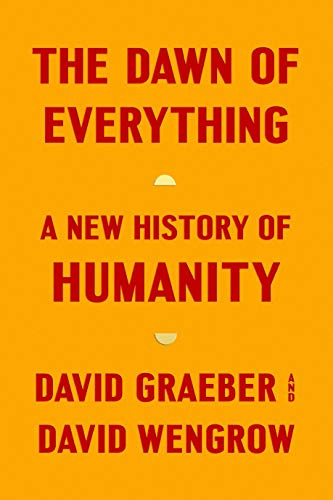
by David Graeber and David Wengrow
This book challenges the standard narrative of human social evolution, suggesting that early societies were far more diverse and experimental than we assume. Fans of Descola will enjoy the way it upends conventional wisdom about the history of human organization.

Not sure what they've already read?
Let them pick their next favorite with an Amazon Gift Card.
As an Amazon Associate, we earn from qualifying purchases.
As an Amazon Associate, we earn from qualifying purchases.