

Based on your book
Cannibalism and the Colonial World
by Francis Barker
Cannibalism and the Colonial World takes a deep, critical look at how the Western imagination has historically fixated on the concept of cannibalism. This isn't a sensationalist exploration of the act itself, but rather a sharp, intellectual analysis of how the image of the cannibal has been deployed as a tool within colonial discourse. Through essays spanning anthropology, literature, and art history, the book unpacks how this fascination shaped representations of non-Western peoples, often justifying domination and 'othering.' Reading this collection feels like participating in a rigorous academic seminar, challenging you to rethink the power of narrative and its political implications. It's for the reader eager to dissect cultural constructs, understand the mechanics of social commentary, and trace the profound, often troubling, legacy of colonial power dynamics on how we perceive the world.
10 Books similar to 'Cannibalism and the Colonial World'
If you found yourself absorbed by Cannibalism and the Colonial World, you likely appreciate a rigorous examination of how power shapes perception. Our curated list extends that intellectual journey, delving deeper into the mechanics of colonial discourse and the 'othering' of cultures. These recommendations, from Edward Said's foundational work on Orientalism to Chinua Achebe's powerful counter-narrative, explore how dominant narratives are constructed and challenged. They collectively illuminate the enduring impact of imperialistic thought and the critical importance of deconstructing representations, offering further avenues for understanding the complex interplay between culture, power, and historical legacy.
As an Amazon Associate, we earn from qualifying purchases.

by Edward Said
Said's foundational work directly addresses how the Western world constructs the 'Orient' as an 'other,' a process strikingly similar to how 'cannibalism' was used to define non-European peoples. Readers will appreciate its rigorous analysis of how cultural representations serve political and imperialistic agendas, mirroring the themes of colonial discourse.

Foucault explores the historical evolution of power structures, surveillance, and the definition of deviance within society. Fans of Barker et al. will appreciate Foucault's rigorous analysis of how institutions and discourses shape perceptions of 'barbarism' and control, mirroring the colonial use of 'cannibalism' to justify domination.

This classic novella offers a chilling fictional exploration of the moral ambiguities and brutal realities of European colonialism in Africa. It delves into the psychological toll of imperial exploitation and questions the very nature of 'civilization' versus 'savagery,' resonating with the deconstruction of colonial narratives and the 'othering' of indigenous peoples.

A powerful counter-narrative to colonial literature, this novel depicts the rich cultural life of an Igbo community before and during the arrival of British missionaries and colonial rule. It vividly portrays the devastating impact of colonialism on indigenous societies, offering a crucial perspective often silenced in colonial discourse and highlighting the human cost of 'othering.'

Love to read on the go?
Explore Kindle e-readers and take your books with you.
As an Amazon Associate, we earn from qualifying purchases.

by Frantz Fanon
Fanon's seminal work provides a profound psychological and political analysis of colonialism and decolonization. It examines the dehumanizing effects of colonial oppression and advocates for liberation, offering a theoretical lens for understanding the violence and resistance inherent in the colonial encounter and the struggle against imposed identities.

Often interpreted as an allegorical exploration of colonialism, this play features Prospero as the colonizer and Caliban as the subjugated 'native,' whose humanity is questioned and whose land is usurped. Its themes of power, control, and the 'othering' of indigenous populations strongly echo the concerns of 'Cannibalism and the Colonial World' regarding representation and exploitation.
by Deborah Root
This academic work directly examines the trope of cannibalism in colonial discourse, analyzing how it was used to construct racial hierarchies and justify colonial expansion. It offers a focused, in-depth exploration of the very subject matter that Barker et al. address, making it a perfect companion for further study into the construction of the 'savage other.'

This gripping non-fiction account exposes the horrific atrocities committed under King Leopold II's rule in the Congo Free State. It provides a stark, real-world illustration of colonial exploitation, dehumanization, and the devastating consequences of imperial power, mirroring the historical context and critique of 'Cannibalism and the Colonial World.'

Kincaid's incisive essay offers a searing critique of colonialism's enduring legacy and the problematic nature of tourism in post-colonial Antigua. Its sharp, analytical voice and focus on power imbalances, cultural appropriation, and the 'othering' of local populations will resonate deeply with readers interested in the themes of Barker et al.'s work.
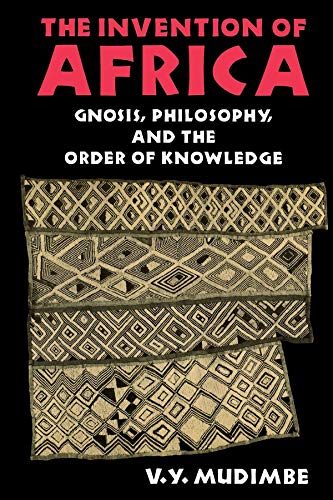
by V.Y. Mudimbe
Mudimbe's scholarly work deconstructs how Western epistemologies have historically 'invented' and defined Africa, shaping its identity and knowledge systems. This critical examination of discourse and the construction of the 'Other' aligns perfectly with the analytical approach of 'Cannibalism and the Colonial World' regarding colonial representations and the power of narrative.

Not sure what they've already read?
Let them pick their next favorite with an Amazon Gift Card.
As an Amazon Associate, we earn from qualifying purchases.
As an Amazon Associate, we earn from qualifying purchases.