

Based on your book
Chance and Necessity
by Jacques Monod
Jacques Monod's "Chance and Necessity" is a profound and unsparing examination of what modern biology tells us about life's origins and our place in the universe. He argues with rigorous clarity that the intricate complexity of life, including humanity, arises from a cosmic dice roll – chance genetic mutations – refined by the unforgiving logic of natural selection, or necessity. This isn't a comforting read; it's an intense intellectual challenge that dismantles deeply held notions of inherent purpose or divine design. Monod is direct, even stark, in his his analysis, pushing readers to confront the moral and existential implications of a universe devoid of predetermined meaning. This book is for the intellectually brave, for those who thrive on dense, idea-driven non-fiction, and who are ready to grapple with a scientific worldview that demands a radical re-evaluation of human values and destiny. It’s a foundational text for understanding the modern scientific perspective on existence.
10 Books similar to 'Chance and Necessity'
If Jacques Monod's unflinching look at life's origins and the challenging implications of a mechanistic universe resonated deeply with you, then our curated list is built for your intellectual curiosity. We've chosen books that similarly explore the scientific underpinnings of existence, from the genetic code to the cosmos, and then bravely confront the profound philosophical and moral dilemmas these discoveries present. You'll find authors who, like Monod, dismantle traditional narratives and push for a worldview grounded in scientific understanding, forcing a re-evaluation of purpose, consciousness, and our place in reality.
As an Amazon Associate, we earn from qualifying purchases.

Dawkins directly expands on Monod's ideas about the molecular basis of life and evolution, presenting a gene-centric view of natural selection. Readers will appreciate the rigorous scientific argumentation and the profound philosophical implications for understanding altruism and purpose in a mechanistic universe.

by Carl Sagan
While broader in scope, Sagan's "Cosmos" shares Monod's sense of wonder and intellectual curiosity about the universe and humanity's place within it, grounded in scientific understanding. It offers a poetic yet rigorous exploration of scientific principles, from cosmology to biology, with profound philosophical undertones.

Harari's work offers a sweeping, analytical look at human history through a scientific and anthropological lens, much like Monod analyzes life through biology. It challenges conventional narratives and forces readers to confront fundamental questions about human nature, society, and the future, echoing the profound re-evaluation Monod demands.
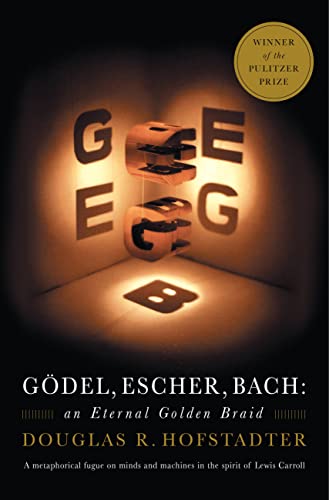
This intricate book explores the nature of intelligence, consciousness, and self-reference through mathematics, art, and music, demanding a similar level of intellectual engagement as Monod. It delves into the fundamental mechanisms of complex systems, providing a multi-disciplinary perspective on emergent properties and the limits of formal systems.

Not sure what they've already read?
Let them pick their next favorite with an Amazon Gift Card.
As an Amazon Associate, we earn from qualifying purchases.

A direct and passionate defense of evolution by natural selection, this book directly addresses the "chance and necessity" argument from a biological perspective, much like Monod. Dawkins meticulously dismantles arguments for intelligent design, offering clear, compelling explanations for the seemingly complex order of life through purely mechanistic processes.

Hawking's seminal work explores the fundamental laws governing the universe, from the Big Bang to black holes, with a similar quest for ultimate understanding as Monod's. It tackles profound questions about existence, time, and the cosmos, inviting readers to grapple with complex scientific ideas and their philosophical implications.

Written by one of the co-discoverers of DNA, this book directly addresses the origin of life, a central theme underpinning Monod's work on molecular biology and chance. Crick explores the scientific hypotheses for life's genesis with rigorous analysis, offering a fascinating glimpse into the foundational questions of biology.

Deutsch presents a unified theory of reality based on four fundamental strands: quantum physics, epistemology, computation, and evolution, echoing Monod's ambition to connect scientific understanding with a broader worldview. It offers a deeply analytical and challenging perspective on how these theories combine to explain the universe.
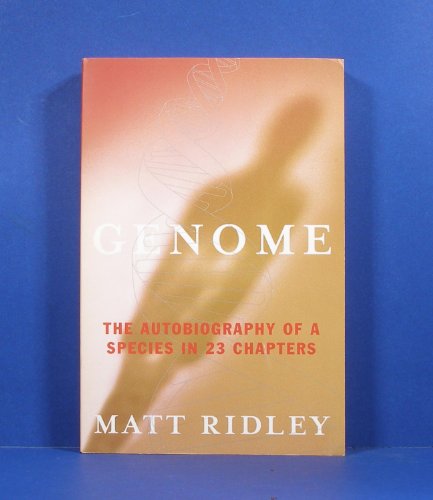
by Matt Ridley
Ridley explores the human genome chapter by chapter, revealing the scientific and philosophical implications of our genetic code, much like Monod delves into molecular biology. It provides a fascinating, accessible yet rigorous examination of how our genes shape us and our history, linking biology to broader human questions.

by Paul Davies
Davies explores the concept of information as a fundamental aspect of reality, particularly in the context of the origin of life and consciousness, directly engaging with themes of chance and necessity. He delves into how information theory can illuminate biological processes and the very nature of existence, providing a modern scientific and philosophical inquiry.

Love to read on the go?
Explore Kindle e-readers and take your books with you.
As an Amazon Associate, we earn from qualifying purchases.
As an Amazon Associate, we earn from qualifying purchases.