

Based on your book
City of Glass
by Auster, Paul
Daniel Quinn is a mystery writer who finds himself pulled into a real-life detective case after a series of late-night phone calls intended for someone else. He agrees to trail a man recently released from prison, but the assignment quickly dissolves into a repetitive, obsessive loop that strips away his sense of self. This is not a traditional whodunit; it is a cerebral interrogation of the detective genre itself. Auster writes with a cool, detached precision that makes the familiar streets of New York feel like a shifting, impossible maze. The pacing is deliberate, favoring internal unraveling over external action. If you enjoy fiction that treats the act of reading like an intellectual puzzle and you are drawn to stories where the narrator loses their grip on reality, this book will keep you up late questioning the stability of your own identity.
10 Books similar to 'City of Glass'
When you finish City of Glass, you might find yourself craving more stories that treat reality as a fragile, constructible thing. Our picks lean into the same postmodern unease, focusing on characters who are untethered from their own lives. Whether through the surreal urban labyrinths found in Calvino or the fractured, unreliable perspectives of Nabokov and Pynchon, these books share a fascination with the breakdown of language and logic. We selected these titles because they treat the mystery format not as a way to find answers, but as a path toward deeper, more beautiful existential questions.
As an Amazon Associate, we earn from qualifying purchases.

Like Auster's work, this novel deconstructs the detective genre through a postmodern lens, featuring a protagonist who descends into a labyrinth of paranoia and cryptic clues. It shares that distinct sense of existential unease and the feeling that the world is a puzzle waiting to be solved, or perhaps, already broken.

This book serves as a perfect companion to Auster's obsession with urban spaces and the nature of reality. It is a lyrical, meditative exploration of cities that exist more in the mind than on a map, mirroring the way Auster treats New York as a character itself.

This is a quintessential metafictional experience that engages the reader directly, much like Auster does in his New York Trilogy. It constantly shifts gears and questions the nature of storytelling, making the reader an active participant in the unraveling of the narrative.

Atwood weaves a complex, nested narrative that challenges the reader to discern truth from fiction, echoing Auster's fascination with the layers of identity. The book's noir-inflected mystery elements and deep psychological introspection will appeal to fans of Quinn's descent into madness.

Not sure what they've already read?
Let them pick their next favorite with an Amazon Gift Card.
As an Amazon Associate, we earn from qualifying purchases.

Auster was deeply influenced by Borges, and this collection of short stories is essential for anyone who enjoys the philosophical puzzles and surreal logic of City of Glass. These stories explore mazes, mirrors, and the infinite nature of language with unparalleled precision.

This is the ultimate unreliable narrative, structured as a poem with a deranged commentary that completely changes the context of the story. Its obsession with authorship, interpretation, and the breakdown of reality is a direct ancestor to the themes explored in Auster's work.
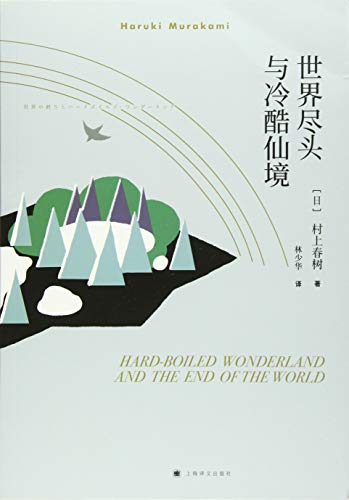
Murakami blends hard-boiled detective tropes with surreal, dreamlike fantasy in a way that feels like a spiritual cousin to Auster's work. The dual-narrative structure and the protagonist's struggle to maintain a sense of self in a crumbling world will resonate deeply.

This novel is a bizarre, darkly comic masterpiece about a man trapped in a hellish landscape where logic has ceased to function. Its obsession with bicycles, atoms, and the absurdity of existence mirrors the specific brand of intellectual madness found in City of Glass.

Like Auster, Murakami excels at creating characters who are adrift in a world that is simultaneously realistic and deeply strange. This book explores the intersection of fate, identity, and the power of stories, capturing a similar sense of intellectual wonder and unease.

by Tom McCarthy
This novel features a protagonist obsessed with recreating past events to achieve a sense of 'realness,' a theme that aligns perfectly with the existential void at the heart of City of Glass. It is a clinical, intense exploration of repetition, memory, and the desire to control one's own narrative.

Prefer to listen?
Try Audible and hear the story instead of reading it.
As an Amazon Associate, we earn from qualifying purchases.
As an Amazon Associate, we earn from qualifying purchases.