

Based on your book
Cultish: The Language of Fanaticism
by Amanda Montell
Amanda Montell's "Cultish" unpacks the fascinating, often unsettling ways language shapes our reality, especially within high-demand groups. This isn't a sensational exposé of cults, but a sharp, analytical look at the linguistic tactics – from specific jargon to shared narratives – that foster intense loyalty and compliance. Montell brilliantly connects the dots between notorious historical cults and everyday phenomena like fitness crazes or even corporate culture, showing how the subtle manipulation of words can exert immense psychological power. Reading it feels like gaining a new pair of glasses; you start noticing these patterns everywhere. It's a thought-provoking, sometimes disturbing, journey into the mechanics of influence. This is for readers who love to dissect social dynamics, understand the psychology behind groupthink, and explore the subtle power of words in shaping belief.
10 Books similar to 'Cultish: The Language of Fanaticism'
If Amanda Montell's "Cultish" resonated with your curiosity about how groups exert influence, you'll find our curated list equally compelling. We’ve gathered books that delve into the psychological mechanisms of persuasion and fanaticism, exploring the power dynamics within high-demand groups and the profound impact of insular belief systems. From the classic analyses of mass movements to deeply personal accounts and investigative journalism, these selections illuminate the subtle and overt ways language and social structures can shape our minds, making them perfect companions for understanding the complex world of groupthink and unwavering conviction.
As an Amazon Associate, we earn from qualifying purchases.
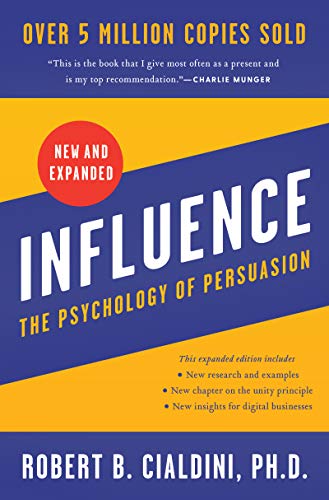
This foundational book delves into the six universal principles of persuasion, offering a scientific understanding of the psychological tactics often employed by cults and high-demand groups to gain compliance. Readers of "Cultish" will appreciate the detailed, analytical breakdown of how language and social dynamics are leveraged for influence and control.

by Jon Krakauer
Krakauer's investigative journalism explores the dark side of religious fanaticism within a fundamentalist sect, detailing the psychological and social mechanisms that lead to extreme beliefs and violence. Fans of Montell's deep dives into real-world examples of 'cultish' behavior will find this equally compelling and disturbing.

This powerful memoir offers a first-hand account of growing up in an isolated, fundamentalist family, illustrating the profound impact of insular belief systems and the struggle for self-definition. Readers who appreciated the personal stories and psychological insights in "Cultish" will connect with Westover's journey of overcoming extreme group influence.

Orwell's dystopian masterpiece vividly portrays a totalitarian society where language (Newspeak) is manipulated to control thought and maintain power, a core theme explored in "Cultish." Its examination of surveillance, propaganda, and the psychological impact of absolute control offers a chilling fictional parallel to Montell's non-fiction analysis.

Love to read on the go?
Explore Kindle e-readers and take your books with you.
As an Amazon Associate, we earn from qualifying purchases.

This meticulously researched book provides an in-depth, journalistic exposé of Scientology, detailing its origins, practices, and the psychological hold it exerts over its members. Like "Cultish," it offers a critical and analytical look at a high-demand group, appealing to readers interested in the mechanics of fanaticism and belief systems.

by Eric Hoffer
A classic work of social psychology, Hoffer's book dissects the motivations and characteristics of fanatical mass movements, offering timeless insights into why people join and dedicate themselves to collective causes. Its analytical and philosophical approach to fanaticism provides a robust theoretical framework that complements Montell's contemporary observations.

by Carol Tavris and Elliot Aronson
This book explores cognitive dissonance and the psychological mechanisms we use to justify our beliefs and actions, even when they are irrational or harmful. It provides a scientific explanation for why individuals cling to 'cultish' ideologies, making it an excellent companion for understanding the internal logic of fanaticism.

Haidt examines the psychological and evolutionary roots of human morality, explaining why people form groups around shared moral matrices and how these divisions lead to fervent, often unshakeable, beliefs. Readers interested in the underlying psychology of group cohesion and fanaticism, as explored in "Cultish," will find this book deeply insightful.

Written by a former cult member and deprogrammer, this book offers a practical and compassionate guide to understanding cult influence and helping individuals recover. It provides a direct, personal, and expert perspective on the 'fanaticism' aspect of "Cultish," focusing on identification, intervention, and healing from high-demand groups.

by Donna Tartt
This dark academia novel masterfully portrays the intense, insular dynamics of a small, intellectually elite group whose shared ideology leads to moral decay and tragedy. Fans of "Cultish" will appreciate the psychological depth, exploration of groupthink, and the chilling atmosphere that mirrors the seductive yet destructive nature of fanaticism.

Not sure what they've already read?
Let them pick their next favorite with an Amazon Gift Card.
As an Amazon Associate, we earn from qualifying purchases.
As an Amazon Associate, we earn from qualifying purchases.