
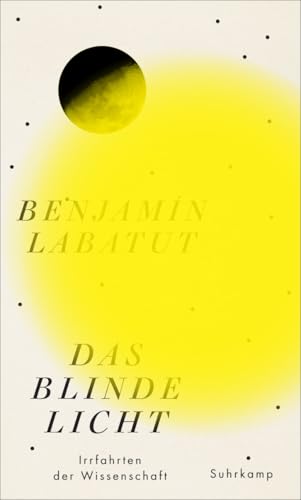
Based on your book
Das blinde Licht
by Benjamín Labatut
Das blinde Licht isn't a novel in the conventional sense; it's a collection of unsettling, fictionalized accounts of real scientists whose brilliant minds pushed the boundaries of human knowledge, often with catastrophic or deeply disturbing results. You'll find yourself immersed in stories where the line between genius and madness blurs, where scientific progress feels less like enlightenment and more like a descent into the unknown. The book has a distinct, ominous atmosphere, a quiet hum of impending dread that pervades each narrative. It's intensely thought-provoking, making you question the very nature of discovery and the moral responsibility that comes with it. This is for readers who appreciate a book that doesn't offer easy answers, who are drawn to philosophical questions about human hubris and unintended consequences, and who enjoy a reading experience that lingers, unsettlingly, long after the last page.
5 Books similar to 'Das blinde Licht'
If Benjamín Labatut's exploration of the complex, often dangerous intersection of genius and scientific progress resonated with you, these next reads offer similar intellectual journeys. Books like Robert Kanigel's The Man Who Knew Infinity and Douglas Hofstadter's Gödel, Escher, Bach delve deeply into the minds of brilliant individuals, grappling with the fine line between insight and obsession, and how their ideas reshape our world. You'll find yourself wrestling with questions of moral ambiguity and the profound, sometimes unsettling, impact of human intellect on history, much like the challenging narratives in Das blinde Licht.
As an Amazon Associate, we earn from qualifying purchases.

This biography of mathematician Srinivasa Ramanujan explores the intersection of genius and madness, similar to Labatut's exploration of the lives of great scientific minds.
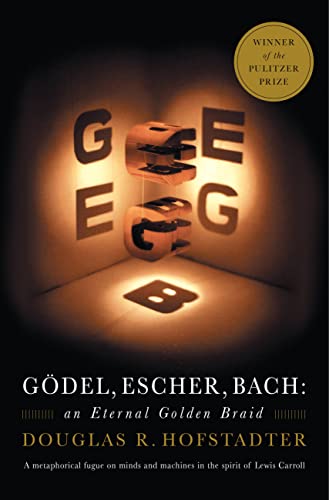
Hofstadter's book delves into the connections between the works of Gödel, Escher, and Bach, blending science, art, and philosophy in a style reminiscent of Labatut's narrative.

by Andrea Wulf
This book captures the life of a great thinker and his impact on the understanding of nature, paralleling Labatut's focus on the profound influence of scientific figures.

Lightman's fictional exploration of Einstein's thought experiments offers a narrative style that mixes science and imagination, similar to Labatut's work.

Not sure what they've already read?
Let them pick their next favorite with an Amazon Gift Card.
As an Amazon Associate, we earn from qualifying purchases.

Skloot's book combines scientific inquiry with human stories, echoing Labatut's blend of factual and narrative storytelling about scientific advancements and their impacts.

Prefer to listen?
Try Audible and hear the story instead of reading it.
As an Amazon Associate, we earn from qualifying purchases.
As an Amazon Associate, we earn from qualifying purchases.