

Based on your book
Death's End
by Liu Cixin
Death's End is an ambitious, often crushing conclusion to the Three-Body Problem trilogy that shifts the focus from planetary survival to the cold, mathematical reality of the entire universe. Liu Cixin discards human-scale drama in favor of cosmic sociology, forcing you to watch civilizations rise, struggle, and inevitably succumb to the laws of physics over millions of years. The pacing is relentless, moving from intimate character decisions to the heat death of space with dizzying speed. It is a lonely, intellectual experience that leaves you feeling profoundly small. If you enjoy hard science fiction that prioritizes massive, existential concepts over character-driven narratives, this book will haunt you for weeks. It is best suited for readers who want their worldview challenged and are comfortable with a story that views human history as a minor footnote in a vast, indifferent cosmos.
10 Books similar to 'Death's End'
If the sheer scale and intellectual weight of Death's End left you craving more, these selections were curated to satisfy that specific itch for cosmic perspective. We chose these books because they share that same cold, analytical curiosity about humanity's place in the universe. Whether it is the focus on deep time, the terrifying implications of alien contact, or the struggle to preserve knowledge against entropy, these titles mirror the existential dread and philosophical rigor that define Liu Cixin's work. They offer similarly grand, thought-provoking explorations of our species' ultimate fate.
As an Amazon Associate, we earn from qualifying purchases.

by Isaac Asimov
Like Death's End, this classic explores the rise and fall of civilizations across vast timescales and galactic distances. It shares the same analytical, intellectual approach to history, sociology, and the survival of humanity against inevitable entropy.

by Peter Watts
This novel offers a similarly cold, hard-science look at the nature of consciousness and the terrifying possibilities of first contact. It matches the bleak, philosophical tone of Liu Cixin's work while challenging the reader's understanding of intelligence.

This epic sci-fi tale spans thousands of years, tracking the evolution of a non-human civilization and its eventual collision with the remnants of humanity. Fans of the grand, multi-generational scope of Death's End will appreciate the sheer scale and biological ingenuity presented here.
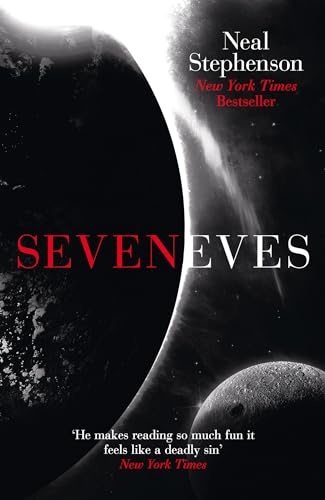
When the moon explodes, humanity must scramble to survive in space, leading to a multi-millennial saga of adaptation and societal restructuring. It mirrors the intense technical detail and the 'big history' perspective that defines the Three-Body Problem trilogy.

Love to read on the go?
Explore Kindle e-readers and take your books with you.
As an Amazon Associate, we earn from qualifying purchases.
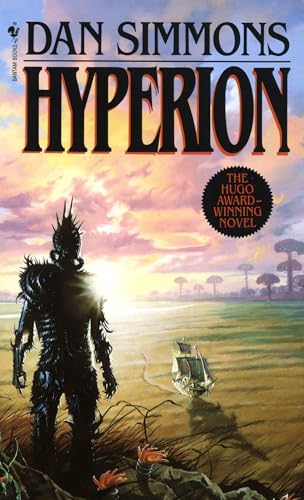
by Dan Simmons
This masterpiece weaves together multiple perspectives to tell a story of cosmic horror, time travel, and the ultimate fate of the universe. It shares the awe-inspiring, almost religious sense of scale and the profound existential dread found in Death's End.

While more focused on sociology than physics, this book provides a deep, intellectual examination of alien culture and the human condition. It captures the same sense of profound loneliness and the difficulty of communication across species boundaries that Liu Cixin explores.

This is a quintessential hard science fiction novel that details the rapid development of a civilization on the surface of a neutron star. Readers who enjoyed the technical rigor and the 'what if' scenarios of Liu Cixin will find this fascinating.

Set on a world where scholars live in monastic seclusion to protect knowledge, this book is a dense, philosophical journey into the nature of reality and mathematics. It matches the high-concept, intellectual weightiness that makes Death's End so memorable.
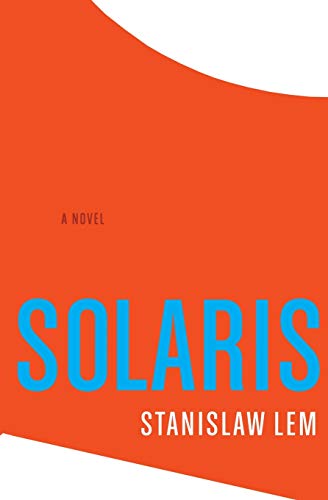
A haunting exploration of humanity's inability to truly communicate with a completely alien intelligence. It shares the psychological depth and the sense of cosmic insignificance that permeates the Three-Body Problem series.

This novel deals with a spaceship that cannot stop accelerating, leading the crew to witness the end of the universe itself. It captures the same sense of cosmic inevitability and the grand, terrifying scale of time that serves as the climax of Death's End.

Not sure what they've already read?
Let them pick their next favorite with an Amazon Gift Card.
As an Amazon Associate, we earn from qualifying purchases.
As an Amazon Associate, we earn from qualifying purchases.