

Based on your book
Determined
by Robert M. Sapolsky
Robert M. Sapolsky takes on one of humanity's most enduring questions: do we truly have free will? In Determined, he meticulously builds a case that our choices, actions, and even our sense of self are the culmination of biological, environmental, and historical forces beyond our conscious control. This isn't a quick read; it's an expansive, intellectually rigorous journey that pulls from neuroscience, genetics, psychology, and philosophy to dissect the very idea of agency. Sapolsky's voice is direct and analytical, guiding you through complex science with clarity, often challenging your most fundamental assumptions about morality, responsibility, and what it means to be human. It’s a book for readers who relish deep thought, who aren't afraid to confront uncomfortable truths, and who find immense satisfaction in understanding the intricate mechanisms that shape our existence. Prepare to rethink everything you thought you knew about choice.
10 Books similar to 'Determined'
If you found yourself grappling with Sapolsky's compelling arguments in Determined, you're likely drawn to books that rigorously explore the intricate forces shaping human behavior and consciousness. Our curated list delves further into the scientific and philosophical foundations of determinism, challenging traditional notions of free will and individual agency. Whether you're fascinated by the biological underpinnings of our actions, the subtle influences of our environment, or the very nature of human identity, these selections offer expansive, thought-provoking perspectives that resonate with Sapolsky's intellectual depth and analytical rigor. They invite you to continue questioning what truly drives us.
As an Amazon Associate, we earn from qualifying purchases.

This is a direct and natural recommendation as it's another magnum opus from Sapolsky. It delves deeply into the biological and environmental factors influencing human behavior, offering a comprehensive scientific foundation for understanding why we do what we do, echoing the determinist perspective of "Determined."

Like "Determined," this book offers a sweeping, interdisciplinary perspective on humanity, challenging deeply held assumptions about our past, present, and future by integrating biology, history, and philosophy, prompting readers to reconsider the nature of human existence.

This book delves into the two systems that drive our thinking, revealing how much of our decision-making is governed by unconscious biases and heuristics rather than conscious free will, providing a psychological complement to Sapolsky's biological arguments.

Eagleman explores the vast unconscious processes that dictate much of our behavior and decision-making, directly challenging the notion of conscious control and free will, making it a compelling read for those who appreciate Sapolsky's scientific dismantling of traditional beliefs.

Not sure what they've already read?
Let them pick their next favorite with an Amazon Gift Card.
As an Amazon Associate, we earn from qualifying purchases.

by Bruce Hood
This book scientifically dissects the concept of the 'self,' arguing that our sense of individual identity is largely a construct of our brains and social interactions, aligning with "Determined"'s theme of how much of what we perceive as 'us' is predetermined or influenced.

by Sam Harris
A concise and potent philosophical argument directly challenging the existence of free will, much like Sapolsky's "Determined." Harris presents a compelling case using neuroscience and logic, making it a direct and accessible companion for readers interested in this specific debate.
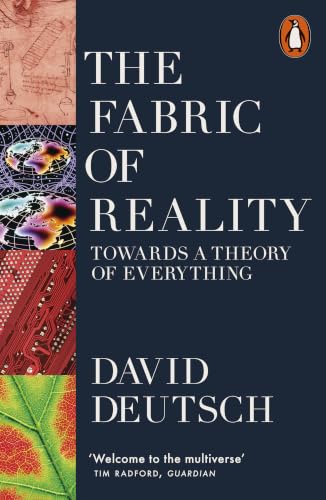
While broader in scope, Deutsch's book offers a deep, analytical dive into the fundamental theories that shape our understanding of the universe, providing a scientific and philosophical framework that supports a deterministic worldview, appealing to readers who enjoy Sapolsky's rigorous intellectual inquiry.

Dehaene explores the neural basis of consciousness, offering a scientific, mechanistic view of how the brain gives rise to our thoughts and experiences. This aligns with Sapolsky's approach of dissecting complex human phenomena through a biological lens, challenging intuitive notions of the mind.

Another seminal work by Sapolsky, this book masterfully explains the biological mechanisms of stress and its impact on the body, demonstrating how our physiology profoundly shapes our experiences and behaviors, reinforcing the deterministic themes explored in "Determined."

Pinker rigorously argues against the idea that humans are born as "blank slates," instead asserting the profound influence of genetics and evolution on human behavior and cognition. This scientific perspective on human nature complements Sapolsky's determinist arguments by highlighting biological predispositions.

Love to read on the go?
Explore Kindle e-readers and take your books with you.
As an Amazon Associate, we earn from qualifying purchases.
As an Amazon Associate, we earn from qualifying purchases.