

Based on your book
Everything That Rises
by Weschler, Lawrence
Lawrence Weschler has a rare talent for spotting the invisible threads that stitch our culture together. Everything That Rises is a collection of essays that function like a series of intellectual scavenger hunts, where the author pairs seemingly unrelated phenomena—art, history, politics, and personal observation—to reveal surprising patterns. The experience of reading this book feels like walking through a gallery with a brilliant, slightly obsessive guide who is constantly pointing out details you would have otherwise missed. It is measured, deeply analytical, and demands your full attention, rewarding you with moments of genuine epiphany. This is not a book to rush through; it is for the reader who enjoys untangling complex ideas and finds joy in the quiet, precise work of observation. If you are the type of person who pauses to wonder why history rhymes or how art mirrors the political landscape, you will find this essential reading.
10 Books similar to 'Everything That Rises'
The books we have selected for this list share a commitment to associative thinking and the pursuit of hidden connections. Whether it is through the sociological rigor of Mitchell Duneier or the poetic, philosophical musings of Italo Calvino, these authors treat the world as a vast, interconnected puzzle. We chose these titles because they mirror Weschler's ability to synthesize disparate facts into a coherent, thought-provoking narrative. If the way Weschler bridges the gap between the historical and the personal resonated with you, these works will offer a similarly satisfying exploration of how we make sense of our surroundings.
As an Amazon Associate, we earn from qualifying purchases.

by W.G. Sebald
Much like Weschler's work, this book is a wandering, intellectual meditation that connects disparate historical and personal threads through a unique observational lens. It shares a similar fascination with how memory, art, and history collide in unexpected, often haunting ways.

by Oliver Sacks
Sacks shares Weschler's deep curiosity about the human condition and the strange, often beautiful ways our minds perceive reality. Both authors excel at taking specific, curious case studies and expanding them into profound philosophical inquiries.

Solnit's essays mirror Weschler's penchant for associative thinking, linking art, geography, and personal experience into a cohesive, thought-provoking tapestry. Readers who enjoy the 'convergences' in Weschler's work will appreciate how Solnit maps the connections between the known and the unknown.

by Susan Orlean
Orlean demonstrates a similar ability to weave together history, personal narrative, and investigative journalism to find deeper meaning in seemingly mundane subjects. Like Weschler, she treats the world as a treasure trove of interconnected stories waiting to be uncovered.

Not sure what they've already read?
Let them pick their next favorite with an Amazon Gift Card.
As an Amazon Associate, we earn from qualifying purchases.

This immersive work of sociology shares Weschler's focus on the 'hidden' patterns of daily life and the unexpected convergences found in urban spaces. It offers a similarly rigorous yet deeply humanistic look at how people and their environments interact.

by John Berger
This seminal text is essential for any reader interested in the visual analysis and cultural critique that forms the backbone of Weschler's 'convergences.' It fundamentally changes how one looks at art and history, mirroring the intellectual rigor found in Weschler's writing.
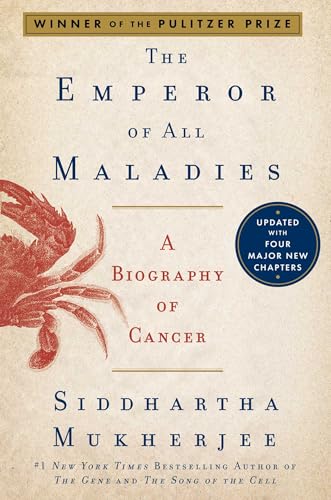
Mukherjee’s 'biography' of cancer displays a similar structural ambition to Weschler’s work, blending historical research, scientific inquiry, and personal narrative to create a comprehensive view of a complex subject. It is an intellectual journey that rewards the patient, curious reader.

While fictional, this book functions as a series of philosophical prose poems that explore the nature of memory and perception, much like Weschler's explorations of visual coincidence. It is a perfect match for readers who enjoy the dreamlike, associative logic of *Everything That Rises*.

Holmes captures the same spirit of intellectual discovery and the 'convergences' of science and art that Weschler champions. It is a beautifully written historical account that highlights how curiosity and observation can lead to profound shifts in our understanding of the world.

by Erik Larson
Larson excels at the kind of historical juxtaposition Weschler loves, setting the grandeur of the 1893 World's Fair against the dark reality of a serial killer. It offers a compelling narrative structure that links disparate historical threads into a single, gripping reality.

Prefer to listen?
Try Audible and hear the story instead of reading it.
As an Amazon Associate, we earn from qualifying purchases.
As an Amazon Associate, we earn from qualifying purchases.