

Based on your book
Fabric
by Finlay, Victoria
Victoria Finlay treats the history of cloth not as a dry academic subject, but as a series of tactile, global adventures. By tracing the origins of materials like silk, wool, and cotton, she reveals how the fibers we wear have literally woven human history together, from ancient trade routes to modern industrial labor. The experience of reading this is akin to sitting down with an exceptionally curious traveler who has spent years chasing down weavers and historians in remote corners of the world. Her prose is patient, analytical, and deeply personal, grounding big-picture economic shifts in the reality of human hands. If you are the type of person who pauses to feel the weave of a shirt or wonders about the origin of a thread, this book will fundamentally change your relationship with your own wardrobe.
10 Books similar to 'Fabric'
Since you enjoyed the way Finlay turns mundane objects into gateways for historical discovery, you will likely appreciate these other titles that treat the material world with similar reverence. We have selected books that balance the biography of a substance with the broader human stories of trade, labor, and cultural evolution. Whether it is the history of salt, paper, or specific pigments, these authors share Finlay's talent for finding the extraordinary hidden within the everyday. These recommendations extend your journey into how the physical things we touch shape the civilizations we build.
As an Amazon Associate, we earn from qualifying purchases.

Written by the same author, this book shares the exact same investigative, travel-heavy narrative style as 'Fabric', exploring the origins and cultural significance of colors. It is the perfect next step for readers who loved Finlay's deep dive into the material history of our world.

Like 'Fabric', this book takes a single, ubiquitous substance and traces its profound impact on human civilization, trade, and culture. It offers a similarly meticulous and engaging look at how a simple material shaped the course of history.
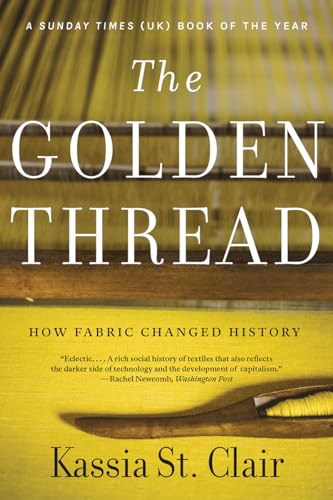
This book is the closest thematic match to 'Fabric', focusing specifically on the history of textiles and their role in human development. Fans of Finlay's work will appreciate the blend of historical research and storytelling that highlights how cloth has defined our lives.

This classic of narrative non-fiction mirrors the 'biography of an object' structure found in 'Fabric'. It demonstrates how a single, seemingly mundane subject can be used as a lens to view centuries of global history, politics, and economics.

Not sure what they've already read?
Let them pick their next favorite with an Amazon Gift Card.
As an Amazon Associate, we earn from qualifying purchases.

If 'Fabric' made you look at your clothes differently, this book will make you look at the entire world around you with new eyes. It combines scientific curiosity with personal narrative, making the history of materials feel intimate and alive.

by Sven Beckert
For readers who enjoyed the economic and labor history aspects of 'Fabric', this book provides a comprehensive and compelling look at the commodity that built the modern world. It is more academic than Finlay's work but shares the same fascination with the power of textiles.

This fascinating, shorter study explores the cultural and symbolic history of a specific pattern, much like Finlay explores the history of materials. It offers a similar 'aha!' moment for readers who enjoy uncovering the hidden meanings behind everyday items.
by Aarti Kawlra
This book provides a deep, scholarly, yet accessible look at the history of silk, connecting the material to global trade routes and cultural identity. It mirrors the 'Fabric' approach of tracing a material from its raw source to its final, luxurious form.

Sharing the same aesthetic and curiosity-driven approach as Finlay's work, this book breaks down history through the lens of specific pigments. It is highly readable, beautifully designed, and perfect for those who loved the anecdotal, travel-inspired structure of 'Fabric'.

Kurlansky is a master of the 'biography of a material' genre, and this exploration of paper is just as engaging as his other works. It matches the pacing and curiosity of 'Fabric', showing how a simple invention fundamentally altered human communication and society.

Love to read on the go?
Explore Kindle e-readers and take your books with you.
As an Amazon Associate, we earn from qualifying purchases.
As an Amazon Associate, we earn from qualifying purchases.