

Based on your book
Finite and Infinite Games
by Carse, James
Carse presents a deceptively simple binary: finite games are played for the purpose of winning, while infinite games are played for the purpose of continuing the play. This is not a typical self-help manual, but rather a dense, meditative philosophical inquiry that asks you to re-examine your career, your relationships, and your very identity. The writing is aphoristic and sparse, forcing you to slow down and sit with the implications of your own choices. You will feel a shift in perspective as you move through its pages, moving from a mindset of competition and closure toward one of openness and possibility. This book is for the reader who feels trapped by the rigid milestones of modern life and is looking for a framework to reclaim their own agency. It is intellectual, challenging, and deeply rewarding for those who value existential clarity.
10 Books similar to 'Finite and Infinite Games'
If this exploration of internal freedom resonated with you, these selections were chosen to deepen your understanding of how we construct our own reality. We curated these titles because they mirror Carse's focus on the tension between societal expectations and individual meaning. Whether you are looking for the psychological grounding found in Viktor Frankl or the ancient, fluid wisdom of the Tao Te Ching, these books provide practical lenses for navigating life as an ongoing process. They help bridge the gap between abstract existential theory and the tangible, lived experience of daily existence.
As an Amazon Associate, we earn from qualifying purchases.

by Erich Fromm
Like Carse, Fromm treats a fundamental human experience—love—not as a static object to be acquired, but as a dynamic, infinite process that requires active practice and discipline. It challenges the reader to view their own life and relationships as an ongoing creative act rather than a finite goal.

Frankl explores the ultimate infinite game: finding meaning in the face of suffering, which aligns perfectly with Carse's focus on how we define our own existence. It is a profound meditation on the freedom to choose one's attitude, regardless of external constraints.

Campbell provides the mythological framework for the 'infinite' journey, mapping out the recurring patterns of human experience that Carse touches upon. Readers will appreciate the deep dive into how universal structures shape our individual paths through life.
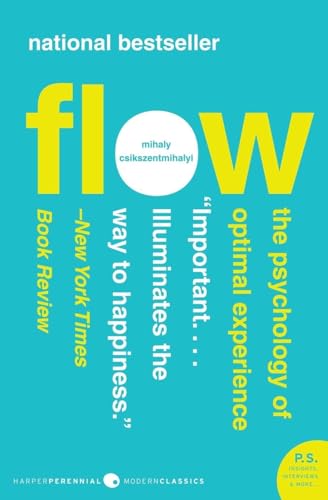
This book provides the psychological counterpart to Carse's philosophical framework by examining the state of 'flow'—the moment when the game becomes the reward itself. It validates the idea that the most meaningful activities are those done for their own sake, not for an external outcome.

Love to read on the go?
Explore Kindle e-readers and take your books with you.
As an Amazon Associate, we earn from qualifying purchases.

Becker offers a rigorous examination of why humans construct 'finite games'—heroic projects and societal structures—to shield themselves from the terror of mortality. It provides a darker, more psychological lens on the same human tendency Carse seeks to transcend.

Pirsig's narrative is a quintessential exploration of the 'infinite game' of quality and understanding, told through a road trip that mirrors the journey of life. It bridges the gap between technical reality and philosophical inquiry, much like Carse's work.

by Lao Tzu
This foundational text is the ancient blueprint for the infinite game, emphasizing non-striving, fluidity, and the acceptance of the way things are. It resonates with Carse's assertion that the infinite player does not play to win, but to continue the play.

Kuhn's work examines how 'finite' paradigms in science are eventually shattered by anomalies, forcing a shift in how we play the game of knowledge. It is a brilliant look at how systems of thought are built, maintained, and ultimately transformed.

by Eric Berne
While Berne focuses on the social 'games' we play that are often unconscious and repetitive, it serves as an excellent contrast to Carse's concept of infinite play. It helps the reader identify the rigid, finite patterns in their own social interactions.

Graeber provides a sharp, modern critique of how our societal structures force us into 'finite' roles that lack intrinsic meaning, echoing Carse's critique of modern institutional life. It is an empowering call to reconsider the value of our time and labor.

Not sure what they've already read?
Let them pick their next favorite with an Amazon Gift Card.
As an Amazon Associate, we earn from qualifying purchases.
As an Amazon Associate, we earn from qualifying purchases.