

Based on your book
Fire In The Mind
by Johnson, George
George Johnson takes you inside the Santa Fe Institute, where a group of unconventional scientists are attempting to map the origins of reality itself. Instead of dry textbook physics, this book reads like a philosophical diary of the scientific process. Johnson captures the messy, human side of high-level research, showing how these thinkers wrestle with the fundamental nature of order and chaos. The atmosphere is quiet, contemplative, and intensely intellectual, moving at a pace that invites you to pause and reconsider your own assumptions about the universe. It is not interested in providing easy answers; rather, it focuses on the tension between our desire for objective truth and the subjective, often spiritual, ways we try to interpret existence. This is a perfect match for readers who enjoy deep-dive science journalism that centers on the existential hunger behind discovery.
10 Books similar to 'Fire In The Mind'
Since you enjoyed the blend of rigorous science and philosophical inquiry in Fire in the Mind, these selections expand on the quest to define order within complex systems. Whether you are interested in the history of information, the mathematics of synchronization, or the way scientific paradigms shift over time, these books mirror Johnson’s fascination with the hidden patterns of our world. We have curated these titles to bridge the gap between hard data and human meaning, ensuring you continue to explore the moral and existential dilemmas that arise when we try to decode the universe.
As an Amazon Associate, we earn from qualifying purchases.

by James Gleick
Like Johnson's work, this book masterfully chronicles the birth of a revolutionary scientific field, making complex mathematical concepts accessible and deeply human. It captures the same sense of intellectual wonder and the thrill of discovery that defines the Santa Fe Institute's approach to complexity.

by Carl Sagan
Sagan explores the essential tension between scientific rationalism and the human tendency toward superstition, mirroring Johnson's examination of how we search for order in the universe. Both books serve as eloquent defenses of the scientific method while remaining deeply respectful of the human quest for meaning.

This is the definitive companion piece to Johnson's exploration, focusing specifically on the Santa Fe Institute and the scientists attempting to synthesize biology, economics, and physics. Readers who appreciated Johnson's narrative style will find this an equally gripping account of paradigm-shifting research.
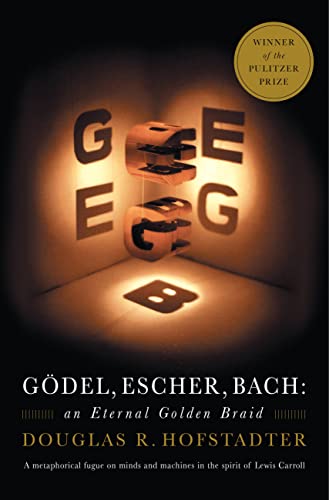
For readers who enjoyed the philosophical depth and interdisciplinary connections in 'Fire in the Mind,' this classic offers a profound exploration of how cognition and consciousness arise from formal systems. It shares Johnson's fascination with the patterns that underpin reality and the recursive nature of human thought.

Not sure what they've already read?
Let them pick their next favorite with an Amazon Gift Card.
As an Amazon Associate, we earn from qualifying purchases.

by James Gleick
This book provides a sweeping intellectual history of how humanity has organized information, resonating with Johnson's themes of human attempts to impose structure on chaos. It is a brilliant, dense, and deeply satisfying read for anyone interested in the evolution of human knowledge.

Written by one of the key figures often discussed in complexity science, this book offers a first-person perspective on the search for universal laws governing life and evolution. It complements Johnson's outsider-journalist perspective with an insider-scientist's visionary outlook.

This seminal text provides the theoretical framework for understanding the 'paradigm shifts' that Johnson describes throughout his work. It is essential reading for anyone interested in why science changes and how human belief systems adapt to new information.
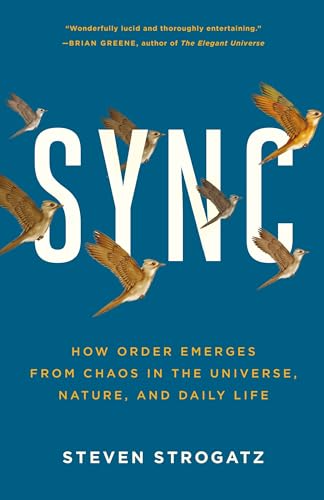
Strogatz explores the hidden mathematical rhythms that govern everything from fireflies to the human heart, echoing Johnson's fascination with the underlying order of the natural world. It is a beautifully written exploration of how complex systems spontaneously synchronize.

While focused on a specific historical event—the London cholera outbreak—this book shares George Johnson's keen eye for how science, data, and human behavior intersect to solve complex problems. It highlights the power of observation and the scientific method in the face of chaos.

Fans of 'Fire in the Mind' will appreciate Hawking's similar ability to distill the most profound questions about the origins of the universe into compelling, readable prose. Both books tackle the 'big questions' of existence through the lens of modern physics and cosmology.

Prefer to listen?
Try Audible and hear the story instead of reading it.
As an Amazon Associate, we earn from qualifying purchases.
As an Amazon Associate, we earn from qualifying purchases.