

Based on your book
Flatland
by Abbott, Edwin A.
Flatland is a Victorian-era satire disguised as a geometry textbook. You follow the life of A. Square, a middle-class inhabitant of a two-dimensional world where social rank is strictly determined by the number of sides you possess. The narrative takes a sharp turn when the protagonist encounters a sphere from the third dimension, forcing him to confront the limitations of his own reality and the absurdity of his rigid society. Reading this feels like solving a puzzle that gradually reveals a dark, existential punchline. It is dry, incredibly precise, and deeply cynical about human nature. If you enjoy thought experiments that make you question your own perception of the world or find humor in the cold logic of social hierarchies, this book will stick with you long after the final page.
10 Books similar to 'Flatland'
If the geometric existentialism of Flatland left you craving more, these selections expand on the idea that our reality is merely one of many possible structures. We chose these titles because they excel at using systems, whether mathematical, linguistic, or societal, to hold a mirror up to the reader. From the playful logic of The Phantom Tollbooth to the heavy philosophical scaffolding of Anathem, these books share that same outsider perspective. They challenge you to look past the surface of your own world and question the arbitrary rules that govern your daily life.
As an Amazon Associate, we earn from qualifying purchases.
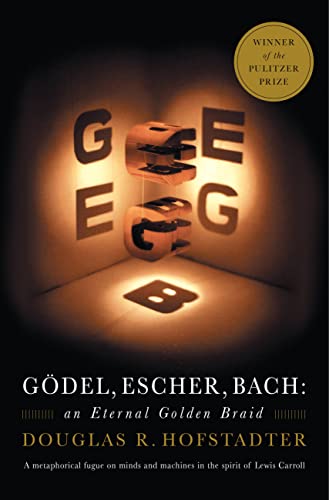
Like Flatland, this masterpiece explores the nature of systems, self-reference, and dimensions through a blend of rigorous logic and playful narrative. It challenges the reader to think about consciousness and structure in ways that feel both deeply mathematical and profoundly artistic.

This charming allegory uses wordplay and mathematical concepts to teach lessons about perspective and the nature of reality, much like Abbott's exploration of dimensions. It is a whimsical journey that, beneath its surface, offers a sophisticated critique of societal stagnation and educational boredom.

Sharing Flatland's penchant for sharp social satire, this dystopian classic examines how rigid societal structures and conditioning limit human potential. It forces the reader to confront the absurdity of their own culture by presenting a world where stability is prioritized over individuality.
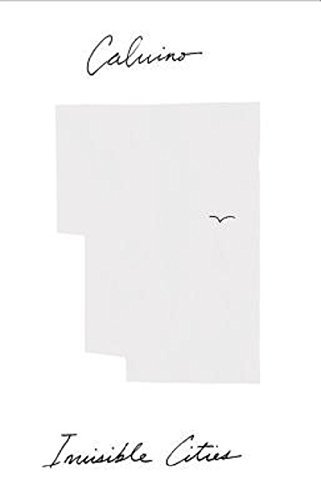
This book is a series of prose poems describing imaginary cities that serve as meditations on memory, desire, and the nature of language. Its structural ingenuity and philosophical depth mirror the geometric abstraction of Flatland, inviting readers to reconsider the spaces they inhabit.

Love to read on the go?
Explore Kindle e-readers and take your books with you.
As an Amazon Associate, we earn from qualifying purchases.

by H.G. Wells
Wells uses a scientific premise to critique class structures and evolutionary theory, echoing Abbott's use of geometry to critique Victorian social hierarchies. It is a foundational work of speculative fiction that questions the trajectory of civilization and the nature of human progress.
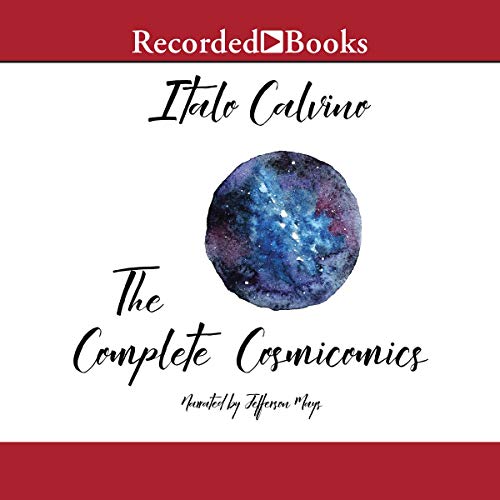
These short stories blend scientific facts with absurd, human-like narratives, creating a surreal experience similar to the sentient shapes of Flatland. It treats the vastness of the universe with a playful, intimate tone that makes complex cosmological concepts feel deeply personal.

While darker and more psychological, this novel shares Flatland's fascination with the breakdown of social norms and the arbitrary nature of reality. It challenges the reader to question the fixed identity of the protagonist, much like the Square's journey beyond his limited worldview.

As a classic of satirical literature, this book uses the 'traveler to a strange land' trope to expose the flaws and follies of the author's contemporary society. It mirrors Flatland's narrative structure perfectly, using an outsider's perspective to hold a mirror up to human nature.

This metaphysical thriller explores the nature of order, chaos, and authority through a surreal, dream-like narrative. Like Flatland, it uses a highly stylized premise to delve into deep philosophical questions about the structure of the universe and the reliability of perception.

This dense, intellectual work builds an entire world around the intersection of philosophy, mathematics, and theology, echoing the rigorous world-building found in Flatland. It demands patience but rewards the reader with a profound exploration of how different intellectual frameworks shape our understanding of reality.

Not sure what they've already read?
Let them pick their next favorite with an Amazon Gift Card.
As an Amazon Associate, we earn from qualifying purchases.
As an Amazon Associate, we earn from qualifying purchases.