

Based on your book
Food of the Gods
by McKenna, Terence
Terence McKenna presents a provocative history of human civilization viewed through the lens of our relationship with psychoactive plants. He argues that our evolutionary trajectory, culture, and religious impulses were fundamentally shaped by the ingestion of substances that altered our perception of reality. The book moves from the prehistoric shift in consciousness to modern societal repression, blending anthropology, botany, and history into a cohesive, if unconventional, critique of our current trajectory. Reading this is like sitting across from a brilliant, fast-talking professor who refuses to accept standard academic boundaries. It is dense, intellectually demanding, and intentionally disruptive. You should pick this up if you enjoy questioning the foundations of modern society, have a fascination with the intersection of biology and spirituality, and prefer ideas that challenge your worldview rather than confirm it.
10 Books similar to 'Food of the Gods'
These selections were curated to build on the foundation of McKenna's radical inquiry. We have grouped these titles to help you explore the specific pillars of his work: the intersection of shamanic wisdom and hard science, the socio-political implications of altered consciousness, and the practical application of mycological study. Whether you want to deepen your understanding of botanical history with Schultes and Hofmann or shift into the philosophical frameworks of Robert Anton Wilson, this list provides a roadmap for those who find the status quo insufficient and are ready to map the unseen architecture of human existence.
As an Amazon Associate, we earn from qualifying purchases.

Like McKenna, Huxley explores the profound impact of psychedelics on human consciousness, blending rigorous intellectual inquiry with a deeply personal, visionary narrative. It serves as a foundational text for anyone interested in the intersection of chemistry, mysticism, and the nature of reality.

by Jeremy Narby
Narby mirrors McKenna's anthropological approach by investigating the connection between shamanic knowledge and molecular biology. This book bridges the gap between indigenous wisdom and modern science in a way that will deeply resonate with fans of McKenna's synthesis of disparate fields.

by Richard Evans Schultes and Albert Hofmann
This classic text provides the botanical and chemical foundation for the shamanic practices McKenna often discussed. It is an essential companion for understanding the historical and biological context of the entheogens that shaped human culture.

Pinchbeck picks up the torch of the psychedelic explorer, documenting his own experiences with tribal shamanism and the modern counter-culture. Readers who appreciate McKenna’s adventurous spirit and willingness to challenge societal norms will find this journey compelling.

Love to read on the go?
Explore Kindle e-readers and take your books with you.
As an Amazon Associate, we earn from qualifying purchases.

While fiction, this novel acts as a philosophical counterpoint to 'Brave New World' and aligns perfectly with McKenna's vision of a society integrated with nature and consciousness-expanding substances. It explores the societal implications of using entheogens for spiritual and communal growth.

This collection of interviews and essays is the direct spiritual successor to 'Food of the Gods,' offering a more granular look at McKenna's theories on the 'archaic' past and the technological future. It is indispensable for those who want a deeper dive into his unique worldview.

Wilson shares McKenna's penchant for questioning reality, authority, and the limitations of human perception. This book provides a practical, often humorous framework for 'reprogramming' one's own mind, which aligns with the transformative goals of psychedelic exploration.
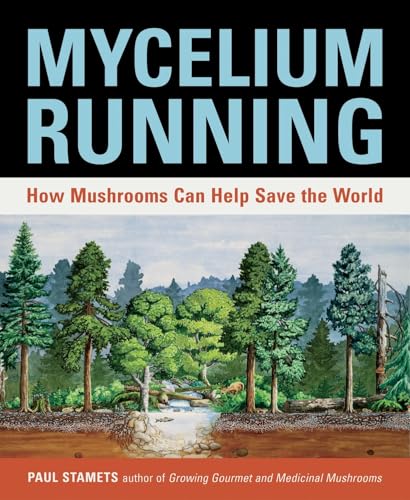
by Paul Stamets
Stamets focuses on the biological and ecological power of fungi, echoing McKenna's fascination with the role of mushrooms in evolutionary history. It provides a grounded, scientific perspective on the 'mycological' themes that often permeated McKenna's lectures.

by Terence McKenna and Dennis McKenna
This early work by the McKenna brothers delves into the mathematical and mystical structures of reality, specifically linking psychedelic experiences to the I Ching. It is a challenging, dense, and highly rewarding read for those who want to understand the roots of Terence's theories.

This anthology explores the controversial yet fertile intersection of Buddhist practice and psychedelic use. It mirrors the 'Food of the Gods' inquiry into how humanity utilizes external catalysts to achieve spiritual insight and enlightenment.

Not sure what they've already read?
Let them pick their next favorite with an Amazon Gift Card.
As an Amazon Associate, we earn from qualifying purchases.
As an Amazon Associate, we earn from qualifying purchases.