

Based on your book
Forbidden
by Rosenblum, Jordan D.
Forbidden asks why humans have spent thousands of years obsessing over what not to put in their mouths. Jordan D. Rosenblum moves past simple dietary history to investigate the logic behind ancient food taboos, particularly within the Jewish tradition. You are not just reading about rules; you are peering into the psychological machinery of identity, purity, and social boundary-setting. The prose is sharp and academic without being inaccessible, feeling less like a lecture and more like a long, restless conversation with a historian who is genuinely fascinated by the human tendency to categorize the world into clean and unclean. It is a dense, cerebral experience that forces you to confront why we still cling to these arbitrary lines today. This is for the reader who enjoys untangling the sociological threads of modern life and wants to understand how ancient anxieties still shape our grocery lists.
10 Books similar to 'Forbidden'
Since Forbidden leaves you hungry for more analysis on the intersection of human behavior and what we consume, these picks expand the conversation. If you appreciated the way Rosenblum uses food as a diagnostic tool for culture, you will find similar satisfaction in the ethical inquiries of Jonathan Safran Foer or the sharp, wit-filled dissections of David Foster Wallace. We chose these titles because they treat the dinner plate as a map of the human psyche, blending history, anthropology, and sociology to explain why we draw the lines we do.
As an Amazon Associate, we earn from qualifying purchases.
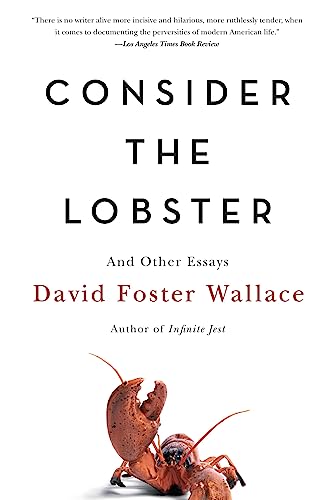
Like Rosenblum, Wallace uses food as a lens to examine complex cultural and ethical questions. This collection of essays is highly intellectual, witty, and deeply analytical, perfect for readers who enjoy digging into the 'why' behind our societal norms.

This book is a seminal work for anyone interested in the sociology and history of what we eat. It shares Rosenblum's talent for making dense, academic topics regarding food production and consumption accessible and fascinating.

by Mary Douglas
For readers who loved the anthropological deep dive into why certain things are classified as 'forbidden' or 'unclean,' this classic text provides the foundational theory behind those social boundaries. It is an essential, if academic, companion to Rosenblum's work.

Kurlansky masterfully tracks the history of a single substance to reveal the evolution of human civilization, mirroring Rosenblum's approach to food history. It is a compelling narrative that connects the mundane to the monumental.

Love to read on the go?
Explore Kindle e-readers and take your books with you.
As an Amazon Associate, we earn from qualifying purchases.

Similar to Rosenblum's exploration of dietary laws, this book focuses on how a specific food item shaped cultures, economies, and religious practices. It is a fascinating look at how our dietary choices have dictated historical outcomes.

Foer combines personal narrative with rigorous research to question the ethics of our food choices, much like Rosenblum questions the origins of food taboos. It is a thought-provoking read that challenges the reader to examine their own cultural conditioning.

This book bridges the gap between religious studies and food ethics, making it a perfect thematic follow-up to Rosenblum's analysis of ancient Jewish dietary laws. It explores the spiritual and communal dimensions of what we consume.

If you enjoyed the analytical side of Rosenblum's writing, this book offers a fascinating, science-backed look at how our brains perceive food. It shifts the focus from history to psychology while maintaining that same 'why do we do this?' curiosity.

This is a cornerstone of cultural anthropology that helps explain the 'forbidden' nature of certain rituals and taboos. Readers who enjoyed the academic rigor and structural analysis in Rosenblum's work will find this deeply rewarding.

by Bee Wilson
Wilson explores how the tools we use to eat have shaped our history, culture, and biology. It shares the same accessible, inquisitive, and historical tone found in Rosenblum's writing, turning everyday objects into subjects of deep fascination.

Not sure what they've already read?
Let them pick their next favorite with an Amazon Gift Card.
As an Amazon Associate, we earn from qualifying purchases.
As an Amazon Associate, we earn from qualifying purchases.