
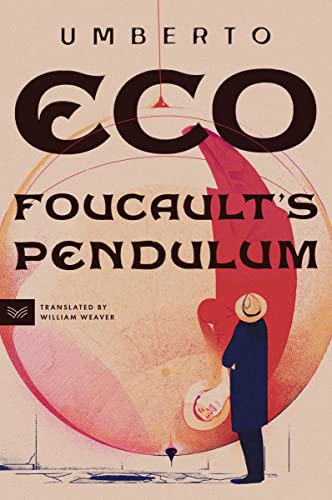
Based on your book
Foucault's Pendulum
by Eco, Umberto
Three editors at a vanity publishing house decide to amuse themselves by creating a fake, all-encompassing conspiracy theory. They weave together every occult myth and historical secret they can find, only to realize that their fabricated narrative has begun to attract real-world believers who are willing to kill for the truth they invented. This is a demanding, sprawling novel that functions as a dark satire of human intellectual arrogance. You will spend much of the book feeling as though you are solving a massive, recursive puzzle that may not actually have a solution. It is a slow, cerebral burn that rewards the patient reader who enjoys feeling slightly paranoid. If you enjoy literary games, deep dives into historical esoterica, and stories that constantly question the validity of the evidence presented, this is your next obsession.
10 Books similar to 'Foucault's Pendulum'
Since Foucault's Pendulum is a masterclass in recursive narratives and the dangers of obsession, these selections were curated to satisfy that specific hunger for dense, intellectual puzzles. You will find that these books share a fascination with the thin boundary between historical reality and the stories we invent to explain our world. Whether through the lens of academic mystery, postmodern paranoia, or the physical weight of rare manuscripts, these authors mirror Eco's ability to turn the act of research into a high-stakes, life-altering pursuit for their protagonists.
As an Amazon Associate, we earn from qualifying purchases.

by Umberto Eco
As the author's most famous work, this novel shares the dense intellectualism, semiotic puzzles, and historical depth found in Foucault's Pendulum. It offers a masterful blend of murder mystery and theological debate that will satisfy any reader looking for Eco's signature narrative voice.

This thriller centers on a book dealer who becomes embroiled in an occult conspiracy involving rare manuscripts and literary obsession. Much like Eco's work, it treats books as physical objects of power and danger, blending bibliophilia with a tense, modern mystery.

Set in post-war Barcelona, this story features a 'Cemetery of Forgotten Books' and a protagonist obsessed with a mysterious author whose life mirrors his own. It captures the same reverence for literature and the labyrinthine nature of historical secrets that define Foucault's Pendulum.
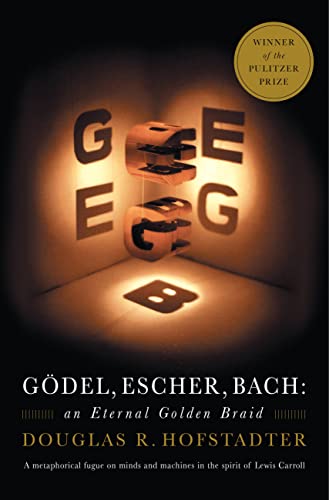
While non-fiction, this book is essential for fans of Eco's playful, recursive, and highly intellectual structure. It explores the intersections of logic, mathematics, and art in a way that mirrors the complex, self-referential puzzle-solving of Foucault's Pendulum.

Prefer to listen?
Try Audible and hear the story instead of reading it.
As an Amazon Associate, we earn from qualifying purchases.

This postmodern classic follows a woman who uncovers a potential centuries-old conspiracy involving the postal service, leading her to question her own reality. It shares Eco's fascination with paranoia, systems of meaning, and the thin line between genuine conspiracy and delusion.

by A.S. Byatt
This literary mystery follows two modern scholars as they uncover a secret, illicit romance between two Victorian poets. It is deeply intellectual and layered, rewarding readers who enjoy piecing together historical narratives and academic intrigue.

by Iain Pears
Set in 17th-century Oxford, this novel presents a murder mystery through four conflicting, unreliable narrators, each with their own intellectual and political agenda. It demands the same level of close reading and skepticism toward the 'truth' as Eco's work.

This novel weaves together two timelines—the French Revolution and the 1970s—as characters race to assemble a legendary chess set that holds dangerous secrets. It is a quintessential 'conspiracy thriller' that fans of Eco's obsession with hidden histories will find highly entertaining.

A sprawling, dense, and linguistically playful historical epic that explores the mapping of the American wilderness alongside themes of science and enlightenment. Its sheer ambition and refusal to adhere to simple narrative structures will appeal to readers who appreciated the density of Eco's prose.

Structured as a lexicon rather than a linear novel, this book invites the reader to assemble the story of a lost civilization through cross-referenced entries. It is a postmodern masterpiece of form and intellectual playfulness that mirrors the structural complexity of Foucault's Pendulum.

Love to read on the go?
Explore Kindle e-readers and take your books with you.
As an Amazon Associate, we earn from qualifying purchases.
As an Amazon Associate, we earn from qualifying purchases.