
Based on your book
Foundation
by Asimov, Isaac
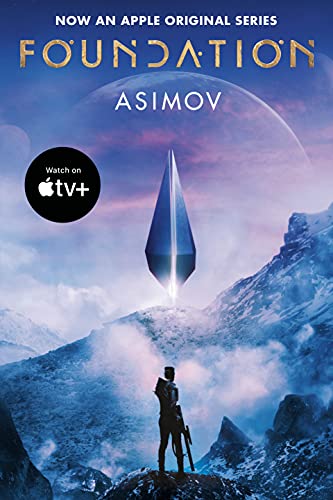
Foundation is less a character-driven novel and more a grand experiment in sociology on a galactic scale. It follows the mathematician Hari Seldon, who uses his science of psychohistory to predict the inevitable collapse of the Galactic Empire. Rather than trying to stop the fall, he establishes a colony of scholars to preserve human knowledge and shorten the ensuing dark ages. The reading experience is cerebral and detached; you are watching history unfold from a distance, observing how politics, trade, and religion shift over centuries. It is not interested in individual heroics but rather in the cold, calculated mechanics of how civilizations rise and decay. If you enjoy puzzle-like narratives where the true protagonist is the progression of time and the weight of human destiny, this is a foundational pillar of the genre.
10 Books similar to 'Foundation'
The books we have selected mirror the scale and intellectual rigor of Asimov's vision. We chose these titles because they treat galactic politics and the trajectory of civilization as central characters, much like the Seldon Plan. Whether you are interested in the granular sociological shifts found in Red Mars, the complex diplomatic maneuvering of A Memory Called Empire, or the philosophical inquiry into fate seen in Childhood's End, these stories expand on the idea that humanity is a system to be studied. They represent the next step for readers who crave big-picture speculative fiction.
As an Amazon Associate, we earn from qualifying purchases.

Like Foundation, Dune is a sweeping epic that explores the rise and fall of empires, the influence of religion on politics, and the long-term consequences of human planning. Both novels feature intricate world-building where destiny, ecology, and societal evolution are central to the narrative.

This novel shares Asimov's intellectual approach to science fiction, focusing on how culture and environment shape human behavior and societal structures. It offers a deeply thoughtful examination of politics and diplomacy on an interstellar scale, much like the Seldon Plan's influence on the galaxy.
by Dan Simmons
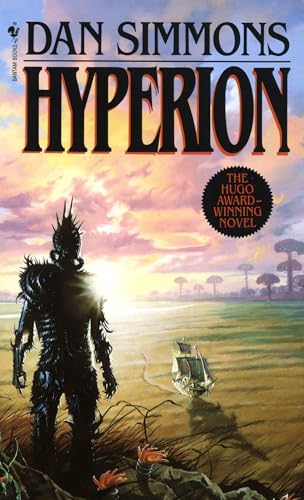
Fans of Foundation will appreciate the grand scale and the focus on the inevitable collapse of civilization as seen through the eyes of multiple travelers. It blends complex scientific concepts with deep philosophical inquiries, mirroring Asimov's style of using sci-fi to explore the trajectory of human history.

This book captures the political complexity and tension of an expanding, decaying empire that fans of the Galactic Empire will find familiar. It focuses on the intricacies of diplomacy, language, and the struggle to maintain identity within a massive, suffocating political machine.

Prefer to listen?
Try Audible and hear the story instead of reading it.
As an Amazon Associate, we earn from qualifying purchases.

by Cixin Liu
Similar to Asimov's work, this novel is heavily rooted in 'hard' science fiction, focusing on large-scale societal and existential threats that span generations. It captures the same sense of awe and dread regarding humanity's place in the universe and the long-term planning required to survive.

For readers who enjoyed the sociological and structural focus of the Foundation series, this book offers a meticulous look at the colonization and political evolution of a new world. It prioritizes the 'big picture' of history and systems engineering over individual character arcs, much like Asimov's approach.

This novel examines the intersection of political theory and human history, paralleling Asimov's interest in how societies organize themselves. It presents a stark contrast between two worlds, inviting the reader to analyze the flaws and virtues of different political systems in a way that echoes the Seldon Plan's motivations.

While more action-oriented than Foundation, this series captures the political instability of a solar system divided by factions, mirroring the tension between the Core and the Periphery in Asimov's work. It deals with the shifting power dynamics of a crumbling system and the individuals caught in the crossfire.

As a contemporary of Asimov, Clarke shares the 'Golden Age' sensibility of grand, sweeping ideas that transcend individual human lives. The book deals with the evolution of humanity and the intervention of superior forces, echoing the themes of determinism and the grand arc of history found in Foundation.

by Ann Leckie
This novel explores the nature of empire, conquest, and the loss of identity, themes that are deeply embedded in the Foundation series. Its unique narrative voice and focus on the mechanics of a massive, sprawling galactic civilization will resonate with readers who enjoyed the scope of Asimov's writing.

Love to read on the go?
Explore Kindle e-readers and take your books with you.
As an Amazon Associate, we earn from qualifying purchases.
As an Amazon Associate, we earn from qualifying purchases.