

Based on your book
Free Will
by Balaguer, Mark
Mark Balaguer approaches the age-old dilemma of free will with the precision of a philosopher and the clarity of a teacher. Instead of getting lost in dense academic jargon, he breaks down the debate into manageable, logical parts, asking whether our choices are truly ours or merely the inevitable result of prior causes. The book feels like an extended, high-level conversation with a mentor who respects your intelligence enough to lay out the arguments without telling you what to believe. It is contemplative and patient, stripping away the emotional baggage we attach to the concept of agency to see what remains under the microscope of reason. If you find yourself staring at the ceiling at 2:00 AM wondering if your life path is scripted or improvised, this book offers a grounded way to organize those existential thoughts.
10 Books similar to 'Free Will'
Once you have finished wrestling with Balaguer, you will likely find yourself craving more perspectives on the intersection of neuroscience and morality. Our selected list leans into the tension between physical determinism and the human experience of choice, featuring thinkers who challenge the very foundation of the self. Whether you are looking for the scientific rigor of Sapolsky or the evolutionary arguments of Dennett, these books expand on the themes of luck, consciousness, and agency. They provide the perfect intellectual architecture to help you build your own stance on whether we are truly free.
As an Amazon Associate, we earn from qualifying purchases.
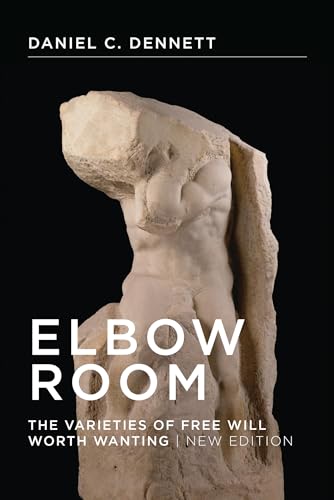
Like Balaguer, Dennett approaches the free will debate with clarity and wit, arguing for a compatibilist perspective that makes sense in a scientific world. It is essential reading for anyone who enjoyed the accessibility and logical rigor of Balaguer's analysis.

Sapolsky provides a comprehensive, scientifically grounded argument against the existence of free will, offering a perfect counterpoint or expansion to Balaguer's philosophical framework. His writing is deeply researched yet accessible, making complex biological determinism understandable for the layperson.

Wegner offers a psychological perspective on why we feel like we are in control of our actions even when we aren't, complementing Balaguer's philosophical inquiry with empirical evidence. It challenges the reader's intuitive sense of agency in a way that aligns perfectly with the themes in 'Free Will'.

Expanding on his earlier work, Dennett explores how free will can be understood as an evolved capacity rather than a metaphysical mystery. Readers who appreciated Balaguer's attempt to bridge the gap between science and philosophy will find this an engaging and rigorous next step.

Prefer to listen?
Try Audible and hear the story instead of reading it.
As an Amazon Associate, we earn from qualifying purchases.

by Sam Harris
This short, punchy book offers a direct, provocative argument that free will is an illusion, perfect for readers who want to see the other side of the debate Balaguer explores. It is highly readable, focused, and designed to challenge your fundamental assumptions about human agency.

by Sean Carroll
Carroll provides a 'poetic naturalism' framework that helps reconcile the deterministic laws of physics with our human experience of choice. It shares the same spirit of inquiry as Balaguer, attempting to place human agency within a vast, scientific worldview.

by Thomas Nagel
Nagel offers a philosophical critique of materialist views of the mind, which provides a fascinating counter-perspective to the physicalist assumptions often found in free will debates. It is a challenging but rewarding read for those who enjoyed the philosophical depth of Balaguer's work.

Mele provides a nuanced, academic look at the 'luck problem' in the free will debate, offering a more technical but highly rewarding analysis than Balaguer's introductory text. It is an excellent choice for readers who want to dive deeper into the specific mechanics of the philosophical arguments.

by John Martin Fischer, Robert Kane, Derk Pereboom, and Manuel Vargas
This book brings together four leading philosophers to debate the topic, providing a comprehensive overview of the current landscape of the free will discussion. It is the perfect follow-up for a reader who wants to see how Balaguer's ideas fit into the broader academic conversation.

Metzinger explores the neuroscience of consciousness, arguing that the 'self' is a mental model, which has profound implications for the concept of free will. Fans of Balaguer will appreciate the blend of hard science and philosophical questioning regarding the nature of human agency.

Love to read on the go?
Explore Kindle e-readers and take your books with you.
As an Amazon Associate, we earn from qualifying purchases.
As an Amazon Associate, we earn from qualifying purchases.