
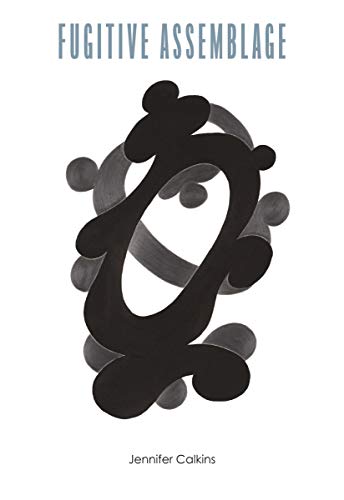
Based on your book
Fugitive Assemblage
by Calkins, Jennifer
Fugitive Assemblage is a dense, cerebral exploration of how we categorize the world and the people within it. Calkins moves away from traditional narrative structures, opting instead for a fragmented, observational style that forces you to reconsider the power dynamics hidden in everyday interactions. It feels less like reading a book and more like participating in a rigorous, slow-motion autopsy of modern culture. The prose is analytical and occasionally sharp, demanding your full attention as it pulls apart the seams of identity and moral ambiguity. This is not a book for a quick bedside read; it is for those who enjoy having their intellectual comfort zones disrupted. If you find yourself gravitating toward cultural theory, environmental philosophy, or writing that challenges the definition of nonfiction, you will likely find this work incredibly rewarding.
10 Books similar to 'Fugitive Assemblage'
The books selected here were chosen to expand on the specific intellectual ecosystem Calkins builds. If the analytical approach of Fugitive Assemblage sparked your curiosity, these titles act as both foundations and departures. We focused on works that bridge the gap between hard science and human experience, specifically highlighting how multispecies assemblages and non-human agency shape our reality. Whether you are looking for the theoretical backbone of these ideas in Jane Bennett or the lyrical, scientific inquiry of Carlo Rovelli, these recommendations prioritize deep, observational thinking over simple answers to complex global questions.
As an Amazon Associate, we earn from qualifying purchases.

Like Calkins, Tsing utilizes an ethnographic, non-linear approach to explore how multispecies assemblages shape our world. Fans of the philosophical and scientific inquiry in 'Fugitive Assemblage' will appreciate this examination of capitalism, ecology, and the interconnectedness of life forms.

Haraway's work is a foundational text for the kind of multispecies storytelling found in Calkins' writing. It challenges traditional boundaries between human and non-human, offering a dense, rewarding, and highly intellectual exploration of living in a damaged world.

by Jane Bennett
This book provides the theoretical backbone for the 'assemblage' concept explored by Calkins, arguing for the agency of non-human things. Readers who enjoyed the conceptual depth and challenging prose of 'Fugitive Assemblage' will find this essential reading.

Rovelli blends rigorous physics with poetic, lyrical prose, much like Calkins blends science with creative non-fiction. It offers a similarly transformative perspective on how we perceive reality, time, and our place within the physical universe.

Not sure what they've already read?
Let them pick their next favorite with an Amazon Gift Card.
As an Amazon Associate, we earn from qualifying purchases.

Kimmerer bridges the gap between scientific knowledge and indigenous wisdom, creating a narrative that feels both deeply personal and globally significant. Fans of Calkins' focus on the environment and the 'assemblage' of life will find this book equally resonant and grounding.

by David Abram
This text explores the relationship between human language, perception, and the more-than-human world, mirroring Calkins' interest in how we define and interact with our surroundings. It is a dense, atmospheric, and highly philosophical inquiry into ecology.

Sheldrake’s exploration of fungi is a masterclass in seeing the world through a non-human lens, echoing the 'assemblage' themes in Calkins' work. It is both scientifically rigorous and narratively inventive, appealing to readers who enjoy challenging their own worldview.

This seminal essay collection challenges the boundaries between human, animal, and machine, providing a radical framework for identity that aligns with Calkins' experimental style. It is a vital text for readers interested in the fluidity of form and the critique of traditional hierarchies.

by Alan Weisman
Weisman uses a speculative, scientific lens to imagine a world where humans are suddenly absent, providing a unique perspective on the 'assemblage' of nature. It shares the same analytical, observational, and slightly haunting tone found in 'Fugitive Assemblage'.

by Andrea Wulf
Wulf chronicles the life of Alexander von Humboldt, who first conceptualized nature as a web of life, a direct precursor to the assemblage theory. It offers a historical deep dive that will satisfy readers who enjoy the intellectual rigor and environmental focus of Calkins.

Prefer to listen?
Try Audible and hear the story instead of reading it.
As an Amazon Associate, we earn from qualifying purchases.
As an Amazon Associate, we earn from qualifying purchases.