

Based on your book
Galois Theory for Beginners
by Jörg Bewersdorff
Jorg Bewersdorff approaches one of the most intimidating subjects in mathematics with a refreshing, stripped-down clarity. Instead of burying you in immediate jargon, the book traces the historical struggle to solve quintic equations, showing you exactly why the standard formulas failed and how Galois developed his revolutionary group theory to explain why. The reading experience is less like a lecture and more like a guided investigation where you are encouraged to follow the logic alongside the author. It is dense and requires your full attention, but it strips away the elitism often found in advanced algebra. This is for the reader who finds traditional textbooks dry and wants to understand the actual mechanics of mathematical discovery. If you enjoy feeling your brain stretch while untangling complex historical puzzles, this is the book to keep on your desk.
10 Books similar to 'Galois Theory for Beginners'
Since you appreciated the way Bewersdorff balances historical narrative with technical rigor, we have curated a list that leans into that same intellectual curiosity. These books move from the dramatic human stories behind famous breakthroughs to the visual intuition required to grasp abstract structures. Whether you want to explore the broader evolution of algebraic thought or dive deeper into the hidden patterns of symmetry, these selections prioritize clarity without sacrificing depth. They are chosen for readers who treat mathematics not just as a set of rules, but as an evolving, deeply human language.
As an Amazon Associate, we earn from qualifying purchases.
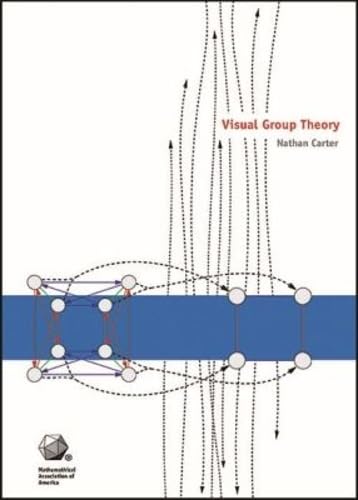
Like Bewersdorff's work, this book excels at making abstract algebraic concepts tangible through clear, intuitive explanations. It uses visual diagrams to demystify complex mathematical structures, making it an ideal follow-up for those who appreciated the accessible approach to Galois theory.
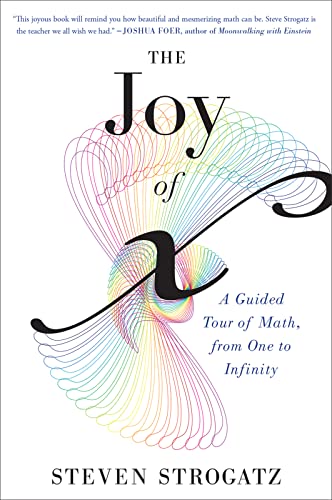
Strogatz shares Bewersdorff's gift for storytelling within mathematics, turning rigorous concepts into engaging narratives. Readers who enjoyed the historical context and logical progression of Galois Theory will find this a similarly delightful and enlightening read.
by Ashay A. Mats and Robert P. Langlands
This book dives into the deep connections between different areas of mathematics, much like Galois theory connects algebra and field theory. It maintains a high level of intellectual rigor while remaining accessible to the curious reader.

For readers who enjoyed the historical evolution of algebraic thought in Bewersdorff's work, this book provides the broader context of how algebra developed over centuries. It balances technical detail with a compelling historical narrative.

Love to read on the go?
Explore Kindle e-readers and take your books with you.
As an Amazon Associate, we earn from qualifying purchases.

by Béla Bajnok
This text serves as a perfect bridge for those who want to transition from the 'beginner' level of Galois theory to more formal mathematical proofs. It mirrors Bewersdorff's structured approach while encouraging the reader to engage deeply with the material.

Gowers provides a concise yet profound overview of the mathematical landscape that complements the specific focus of Galois theory. It captures the same spirit of intellectual curiosity and clarity that makes Bewersdorff's writing so effective.

by Mario Livio
This book is essentially the narrative companion to Galois theory, focusing on the lives of Evariste Galois and Niels Henrik Abel. It provides the dramatic, human story behind the mathematical breakthroughs discussed in Bewersdorff's book.
If the pedagogical style of Bewersdorff was the primary draw, this book offers a similarly supportive and clear guide to abstract algebra. It focuses on clarity and understanding, making difficult topics feel manageable and logical.

While focused on a different problem, this book shares the same commitment to explaining deep mathematical concepts to a general audience. Fans of the logical journey in Galois Theory for Beginners will appreciate the depth and clarity here.
Pinter's classic text is renowned for its clarity and is often recommended alongside introductory Galois texts. It shares the same 'beginner-friendly' philosophy as Bewersdorff, focusing on building intuition before formalizing proofs.

Not sure what they've already read?
Let them pick their next favorite with an Amazon Gift Card.
As an Amazon Associate, we earn from qualifying purchases.
As an Amazon Associate, we earn from qualifying purchases.