

Based on your book
Gentile Impurities and Jewish Identities
by Hayes, Christine E.
Christine E. Hayes explores the intellectual mechanics behind how ancient Jewish communities defined themselves against the outside world. This is not a dry legal history; it is an investigation into the psychological and social walls constructed through the lens of purity laws. Hayes examines how the shift in attitudes toward Gentiles was not merely a matter of ritual, but a fundamental negotiation of identity during a period of intense cultural transition. The writing is dense and academic, demanding your full focus, but it rewards the reader with a clear-eyed look at how ancient societies used boundary-making to preserve their distinctiveness. If you enjoy untangling complex historical arguments and are fascinated by the intersection of sociology and religious law, this book offers a rigorous framework for understanding how we define who belongs and who is marked as other.
10 Books similar to 'Gentile Impurities and Jewish Identities'
Since you appreciated how Hayes deconstructs the structural barriers of antiquity, these selections are curated to expand on the themes of social boundary-making and identity formation. Whether you want to ground your understanding in the foundational anthropological theories of Mary Douglas or trace the historical divergence of religious groups as James D. G. Dunn does, these works keep the focus on the tension between the insider and the outsider. This collection bridges the gap between ancient historical context and modern sociological analysis, helping you map the long, complex evolution of group identity.
As an Amazon Associate, we earn from qualifying purchases.

As a primary source from the same historical era Hayes analyzes, this classic text provides the essential context of the political and cultural tensions that shaped early Jewish identity. Readers will appreciate the direct, firsthand perspective on the societal conflicts that necessitated the legal and purity boundaries discussed in Hayes's work.

Much like Hayes, Meier employs rigorous historical-critical methodology to strip away later theological layers and understand the Jewish context of early religious figures. This book is perfect for readers who enjoy Hayes's analytical approach to deconstructing ancient identity and legal frameworks.

by Shlomo Sand
This provocative work challenges established historical narratives regarding Jewish identity, mirroring Hayes's scholarly interest in how identity categories are constructed rather than innate. It offers a similarly ambitious and intellectually demanding look at the sociopolitical forces that define Jewishness across history.

While focused on modern America, this book explores the sociological power of 'purity' as a tool for social control and identity formation, echoing the themes of Hayes's study. It provides a contemporary lens on how ancient concepts of impurity continue to shape cultural and gendered identities.

Not sure what they've already read?
Let them pick their next favorite with an Amazon Gift Card.
As an Amazon Associate, we earn from qualifying purchases.

by Mary Douglas
This foundational anthropological text is essential for understanding the theoretical framework behind Hayes's study of impurity laws. Readers interested in the 'why' behind the regulations discussed in *Gentile Impurities* will find Douglas's exploration of symbolic boundaries and social order indispensable.
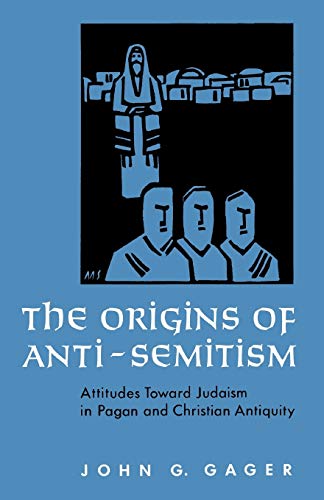
Gager provides a nuanced examination of the interactions between Jews and non-Jews in the ancient world, similar to the scope of Hayes's research. It is an excellent companion for understanding the external pressures and internal responses that defined Jewish identity during the Hellenistic and Roman periods.
For readers who enjoyed the specific focus on linguistic and cultural boundaries in Hayes's work, this book offers a deep dive into how the translation of sacred texts influenced Jewish self-understanding. It bridges the gap between theology and identity construction in the ancient diaspora.

Dunn explores the critical period where Jewish and Christian identities diverged, providing the broader context for the boundary-making processes Hayes describes. It is a highly scholarly and rewarding read for those interested in the evolution of religious identity and the 'othering' of groups.
Anderson examines how ancient Near Eastern cultures, including Israel, dealt with the concept of the 'stranger' and the 'other,' which parallels Hayes's discussion of Gentile status. It offers a fascinating look at the ethical and legal implications of hospitality and exclusion in antiquity.

To fully grasp the environment in which Hayes's subjects lived, one must understand the interconnectedness of the ancient Mediterranean. This book provides the grand historical stage upon which the cultural negotiations of identity and purity described in Hayes's work took place.

Prefer to listen?
Try Audible and hear the story instead of reading it.
As an Amazon Associate, we earn from qualifying purchases.
As an Amazon Associate, we earn from qualifying purchases.