

Based on your book
Going to Pieces without Falling Apart
by Epstein M.D., Mark
Mark Epstein argues that our modern obsession with maintaining a polished, impenetrable sense of self is exactly what keeps us from feeling whole. Instead of viewing our moments of psychological disintegration as failures, he suggests they are actually vital opportunities to drop the ego and engage with reality more authentically. Drawing from his background as a psychiatrist and his study of Buddhist meditation, Epstein writes with a calm, clinical precision that never feels detached. The prose is meditative and steady, inviting you to slow down and examine your own defensive patterns without judgment. This is a book for anyone who feels exhausted by the effort of holding their life together and is curious about what happens when you stop trying to control every outcome. It is a quiet, steady companion for those navigating a personal or existential crossroads.
10 Books similar to 'Going to Pieces without Falling Apart'
If this book resonated with your desire to peel back the layers of the ego, our collection of similar titles expands on that journey. We selected these works because they share a common thread of using mindfulness and psychological inquiry to navigate life's inevitable instability. Whether you are looking for the compassionate, grounded wisdom found in Pema Chodron or the more philosophical, detached perspective of Alan Watts, these authors offer a cohesive toolkit. Each recommendation bridges the gap between ancient contemplative practice and the complex, often chaotic reality of modern human existence.
As an Amazon Associate, we earn from qualifying purchases.
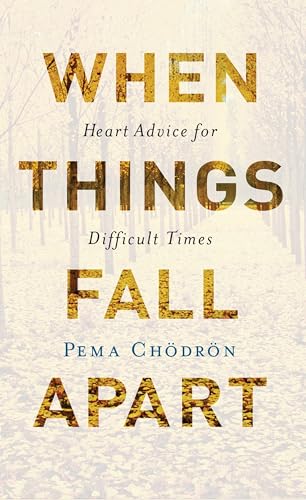
by Pema Chödrön
Like Epstein's work, this book bridges Buddhist wisdom and modern psychological struggle, offering gentle guidance on how to embrace chaos rather than fighting it. It provides a compassionate, accessible framework for finding stability when life feels overwhelming.

by Alan Watts
Watts explores the human tendency to seek security in a constantly changing world, echoing Epstein's exploration of attachment and the ego. It is a profound, philosophical look at how accepting the present moment is the only true path to peace.

by Tara Brach
Brach combines psychotherapy with meditation to help readers heal from the 'trance of unworthiness,' a theme that perfectly complements Epstein's focus on integrating mindfulness into daily life. It is deeply compassionate and practical for those struggling with self-judgment.

This classic text on mindfulness meditation offers a similar grounding approach to mental health as Epstein's work, emphasizing that peace is found in the 'here and now.' It is essential reading for those looking to apply Buddhist principles to the stresses of modern existence.

Prefer to listen?
Try Audible and hear the story instead of reading it.
As an Amazon Associate, we earn from qualifying purchases.

by Mark Epstein
As the foundational text that precedes 'Going to Pieces,' this book is the perfect next step for readers who want to understand Epstein's core thesis on the intersection of psychotherapy and Buddhism. It provides a deeper, more academic look at the concepts introduced in his later works.

Singer explores the relationship between the self and the mind, providing practical insights on how to detach from habitual thought patterns. Readers who enjoyed Epstein's exploration of the ego will find this to be a transformative guide to inner freedom.

While more grounded in the horrors of the Holocaust, Frankl's logotherapy shares the core belief that we have the power to choose our attitude in any circumstance, a key tenet of Buddhist-influenced psychology. It is a powerful, deeply moving testament to the resilience of the human spirit.

Goldstein offers a clear, structured approach to Buddhist meditation that complements Epstein's more psychological narrative. It is an excellent resource for readers who want to move from the theory of mindfulness to the actual practice.

by Brené Brown
Brown's research into vulnerability mirrors Epstein's focus on the necessity of facing our 'broken' pieces rather than hiding them. Both authors argue that true strength comes from accepting our flaws and engaging fully with our lives.

This book is a gentle, poetic introduction to mindfulness that shares the same calm, authoritative, and compassionate voice as Epstein's writing. It focuses on finding the sacred in the mundane, which is a central motif in 'Going to Pieces.'

Love to read on the go?
Explore Kindle e-readers and take your books with you.
As an Amazon Associate, we earn from qualifying purchases.
As an Amazon Associate, we earn from qualifying purchases.