

Based on your book
Hopeful Pessimism
by van der Lugt, Mara
Mara van der Lugt turns the idea of pessimism on its head, arguing that a grim view of human nature is not a reason for despair, but a necessary foundation for tolerance and intellectual humility. By examining the history of skeptical thought, she constructs a framework where acknowledging our inherent flaws and limitations actually clears the path for a more stable, compassionate society. The reading experience is cerebral and measured, moving with the steady pace of a deep, late-night conversation with a sharp-witted scholar. It does not offer easy comfort or shallow positive thinking; instead, it demands that you sit with the complexity of human failings. This is essential reading for anyone who feels exhausted by modern moral certainty and is looking for a grounded, philosophical way to engage with a world that rarely behaves the way we want it to.
10 Books similar to 'Hopeful Pessimism'
Since you appreciated the way van der Lugt balances skepticism with a constructive outlook, our curated list leans into works that dismantle human bias and existential absurdity. Whether you are drawn to the psychological roots of moral disagreement found in Haidt or the raw, poetic nihilism of Cioran, these selections mirror the book's commitment to rigorous intellectual honesty. We have gathered these titles to help you further trace the history of doubt and the paradoxes of human progress, providing you with a complete toolkit for navigating a complex, often indifferent world.
As an Amazon Associate, we earn from qualifying purchases.

Like van der Lugt's work, this Pulitzer Prize-winning book explores the existential paradoxes of the human condition, arguing that our awareness of mortality drives our greatest cultural achievements. It offers a similarly profound, philosophical, and analytical examination of how we reconcile the darkness of reality with the necessity of hope.

by Paul Bloom
This book shares the intellectual rigor and contrarian spirit of van der Lugt's analysis, challenging conventional wisdom about human nature. It argues that our emotional instincts can be biased and destructive, advocating for a more detached, rational approach to morality that echoes the skeptical yet constructive outlook found in 'Hopeful Pessimism'.

by Albert Camus
Camus is the quintessential philosopher of 'hopeful pessimism,' exploring how one finds meaning in a world that is inherently absurd and indifferent. Readers who appreciate van der Lugt's deep dive into the tension between skepticism and optimism will find this essay essential reading for understanding how to live authentically in a bleak world.
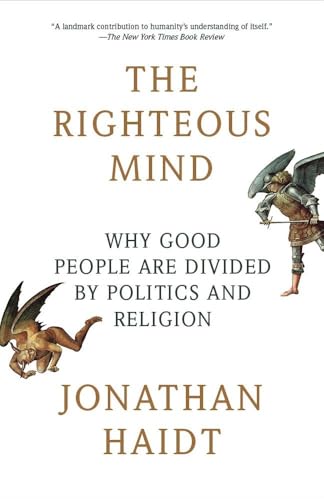
Haidt provides a psychological framework for understanding human disagreement, much like van der Lugt explores the historical roots of tolerance and skepticism. It is an intellectual journey that encourages readers to look past their own biases to understand the complex, often messy, nature of human morality.

Love to read on the go?
Explore Kindle e-readers and take your books with you.
As an Amazon Associate, we earn from qualifying purchases.

by Hugo Mercier and Dan Sperber
This work challenges the traditional view of human reason, suggesting it evolved not for truth-seeking but for social interaction and persuasion. Readers interested in the intellectual history and the skeptical deconstruction of human nature found in van der Lugt's work will find this a fascinating, evidence-based companion.

Focusing on the historical development of skepticism and religious doubt, this book pairs perfectly with van der Lugt's study of Pierre Bayle. It explores how thinkers navigated the precarious balance between faith and reason, offering a similar historical deep dive into the origins of modern intellectual tolerance.

by Noam Chomsky
While Chomsky’s political lens differs from van der Lugt's philosophical one, both authors share a commitment to critical inquiry and the belief that clear-eyed analysis of the worst realities is the only path toward genuine improvement. It is a bracing, intellectual look at how to maintain hope while acknowledging systemic darkness.

by Emil Cioran
For readers who want to explore the darker, more radical side of the 'pessimism' spectrum before circling back to the 'hopeful' aspect, Cioran is the master. His aphoristic style provides a stark, poetic contrast to van der Lugt's historical analysis while tackling the same fundamental questions about the human condition.

Pinker offers a massive, data-driven argument that despite our dark history, humanity is trending toward less violence and more tolerance. It provides the empirical 'hope' that complements van der Lugt's historical and philosophical exploration of how we manage our pessimistic tendencies.
This is a foundational text for anyone interested in the specific intellectual lineage van der Lugt explores. It traces the development of skeptical thought, providing the necessary historical context for understanding how early modern thinkers like Bayle developed their unique, hopeful approaches to doubt.

Not sure what they've already read?
Let them pick their next favorite with an Amazon Gift Card.
As an Amazon Associate, we earn from qualifying purchases.
As an Amazon Associate, we earn from qualifying purchases.