
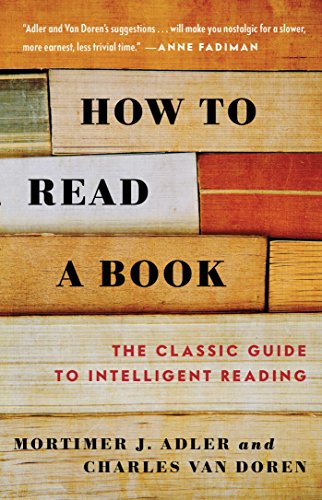
Based on your book
How to Read a Book
by Adler, Mortimer J.
Most of us learn to decode words in grade school, but few of us ever truly learn how to digest a complex text. Adler treats reading not as a passive pastime, but as a rigorous athletic event for the mind. He breaks down the process into progressive levels—from inspectional skimming to the heavy lifting of syntopical reading, where you cross-reference multiple books on a single subject. The writing is methodical and demanding, stripping away the comfort of skimming to reveal the architecture of an author's argument. It feels like sitting across from a stern but brilliant professor who refuses to let you get away with laziness. This is for the reader who feels they are missing the deeper layers of the books they pick up and wants to transform their library from a collection of status symbols into a genuine tool for personal growth.
10 Books similar to 'How to Read a Book'
Since you appreciate the intellectual rigor Adler demands, these selections were curated to help you apply his principles across different disciplines. Whether you are looking to master the craft of writing through Strunk and White, explore the philosophical discipline of the mind with Sertillanges, or unlock the symbolic codes of fiction via Foster, these books share a commitment to active, focused engagement. They move beyond mere consumption, focusing instead on the tools of logic, rhetoric, and deep work that turn a casual reader into a disciplined student of literature and life.
As an Amazon Associate, we earn from qualifying purchases.

This book serves as a practical, modern companion to Adler's work, offering a structured approach to reading the great books of Western literature. It mirrors Adler's philosophy that reading is an active, disciplined skill that can be mastered by anyone willing to put in the effort.

While Adler focuses on the consumption of text, Zinsser focuses on the creation of it, yet both share a rigorous, no-nonsense approach to the craft of language. Readers who appreciate Adler's emphasis on clarity and structure will find Zinsser's guide equally essential for understanding how to process and produce high-quality writing.

This is a spiritual and practical guide for anyone dedicated to the life of the mind, much like Adler's work. It provides a deeper, more philosophical look at the discipline required for serious study and reading, making it a perfect follow-up for those who found Adler's advice transformative.

by William Strunk Jr. and E.B. White
Adler's book is about the architecture of reading, and this is the architecture of writing; both are foundational texts for the serious student of literature. Fans of Adler will appreciate the concise, authoritative, and prescriptive nature of this classic guide.

Love to read on the go?
Explore Kindle e-readers and take your books with you.
As an Amazon Associate, we earn from qualifying purchases.

Prose takes Adler's concept of 'syntopical reading' and applies it to the craft of fiction, teaching readers how to dismantle a book to see how it works. It is a deeply analytical text that rewards the same kind of careful, slow reading that Adler advocates.

This book expands on the idea of a classical, self-directed education, which is the ultimate goal of the reading skills Adler describes. It shares the same empowering, intellectual tone and encourages readers to take full responsibility for their own learning journey.

Adler frequently references the importance of grammar, logic, and rhetoric in understanding complex texts, and this book provides the deep dive into those subjects. It is the perfect technical manual for a reader who wants to master the foundational tools of thought that Adler highlights.

Foster provides the 'code' to understanding the symbols, patterns, and themes that Adler suggests looking for in high-level reading. It bridges the gap between Adler's abstract methodology and the actual experience of analyzing a novel or poem.
Hutchins was a close colleague of Adler, and this book provides the historical and philosophical context for the 'Great Books' curriculum that Adler's reading method was designed to support. Readers interested in the 'why' behind Adler's approach will find this essential reading.
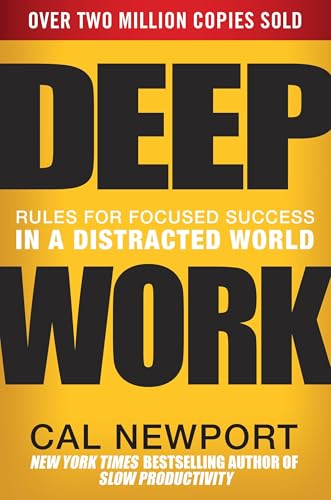
by Cal Newport
While contemporary, this book echoes Adler's insistence on deep, concentrated engagement rather than superficial skimming. It provides the modern psychological framework for the 'active reading' Adler championed, making it highly relevant for today's reader.

Not sure what they've already read?
Let them pick their next favorite with an Amazon Gift Card.
As an Amazon Associate, we earn from qualifying purchases.
As an Amazon Associate, we earn from qualifying purchases.