

Based on your book
If Mayors Ruled the World
by Barber, Benjamin R.
Benjamin Barber posits a provocative shift in our global order: national governments are increasingly paralyzed by gridlock and ideological warfare, while cities operate as pragmatic, efficient hubs of innovation. He argues that mayors, unburdened by the baggage of state sovereignty, are the ones actually solving the problems of climate change, migration, and infrastructure. Reading this feels like attending a high-level seminar on political evolution; it is dense, analytical, and intellectually rigorous. Barber challenges you to rethink the nation-state as the primary unit of power, shifting your gaze toward the municipal level. This is for the reader who enjoys political philosophy and wants to understand the mechanics of modern governance. If you are tired of cynical news cycles and looking for a structural argument for why the local scale might be our best hope for the future, this book offers a compelling roadmap.
10 Books similar to 'If Mayors Ruled the World'
Since Barber focuses on the political theory of municipal power, we selected these books to build out the practical, economic, and historical dimensions of his argument. If you found his vision of city-led governance inspiring, you will appreciate how authors like Elinor Ostrom and Jane Jacobs provide the scholarly and social foundations for self-governance. Whether you are interested in the economic engines of urban progress or the specific design principles that foster democratic engagement, this collection bridges the gap between Barber's high-level political inquiry and the tangible, ground-level reality of how our cities actually function.
As an Amazon Associate, we earn from qualifying purchases.

Like Barber, Glaeser argues that cities are the engines of human progress and innovation, making them the most important entities for our future. This book provides a robust economic argument for urbanization that perfectly complements Barber's political focus.

by Jeff Speck
This book offers a practical, ground-level look at the urban design principles that make cities livable and democratic, echoing Barber's belief in the power of local action. It bridges the gap between political theory and the physical reality of city life.

by Jane Jacobs
A foundational text for anyone interested in urbanism, Jacobs' work champions the 'sidewalk ballet' of city life against top-down planning, aligning closely with Barber's vision of bottom-up governance. It is essential reading for understanding the vitality of the local scale.
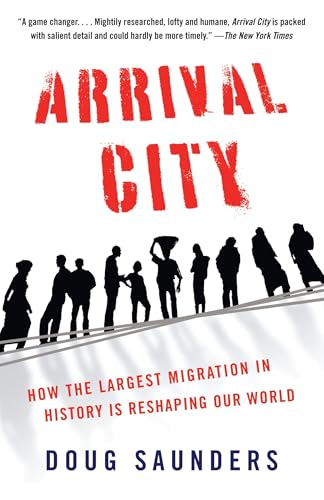
Saunders explores how cities act as the primary integration points for global migrants, reinforcing the idea that the future of the world is being written in urban centers. It expands on the global scope of Barber's argument by focusing on the human geography of these spaces.

Prefer to listen?
Try Audible and hear the story instead of reading it.
As an Amazon Associate, we earn from qualifying purchases.

Montgomery investigates the intersection of urban design and human happiness, arguing that how we build our cities directly dictates our political and social well-being. It shares Barber's conviction that the city is the primary unit of human experience.

Ostrom provides the rigorous academic framework for how local communities can self-govern and manage shared resources without relying on national mandates. It offers the scholarly backbone for the decentralized governance model that Barber advocates.

by Peter Hall
This comprehensive history of urban planning and its political implications provides essential context for why cities have developed the way they have. It helps readers understand the historical tensions between national control and municipal ambition that Barber discusses.

Fainstein critiques urban planning through the lens of equity and justice, asking how cities can be designed to serve all citizens rather than just the elite. It adds a necessary layer of social ethics to the political arguments presented in Barber's work.

Solomon explores the tension between modern urban development and the need for a sense of place, echoing Barber's concerns about the loss of local identity in a globalized world. It is a thoughtful meditation on the soul of the modern city.

by Stephen Goldsmith and Susan Crawford
This book provides a modern, technological roadmap for the 'mayoral rule' Barber envisions, showing how data and connectivity can empower local governments to be more responsive to their citizens. It is the practical, 21st-century application of Barber's political philosophy.

Love to read on the go?
Explore Kindle e-readers and take your books with you.
As an Amazon Associate, we earn from qualifying purchases.
As an Amazon Associate, we earn from qualifying purchases.