
Based on your book
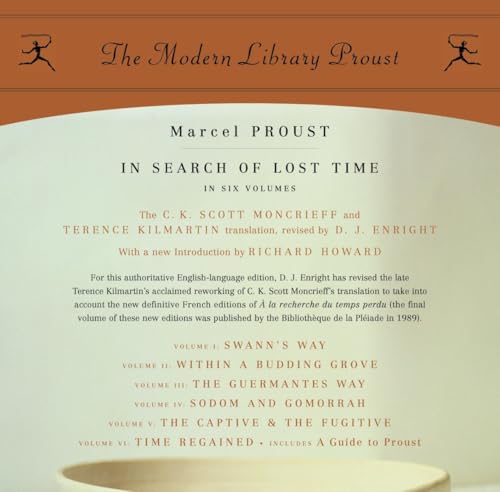
In Search of Lost Time
by Proust, Marcel
Proust asks a simple question: what happens to the people we have been as we age? This massive work follows a narrator through the salons, bedrooms, and gardens of French high society, but the real movement happens inside his head. It is a slow, hypnotic study of how a sensory trigger—a taste, a smell, a slant of light—can pull the past into the present with terrifying clarity. The pacing is deliberate, favoring long, wandering sentences that mimic the way thoughts actually spiral and settle. You do not read this for the plot in the traditional sense; you read it to live inside someone else's memory. It is a demanding, deeply philosophical commitment, perfect for readers who find the quiet, internal shifts of human consciousness more dramatic than any external adventure.
10 Books similar to 'In Search of Lost Time'
Since you are clearly drawn to the heavy lifting of memory and the slow decay of social eras, these selections expand on the specific melancholy that defines Proust. Whether through the stream-of-consciousness experiments of Woolf and Joyce or the crumbling aristocratic landscapes found in Lampedusa and Wharton, these books prioritize the interior life over action. We chose these titles because they treat time not as a linear progression, but as a complex, recursive experience. If you enjoy mapping the evolution of identity against the backdrop of a changing world, these authors offer equally immersive, intellectual homes.
As an Amazon Associate, we earn from qualifying purchases.

by Thomas Mann
Like Proust, Mann captures the slow, meticulous passage of time and the intellectual evolution of a protagonist within a sequestered environment. It offers a similarly dense, philosophical examination of European society on the brink of profound change.

Woolf’s stream-of-consciousness technique mirrors Proust’s exploration of memory and the subjective experience of time. The novel focuses on the interior lives of its characters, elevating the mundane details of daily existence into something profoundly poetic.

by James Joyce
This modernist masterpiece shares Proust's obsession with the minutiae of human consciousness and the weight of the past. It is an essential read for anyone who appreciates linguistic complexity and the deep, recursive exploration of a single life.

For readers who enjoyed the expansive social tapestry and the chronicle of a family's decline in Proust, this series offers a rich, multi-generational look at the upper-middle-class British society. It balances personal ambition with the inexorable shifts of history.

Love to read on the go?
Explore Kindle e-readers and take your books with you.
As an Amazon Associate, we earn from qualifying purchases.

by Giuseppe Tomasi di Lampedusa
This novel echoes Proust’s preoccupation with the fading aristocracy and the inevitable passage of time. Its lush, evocative prose captures the melancholy beauty of a world that is slowly disappearing, much like the salons of the Guermantes.

Ferrante’s Neapolitan Novels share Proust’s intense focus on the formation of identity through long-term relationships and memory. The narrative voice is deeply introspective, mapping the complex emotional landscape of a lifelong friendship against the backdrop of changing social structures.

Often cited as the English equivalent to Proust, this twelve-volume sequence tracks the lives of a wide circle of characters over several decades. It is a brilliant, observational study of social manners, ambition, and the relentless, circular nature of time.

Wharton’s sharp, analytical prose dissects the rigid social codes of high society with the same precision Proust applied to the Parisian elite. It is a poignant exploration of longing, social obligation, and the internal conflicts between desire and duty.

This novel delves into the obsessive, memory-laden nature of love and the way past events continue to haunt the present. Like Proust, Greene explores the subjectivity of experience and the difficulty of truly knowing another person.

by Robert Musil
For those who appreciate the digressive, essayistic, and highly intellectual nature of Proust, Musil’s work is a perfect match. It provides a sprawling, philosophical critique of a decaying empire, blending narrative with profound cultural analysis.

Not sure what they've already read?
Let them pick their next favorite with an Amazon Gift Card.
As an Amazon Associate, we earn from qualifying purchases.
As an Amazon Associate, we earn from qualifying purchases.