

Based on your book
Incognito
by Eagleman, David
Incognito challenges the comfortable assumption that you are the pilot of your own consciousness. David Eagleman lays out the evidence that your conscious mind is merely a visitor in the vast, subterranean machine of your brain, which handles the overwhelming majority of your decisions, reactions, and beliefs long before you become aware of them. It is an unsettling, eye-opening read that moves quickly through complex neuroscience, using bizarre neurological case studies to highlight how fragile our sense of self actually is. You will not finish this book feeling like the same person who started it. It is perfect for the reader who enjoys intellectual puzzles and is willing to trade the comfort of free will for a more honest, biological understanding of human behavior. Expect to look at your own daily habits and snap judgments with a healthy dose of skepticism.
10 Books similar to 'Incognito'
If Incognito left you questioning the true origins of your personality, these titles act as a map for further exploration. We selected these books because they share Eagleman’s commitment to peering behind the curtain of conscious thought. Whether you are interested in the biological roots of human morality found in Behave and The Righteous Mind, or the cognitive shortcuts explained in Thinking, Fast and Slow and Predictably Irrational, these authors collectively dismantle the myth of the rational actor. They offer a grounded, scientific perspective on the hidden forces that dictate our lives, biases, and ultimate identity.
As an Amazon Associate, we earn from qualifying purchases.
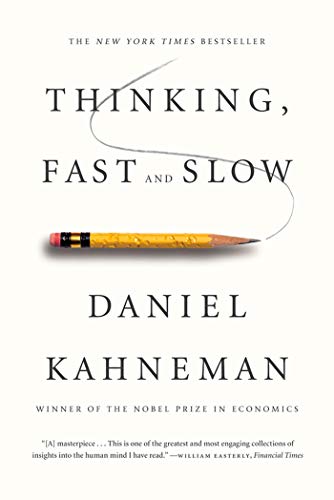
Like Eagleman, Kahneman explores the dual systems of the mind, challenging the reader's perception of conscious choice and rationality. It is a foundational text for anyone interested in the cognitive biases and unconscious processes that govern human behavior.

by Oliver Sacks
Sacks presents fascinating neurological case studies that reveal the fragility and complexity of the human brain, much like Eagleman's explorations of abnormal brain function. The narrative style is deeply humanizing, blending clinical observation with profound empathy.

Sapolsky offers a comprehensive look at why we do what we do, spanning from neurobiology to evolutionary psychology, perfectly complementing Eagleman's focus on the biological underpinnings of behavior. It is an ambitious, sweeping examination of the human condition.

Ramachandran uses strange and compelling neurological disorders to unlock the mysteries of the mind, mirroring Eagleman's approach of using the 'broken' brain to understand the 'normal' one. It is highly accessible, engaging, and filled with mind-bending insights.

Love to read on the go?
Explore Kindle e-readers and take your books with you.
As an Amazon Associate, we earn from qualifying purchases.

Gladwell explores the 'adaptive unconscious' and the power of snap judgments, which aligns directly with Eagleman's thesis about the brain's automatic processing. It is a fast-paced, narrative-driven look at how we make decisions beneath our conscious awareness.
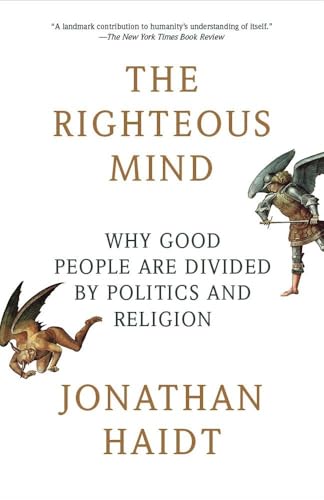
Haidt investigates the intuitive, automatic processes that drive our moral and political judgments, echoing Eagleman's view that our conscious reasoning is often just a post-hoc justification. It provides a crucial psychological framework for understanding human tribalism.

by V.S. Ramachandran and Sandra Blakeslee
This book delves into the bizarre world of neurological patients to explain how the brain constructs our reality, a central theme in Eagleman's work. It is a gripping read that turns medical mystery into a profound exploration of the self.

Mlodinow provides a clear, accessible overview of how our unconscious minds shape our social interactions, memories, and perceptions, directly paralleling the core arguments in Incognito. It is an excellent primer on the hidden forces influencing daily life.

by Dan Ariely
Ariely uses behavioral economics to demonstrate the systematic ways in which we act irrationally, reinforcing Eagleman's conclusion that our conscious mind is not the captain of the ship. It is witty, relatable, and deeply insightful regarding human decision-making.

by David Brooks
Brooks weaves neuroscience and psychology into a fictional narrative to explain the unconscious drivers of human success and happiness, offering a more literary take on the themes found in Eagleman's work. It is a unique blend of storytelling and scientific synthesis.

Not sure what they've already read?
Let them pick their next favorite with an Amazon Gift Card.
As an Amazon Associate, we earn from qualifying purchases.
As an Amazon Associate, we earn from qualifying purchases.