

Based on your book
Incognito: The Secret Lives of the Brain
by David Eagleman
Eagleman dismantles the illusion that you are the pilot of your own consciousness. By examining the complex, automated machinery operating beneath your awareness, he illustrates how much of your personality, judgment, and moral compass is actually dictated by neural processes you cannot access. The writing is sharp and conversational, avoiding academic jargon while maintaining a rigorous scientific backbone. You will feel like you are looking at your own reflection through a microscope; it is unsettling in the best possible way. This book is for the curious skeptic who enjoys questioning their own reality and wants to understand why they act the way they do. If you have ever wondered whether your choices are truly yours or just the output of biological code, this will shift your perspective on everything from criminal justice to your morning routine.
10 Books similar to 'Incognito: The Secret Lives of the Brain'
Since you enjoyed the way Eagleman challenges the concept of the self, these selections extend that investigation into the mechanics of human behavior. We chose these titles because they bridge the gap between hard neuroscience and the existential questions of free will and identity. Whether you want to explore the quirks of neural malfunctions with Sacks and Ramachandran or examine the cognitive biases that drive your daily decisions with Kahneman and Gladwell, these books provide a deeper look at the hidden architecture that defines your experience of the world.
As an Amazon Associate, we earn from qualifying purchases.

by Oliver Sacks
Like Eagleman, Sacks explores the mysteries of the brain through fascinating, real-world case studies that challenge our understanding of identity and consciousness. His compassionate, narrative-driven approach makes complex neurological conditions feel deeply human and profoundly intriguing.
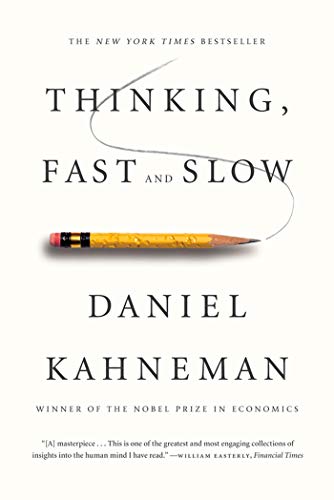
This seminal work dives deep into the two systems that drive the way we think, mirroring Eagleman's exploration of the unconscious processes that govern our behavior. It is an essential read for anyone interested in the cognitive biases and hidden mechanics of the human mind.

Sapolsky offers a comprehensive, multi-layered look at why we do the things we do, tracing behavior from the milliseconds before an action to the evolutionary history of the species. It shares Eagleman's ambition to synthesize neuroscience into a cohesive explanation of human nature.

Ramachandran investigates the brain's quirks and malfunctions to reveal how it constructs our reality, much like Eagleman's exploration of the 'secret lives' of our neural circuitry. The book is filled with surprising anecdotes that make hard science feel like a detective story.

Not sure what they've already read?
Let them pick their next favorite with an Amazon Gift Card.
As an Amazon Associate, we earn from qualifying purchases.

Focusing on what neurological disorders reveal about the evolution of the human mind, this book complements Eagleman’s work by examining the very nature of self-awareness. It is written with a similar sense of wonder and accessibility that makes high-level neuroscience engaging for the general reader.

Gladwell explores the 'adaptive unconscious'—the rapid, intuitive judgments our brains make before we are even aware of them. It serves as a perfect companion piece to Eagleman, focusing on the practical, everyday implications of our subconscious processing.

by David Brooks
Using a fictional narrative to illustrate the latest findings in behavioral science, Brooks explains how the unconscious mind shapes our lives, relationships, and society. It captures the same fascination with the hidden forces that drive human behavior as Eagleman's work.

Mlodinow provides a clear, compelling look at the hidden influences of our unconscious mind, from social interaction to perception. Readers who enjoyed Eagleman's breakdown of the brain's 'secret' operations will find this a natural and equally accessible follow-up.

Gazzaniga, a pioneer in cognitive neuroscience, tackles the age-old question of free will versus biological determinism with the same rigor and curiosity found in Eagleman's writing. It is a profound exploration of personal responsibility in the age of brain science.

This book introduces the revolutionary concept of neuroplasticity, showing that the brain is far more adaptable than previously thought—a theme that resonates with Eagleman's view of the brain as a dynamic, ever-changing system. It offers an inspiring look at the brain's capacity for transformation.

Prefer to listen?
Try Audible and hear the story instead of reading it.
As an Amazon Associate, we earn from qualifying purchases.
As an Amazon Associate, we earn from qualifying purchases.