

Based on your book
Infinite Powers
by Strogatz, Steven
Calculus is often treated as a gatekeeper subject, something meant only for engineers or those with a specific academic bent. Steven Strogatz dismantles this notion by framing calculus as the hidden language of the universe. He walks you through how we learned to measure the changing world, moving from the geometric puzzles of ancient Greece to the modern breakthroughs that power your smartphone. The experience feels less like a textbook and more like a conversation with a brilliant, patient friend who is genuinely excited to show you the gears turning behind reality. It is contemplative and precise, stripping away the intimidation factor to reveal the elegance of the math itself. This is for the curious reader who wants to understand the intellectual architecture of our world without needing a degree in physics to follow the path.
10 Books similar to 'Infinite Powers'
Since you enjoyed how Strogatz maps the history of ideas to real-world impact, we have curated a list that shares that same blend of intellectual rigor and narrative curiosity. Whether you are looking for the human drama behind famous proofs, like in The Man Who Knew Infinity, or the practical application of abstract logic found in How Not to Be Wrong, these selections focus on the pioneers who redefined our reality. Each book keeps the focus on the wonder of discovery, perfect for anyone fascinated by the hidden structures shaping our lives.
As an Amazon Associate, we earn from qualifying purchases.

Since fans of Infinite Powers already appreciate Strogatz's unique ability to demystify complex mathematical concepts, this collection of essays is the perfect follow-up. It offers the same accessible, witty, and deeply human perspective on the beauty of mathematics in everyday life.

Like Strogatz, Hawking excels at taking abstract, intimidating scientific concepts and rendering them understandable for a general audience. This classic exploration of cosmology shares the same sense of wonder regarding the fundamental laws that govern our universe.

by Mario Livio
This book mirrors the historical narrative style of Infinite Powers, focusing on the dramatic human stories behind mathematical breakthroughs. It captures the same excitement of discovery and the intellectual struggle inherent in solving the unsolvable.

by James Gleick
Readers who enjoyed learning how calculus changed the world will appreciate this deep dive into how chaos theory fundamentally altered our understanding of nature. It shares the same narrative drive, focusing on the pioneers who challenged the status quo.

Prefer to listen?
Try Audible and hear the story instead of reading it.
As an Amazon Associate, we earn from qualifying purchases.

This biography of Srinivasa Ramanujan provides a deeply emotional and historical look at mathematical genius, complementing the focus on ideas found in Strogatz's work. It highlights the profound, often difficult, human experience behind the numbers.

Ellenberg shares Strogatz's enthusiasm for showing how math is not just a classroom subject but a powerful tool for interpreting reality. It is written with a similar blend of humor, clarity, and genuine curiosity about the hidden structures of the world.

This book weaves a compelling narrative around the Riemann Hypothesis, much like Strogatz weaves stories around calculus. It is a masterful blend of history, biography, and mathematics that keeps the reader engaged through sheer intellectual curiosity.
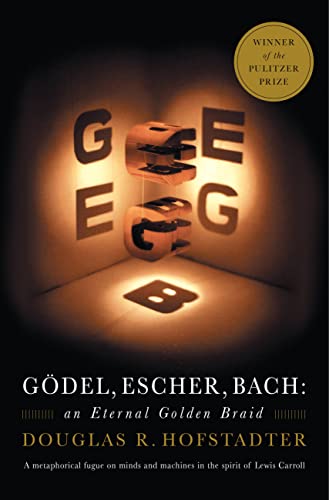
For readers who want to push their intellectual boundaries after reading Infinite Powers, this masterpiece explores the intersection of math, art, and consciousness. It is more complex and abstract, yet shares the same awe for logical systems and patterns.

While more biographical, this book highlights the critical, often overlooked application of mathematics in history, echoing Strogatz's theme of calculus as a hidden engine of progress. It is an inspiring look at how math changes lives and societies.

This book masterfully balances the history of the Riemann Hypothesis with the actual mathematical mechanics involved, much like Strogatz does with calculus. It is perfect for readers who want to understand the 'how' and 'why' behind the math without getting lost in jargon.

Love to read on the go?
Explore Kindle e-readers and take your books with you.
As an Amazon Associate, we earn from qualifying purchases.
As an Amazon Associate, we earn from qualifying purchases.