
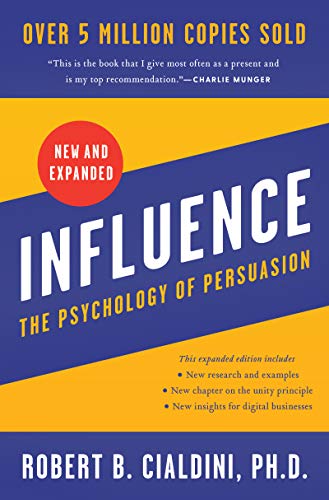
Based on your book
Influence: The Psychology of Persuasion
by Robert B. Cialdini
Cialdini pulls back the curtain on why we say yes when we might rather say no. By breaking down the six universal principles of persuasion—like reciprocity and social proof—he explains the automatic triggers that dictate our daily choices. Reading this feels less like a dry textbook and more like being handed a secret decoder ring for human interaction. It is analytical and observant, forcing you to constantly pause and reflect on your own recent conversations and consumer habits. The pacing is steady, grounded in academic rigor but kept accessible through relatable, real-world scenarios. This is ideal for anyone who is naturally curious about the mechanics of social power or the subtle ways environments shape our decision-making. It is a book that changes how you watch commercials, negotiate, and interact with the world around you.
10 Books similar to 'Influence: The Psychology of Persuasion'
If Cialdini sparked an interest in the hidden architecture of the human mind, these titles will help you map out the rest of the landscape. We selected these books because they share a common fascination with the subtle social forces that move the needle in our daily lives. Whether you are curious about the mechanics of behavioral economics, the anatomy of viral ideas, or the tactical side of interpersonal influence, this collection explores how our seemingly irrational actions are actually deeply predictable. It is a curated path for those who want to understand the levers behind our choices.
As an Amazon Associate, we earn from qualifying purchases.
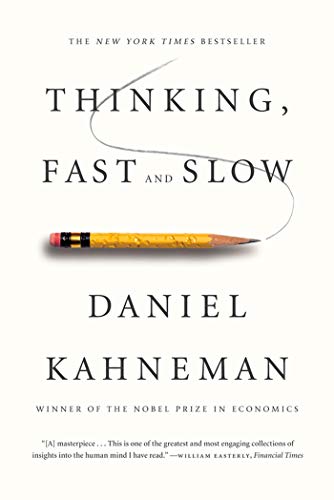
As a cornerstone of behavioral economics, this book complements Cialdini's work by exploring the dual systems that drive our thought processes. It provides the scientific foundation for understanding the cognitive biases that make individuals susceptible to the influence tactics Cialdini describes.

by Richard H. Thaler and Cass R. Sunstein
This book takes the principles of influence and applies them to 'choice architecture,' showing how small changes in presentation can significantly alter human behavior. It is essential reading for anyone interested in the ethical and practical application of Cialdini's theories in policy and daily life.

by Dan Ariely
Ariely bridges the gap between academic psychology and everyday life, demonstrating that our irrational behaviors are systematic and predictable. Fans of Cialdini will appreciate how this book deconstructs the 'why' behind our seemingly illogical choices in consumerism and social interaction.
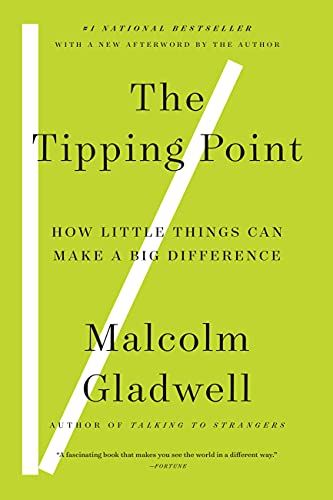
Gladwell explores the social epidemics and viral trends that shape our culture, offering a narrative-driven look at how ideas spread. It shares Cialdini's fascination with the subtle, often invisible mechanisms that trigger massive shifts in human behavior.

Prefer to listen?
Try Audible and hear the story instead of reading it.
As an Amazon Associate, we earn from qualifying purchases.

by James Clear
While focused on personal behavior rather than social persuasion, this book utilizes the same psychological principles of cues and triggers that Cialdini highlights. It is a practical manual for hacking one's own psychology to achieve desired outcomes.

This book investigates the anatomy of 'sticky' ideas—those that successfully influence and persuade audiences over time. It provides a perfect companion to Cialdini by explaining the communication tactics that make persuasion effective in the real world.

by Susan Cain
Cain challenges the cultural bias toward extroversion, offering a deep psychological analysis of how personality types influence social dynamics. Readers who enjoy Cialdini's examination of societal norms will find this a fascinating look at the hidden power structures of personality.

Greene explores the psychological dynamics of attraction and persuasion on an interpersonal level, dissecting the strategies used to influence others. While more Machiavellian than Cialdini, it offers a deep dive into the human need for connection and the tactics used to exploit it.

This memoir-style history of behavioral economics provides the context for the field that Cialdini operates within. It is a compelling, behind-the-scenes look at how scholars fought to prove that humans are not the rational actors traditional economics assumed.
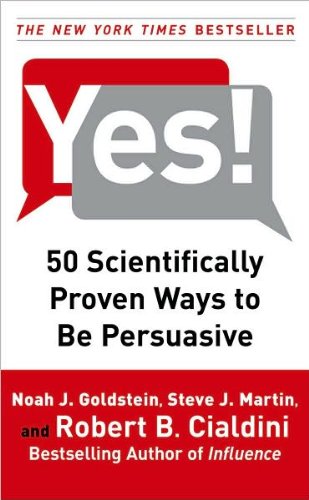
by Noah J. Goldstein, Steve J. Martin, and Robert B. Cialdini
Co-authored by Cialdini himself, this book serves as a direct, practical application of the theories presented in 'Influence.' It is an essential follow-up for readers who want to see how the science of persuasion translates into specific, actionable tactics for daily life.

Love to read on the go?
Explore Kindle e-readers and take your books with you.
As an Amazon Associate, we earn from qualifying purchases.
As an Amazon Associate, we earn from qualifying purchases.