
Based on your book
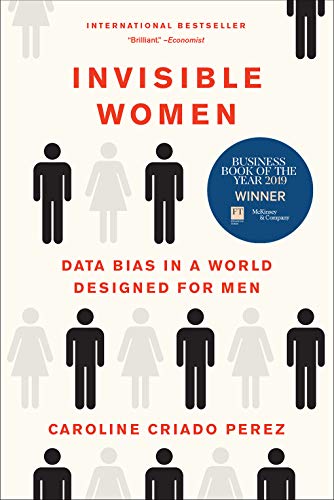
Invisible Women
by Criado Perez, Caroline
Caroline Criado Perez demonstrates how the world is designed for a male default, leaving women as an afterthought in everything from urban planning and medical research to workplace safety. By gathering a mountain of data, she proves that this is not a series of isolated accidents but a systemic failure to account for half the population. The experience of reading this is startling; you will find yourself constantly nodding in recognition of small annoyances, only to realize the scale of the danger they represent. The prose is analytical and sharp, avoiding academic dryness in favor of clear, urgent communication. This is an essential pick for anyone who feels like the world around them does not quite fit, as well as readers who enjoy connecting the dots between individual frustrations and broader cultural power dynamics.
10 Books similar to 'Invisible Women'
Since you appreciated the way this book maps out systemic invisibility, our list focuses on authors who further expose the gaps in our cultural and technological infrastructure. We chose these titles because they echo that same analytical rigor, whether they are dismantling the myths of biological determinism in science or highlighting how algorithms and history books have erased marginalized voices. If you want to keep pulling at these threads, these books provide the intersectional context and historical depth needed to understand how we can demand a more inclusive design for the future.
As an Amazon Associate, we earn from qualifying purchases.

Like 'Invisible Women,' this book uses data and personal storytelling to highlight systemic inequalities facing women globally. It serves as an empowering companion piece that focuses on actionable solutions and the ripple effect of gender equality.

This book expands the conversation of 'Invisible Women' by critiquing how mainstream feminism often overlooks the needs of women of color and those living in poverty. It provides a necessary, intersectional lens that challenges readers to examine who is truly being represented in data and policy.

Focusing specifically on the tech industry, this book mirrors the arguments in 'Invisible Women' regarding how flawed data sets and biased design choices perpetuate real-world harm. It is an essential read for understanding how the digital world is built with a male-default perspective.

This book deconstructs the scientific myths surrounding gender differences, much like Criado Perez deconstructs the data gaps in society. It provides a rigorous, evidence-based look at how 'hard science' is often skewed by cultural bias.

Prefer to listen?
Try Audible and hear the story instead of reading it.
As an Amazon Associate, we earn from qualifying purchases.

Sieghart explores the systemic dismissal of women's expertise, providing a perfect follow-up to the data-driven arguments in 'Invisible Women.' It combines research with cultural analysis to explain why women are consistently underestimated in professional and social spaces.

While focusing on race, this book shares the core methodology of 'Invisible Women' by exposing how automated systems and algorithms are not neutral. It is a critical examination of how data infrastructure can actively marginalize specific groups.

This book challenges the evolutionary biology arguments often used to justify gender inequality, aligning with the scientific rigor found in 'Invisible Women.' It is a sharp, witty, and well-researched takedown of biological determinism.

by Kate Harding
Harding uses a similar investigative, evidence-heavy approach to dismantle the myths surrounding sexual assault. Fans of the structured, fact-based argumentation in 'Invisible Women' will appreciate the clarity and systemic focus here.

by Angela Saini
Saini investigates the history of scientific research on women, revealing how pervasive bias has skewed our understanding of evolution, brain science, and psychology. It complements 'Invisible Women' by looking at the historical roots of the data bias we see today.

While 'Invisible Women' highlights where women have been erased, this book provides the necessary counter-narrative by highlighting the women who were central to the creation of the internet. It offers a hopeful, historical perspective on technology that balances the critique of systemic bias.

Love to read on the go?
Explore Kindle e-readers and take your books with you.
As an Amazon Associate, we earn from qualifying purchases.
As an Amazon Associate, we earn from qualifying purchases.