

Based on your book
L'Assommoir
by Zola, Emile
Gervaise Macquart arrives in Paris with a dream of simple stability, but she quickly finds herself trapped in the grinding gears of a city that consumes the vulnerable. Zola tracks her slow, agonizing disintegration as she tries to build a life amidst the filth and alcoholism of the working-class slums. This is not a story of redemption; it is a clinical, unflinching autopsy of a life dismantled by environment and addiction. The prose is thick with the sensory details of the laundry, the tavern, and the street, creating a claustrophobic atmosphere that feels as heavy as the poverty it describes. You should pick this up if you want a powerful, bleak study of human endurance and the crushing weight of circumstance, rather than an uplifting tale. It is an essential read for anyone interested in the raw mechanics of naturalism.
10 Books similar to 'L'Assommoir'
The following collection was curated for readers who appreciate how environment dictates human fate. If the stark, unvarnished look at social decay in Zola’s work resonated with you, these titles explore similar intersections of economic pressure and personal collapse. Whether through the industrial critiques of Dickens and Sinclair or the psychological descent found in Hamsun and Flaubert, these books share that same grounding in harsh, realistic struggle. We selected these because they mirror the way your surroundings can become a cage, offering a deep, often uncomfortable look at the fragility of dignity when pushed to the absolute limit.
As an Amazon Associate, we earn from qualifying purchases.

by Emile Zola
As part of the same Rougon-Macquart cycle, this novel shares Zola's unflinching commitment to naturalism and the brutal depiction of the working class. It offers a similarly devastating look at systemic poverty and the crushing weight of environmental determinism.

Like Gervaise in L'Assommoir, Carrie Meeber navigates the harsh realities of urban life, where moral choices are often dictated by economic necessity. Dreiser's naturalistic approach mirrors Zola's, examining how environment shapes human destiny.
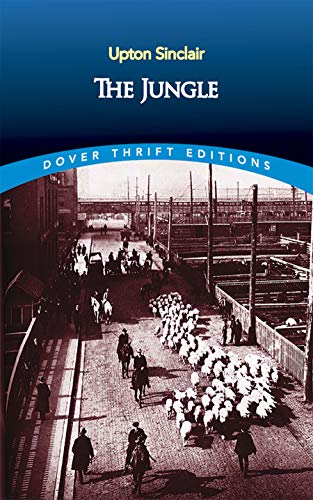
This novel serves as the American counterpart to Zola's naturalism, exposing the horrific conditions of the meatpacking industry. Readers who appreciated the visceral, often disturbing depiction of labor and decline in L'Assommoir will find this equally compelling and harrowing.

Flaubert's masterpiece of realism influenced Zola's style, focusing on the slow, inevitable decline of a character trapped by their circumstances and desires. The meticulous attention to detail and the tragic trajectory of the protagonist will resonate deeply with fans of Gervaise.

Love to read on the go?
Explore Kindle e-readers and take your books with you.
As an Amazon Associate, we earn from qualifying purchases.

Dickens offers a critique of industrialization and the dehumanizing effects of utilitarianism that parallels Zola's social commentary. While the tone is distinct, the focus on the struggles of the working class and the harshness of the environment creates a similar thematic bridge.

by Knut Hamsun
This novel provides an intense, psychological exploration of poverty and desperation, much like the slow descent seen in L'Assommoir. It captures the visceral, day-to-day struggle for survival with a raw, subjective intensity that fans of Zola's naturalism will appreciate.

by Emile Zola
Continuing the Rougon-Macquart cycle, this book focuses on Gervaise's daughter, Nana, exploring the decadence and corruption of the Second Empire. It maintains the same gritty, deterministic narrative voice while shifting the lens from poverty to the moral decay of the elite.

Steinbeck's epic captures the crushing weight of economic forces on a family unit, mirroring the disintegration of Gervaise's family in L'Assommoir. It is a powerful, deeply empathetic look at the struggle for dignity amidst systemic collapse.

by Betty Smith
While more optimistic than Zola, this novel offers a vivid, detailed portrait of life in poverty-stricken urban environments. Readers who enjoyed the immersive, slice-of-life quality of the Parisian slums in L'Assommoir will appreciate the rich cultural texture of this narrative.

Dickens explores the criminal underworld and the plight of the poor with a starkness that anticipates Zola's naturalism. The focus on how environment and upbringing shape character makes it a thematic ancestor to the struggles depicted in L'Assommoir.

Not sure what they've already read?
Let them pick their next favorite with an Amazon Gift Card.
As an Amazon Associate, we earn from qualifying purchases.
As an Amazon Associate, we earn from qualifying purchases.