

Based on your book
Languages of Labor and Gender
by Canning, Kathleen
Kathleen Canning shifts the focus of labor history away from simple economic statistics and toward the complex, often messy ways that language and gender shaped the lives of German industrial workers. This is not a light read; it is a dense, deeply analytical investigation into how cultural norms dictated who could work, how they were perceived, and how they organized. The atmosphere is academic and rigorous, demanding a reader who enjoys untangling the threads of power dynamics and social identity. You will find yourself constantly reevaluating the relationship between the private domestic sphere and the public factory floor. It is perfect for history students, political theorists, or anyone who wants to understand how the rhetoric of gender was used to define class boundaries during the turn of the century.
10 Books similar to 'Languages of Labor and Gender'
If the analytical depth of Canning's work left you wanting more, these selections expand on the intersection of class formation and gendered identity. We chose these titles because they mirror the way Canning treats social categories not as fixed facts, but as evolving political constructions. Whether you are interested in the foundational theories of E.P. Thompson and Joan Wallach Scott or the regional labor histories of Robert Edelman, these books prioritize the same intellectual rigor. They collectively offer a broader look at how cultural language and power dynamics continue to influence our understanding of labor movements.
As an Amazon Associate, we earn from qualifying purchases.

Like Canning's work, this seminal text is essential for understanding the intersection of labor history, culture, and political consciousness. It provides a foundational, deeply researched analysis of how social classes are formed through lived experience and language.

This book is a crucial companion to Canning's methodology, as it fundamentally reshaped how historians analyze gender as a category of historical analysis. Readers interested in the theoretical underpinnings of Canning's work will find this equally rigorous and transformative.

by Louise A. Tilly and Joan W. Scott
This classic study parallels Canning's focus on the domestic and industrial spheres, examining how women's labor and family roles shifted during the industrial revolution. It offers a similarly structured, academic exploration of the gendered nature of economic history.

by G.D.H. Cole
For those interested in the structural and political aspects of labor movements that Canning explores, this work provides a detailed look at the organizational and ideological challenges faced by workers. It complements Canning's cultural focus with a broader view of labor politics.

Not sure what they've already read?
Let them pick their next favorite with an Amazon Gift Card.
As an Amazon Associate, we earn from qualifying purchases.

This book shares Canning's interest in how specific regional identities and labor conditions influence political mobilization and revolutionary action. It is a dense, scholarly examination of the complex interplay between class, culture, and political upheaval.

While focused on a different era and conflict, this book mirrors Canning's approach by examining how class identity and cultural language shape the experiences of those within a specific labor or social group. It masterfully connects individual narratives to broader societal structures.
Readers who appreciated Canning's focus on gender in the German context will find this book an excellent follow-up for its exploration of women's roles, labor, and political agency across the turbulent decades of the 20th century. It provides a comprehensive social history that echoes Canning's thematic concerns.

by Karl Polanyi
This classic text provides the essential economic and historical context for the labor crises and social shifts that Canning analyzes. It is a dense, intellectual read that explains how market societies fundamentally altered human relationships and political structures.
by Anna Clark
This book is highly compatible with Canning’s work, as it explicitly links the development of class consciousness with the construction of gender roles in the industrial era. It offers a similar blend of rigorous research and theoretical insight.
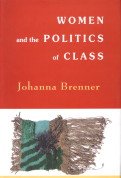
Brenner's work bridges the gap between feminist theory and labor history, much like Canning does. Readers will appreciate the focus on how gendered labor divisions are not just economic facts, but political constructions that require active resistance.

Prefer to listen?
Try Audible and hear the story instead of reading it.
As an Amazon Associate, we earn from qualifying purchases.
As an Amazon Associate, we earn from qualifying purchases.