

Based on your book
Liberal Fascisms
by Žižek, Slavoj
Slavoj Zizek is never interested in providing easy answers, and this work is no exception. He turns his gaze toward the uncomfortable overlaps between political extremes, dissecting the ways modern liberalism often mirrors the very authoritarianism it claims to oppose. Expect a dense, rapid-fire intellectual workout that jumps between high philosophy, pop culture, and jarring political anecdotes. The prose is deliberately provocative, designed to unsettle your assumptions about power and moral clarity. It is not a book to read for comfort; it is a book to read when you want your political framework shaken to its core. This is for the reader who enjoys untangling complex systems and is willing to follow a chaotic, brilliant mind down several rabbit holes at once. If you prefer linear arguments, you might find this frustrating, but if you enjoy having your worldview challenged, it is essential.
10 Books similar to 'Liberal Fascisms'
Since you appreciate the way Zizek deconstructs the hidden structures of our reality, this list focuses on thinkers who similarly refuse to accept the status quo. We have grouped these titles to help you explore the intersection of media manipulation, the psychological weight of ideology, and the evolution of global power. Whether you are looking for the historical rigor of Arendt or the sharp, media-focused critiques of Chomsky and Debord, these books expand on the existential crisis of living under late-stage capitalism, offering a roadmap for anyone trying to think critically about our modern political landscape.
As an Amazon Associate, we earn from qualifying purchases.

by Slavoj Žižek
As the foundational text of Žižek's career, this book provides the theoretical bedrock for his later critiques of political structures. Readers who appreciate his unique blend of Lacanian psychoanalysis and Marxist theory will find this essential for understanding his broader intellectual project.

by Mark Fisher
Fisher shares Žižek's sharp, incisive critique of late-stage capitalism and the pervasive sense of political paralysis in modern society. It is a concise, powerful analysis that resonates deeply with those interested in how ideology shapes our perception of what is possible.

This classic historical and political study provides a rigorous examination of the mechanisms behind authoritarian regimes, a topic that frequently intersects with Žižek's discussions on political extremism. It offers a deep, scholarly dive into the structures of power that readers of political theory will find indispensable.
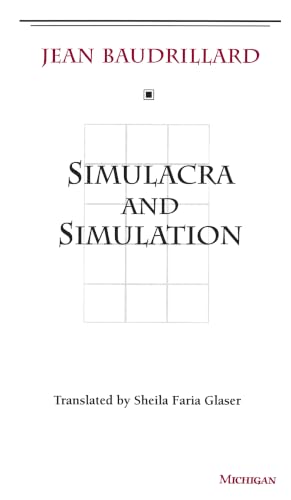
Baudrillard's exploration of hyperreality and the breakdown of the distinction between the real and the representation is a frequent touchstone for Žižek's own cultural critiques. Fans of high-level theory will appreciate this seminal work on how media and symbols manipulate our reality.

Not sure what they've already read?
Let them pick their next favorite with an Amazon Gift Card.
As an Amazon Associate, we earn from qualifying purchases.

by Naomi Klein
Klein provides a concrete, journalistic counterpart to the abstract political theories often found in Žižek's work, documenting how crises are exploited to push radical economic agendas. It is a compelling, fast-paced investigation that appeals to readers who enjoy connecting political philosophy to real-world events.

by Edward S. Herman and Noam Chomsky
This book serves as a vital critique of how media institutions shape public opinion to serve elite interests, aligning with the critical spirit of Žižek's interrogations of liberal ideology. It is a rigorous, evidence-based look at how political narratives are constructed and maintained.

by Guy Debord
A seminal text for understanding the commodification of life, Debord's work is a direct ancestor to the type of cultural critique Žižek engages in. Its aphoristic and challenging style makes it a rewarding read for those interested in the intersection of media, economy, and alienation.

by Michael Hardt and Antonio Negri
This ambitious work rethinks the nature of global power and sovereignty in the contemporary era, offering a grand theoretical framework that complements Žižek's analysis of modern political shifts. It is essential reading for those seeking a comprehensive, systemic view of global capitalism.

by Neil Postman
Postman provides a brilliant critique of how technology has reshaped our culture and political discourse, mirroring the concerns about the loss of critical thinking found in Žižek's writing. It is a thought-provoking exploration of how tools become masters of the society that created them.

by Frantz Fanon
Fanon's profound psychological and political analysis of the effects of colonization remains a crucial text for understanding the dynamics of power, resistance, and identity. Its intense, revolutionary spirit provides a powerful counterpoint to the more detached theoretical critiques often found in Western political philosophy.

Prefer to listen?
Try Audible and hear the story instead of reading it.
As an Amazon Associate, we earn from qualifying purchases.
As an Amazon Associate, we earn from qualifying purchases.