
Based on your book
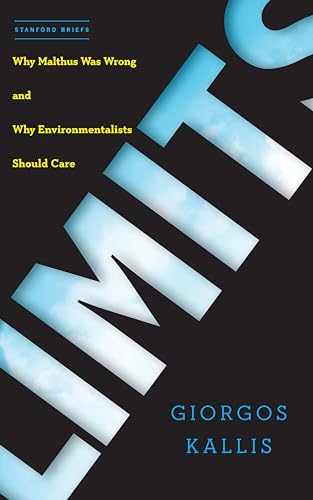
Limits
by Kallis, Giorgos
Giorgos Kallis invites us to confront the uncomfortable reality that our obsession with endless growth is not a natural state of affairs, but a cultural construct pushing us toward ecological and social exhaustion. Limits is less of a manifesto and more of a meditative inquiry into the history and philosophy of why we equate more with better. The prose is precise and calm, stripped of unnecessary jargon, which makes the weight of his argument feel even more profound. You are not going to find easy answers here, but rather a framework for rethinking your own relationship with consumption and success. This book is for the reader who finds themselves feeling uneasy about the relentless pace of modern life and wants to move beyond surface-level critiques to understand the deeper, structural boundaries of our existence.
10 Books similar to 'Limits'
If Limits left you feeling both unsettled and hungry for more, these selections are curated to help you build out a full intellectual map of a post-growth world. We chose these specific titles because they bridge the gap between abstract philosophy and grounded, actionable critique. Whether you want to explore the economic mechanics of a sustainable future through Raworth or the psychological shifts required by Jackson, these authors share Kallis's commitment to challenging the status quo. They offer a rigorous, thoughtful path forward for anyone ready to move past the myth of infinite expansion.
As an Amazon Associate, we earn from qualifying purchases.

by Jason Hickel
This book acts as a perfect companion to Kallis's work, providing a rigorous economic and historical argument for why capitalism's fixation on growth is incompatible with a habitable planet. It shares the same analytical, urgent, and hopeful tone, challenging readers to reimagine the global economic order.

Tsing explores the matsutake mushroom trade to examine how life persists in the damaged landscapes of capitalism, mirroring Kallis's interest in political ecology and non-growth alternatives. It offers a similarly complex, observational, and deeply intellectual look at how we might live within planetary limits.

by Kate Raworth
Raworth provides a practical framework for the ideas Kallis champions, visualizing the balance between human needs and planetary boundaries. Fans of 'Limits' will appreciate her critique of traditional growth-based economic models and her proposal for a regenerative, distributive economy.
by Jon Erickson
Erickson dismantles the assumption that GDP growth equates to human well-being, aligning perfectly with the core thesis of 'Limits'. It is a concise and critical examination that encourages readers to question the fundamental narratives driving modern society.

Not sure what they've already read?
Let them pick their next favorite with an Amazon Gift Card.
As an Amazon Associate, we earn from qualifying purchases.

Haraway's work is a philosophical deep dive into how humans can coexist with other species in a damaged world, resonating with the ecological consciousness found in Kallis's writing. It challenges readers to move beyond anthropocentric views and embrace a more interconnected, sustainable existence.
This book provides a detailed investigation into the political and social movements that are actively pursuing alternatives to growth-based systems. It complements Kallis's theoretical work by highlighting the real-world efforts to build a post-growth society.

by Giorgos Kallis, Susan Paulson, Giacomo D'Alisa, Federico Demaria
Co-authored by Kallis himself, this book is the essential primer for those who want to deepen their understanding of the degrowth movement. It offers a structured and accessible breakdown of the arguments presented in 'Limits', making it a natural next step for any reader.

by Tim Jackson
Jackson explores the psychological and economic dimensions of life beyond the growth imperative, offering a vision of prosperity that isn't tied to material accumulation. Its contemplative and philosophical tone mirrors the thoughtful inquiry found in 'Limits'.

by Herman E. Daly and Joshua Farley
For readers who enjoyed the academic rigor of 'Limits', this foundational text provides the scientific and economic bedrock for ecological sustainability. It is a comprehensive, analytical guide that explains the physical limits of our planet in relation to human economic activity.

by Naomi Klein
While more focused on the political history of neoliberalism, Klein's work provides the necessary context for the systems Kallis critiques in 'Limits'. It is a gripping, intense, and deeply researched analysis of how crises are exploited to enforce economic agendas.

Prefer to listen?
Try Audible and hear the story instead of reading it.
As an Amazon Associate, we earn from qualifying purchases.
As an Amazon Associate, we earn from qualifying purchases.