

Based on your book
Logical Reasoning
by Nederpelt, R
Logical Reasoning acts as a rigorous map for the architecture of human thought. Rather than offering a soft introduction to logic, Nederpelt guides you through the precise mechanics of formal systems, stripping away intuition to reveal the structural bones of valid argumentation. Reading this feels like sitting in an austere, sunlit study; the pacing is deliberate and requires your full intellectual attention, making it less of a casual read and more of a mental workout. You will find yourself constantly pausing to test your own assumptions against the frameworks presented on the page. This book is perfectly suited for readers who find deep satisfaction in order, precision, and the challenge of decoding the patterns that govern rational discourse. It is for the person who wants to understand not just what they think, but the precise logical machinery that makes that thinking possible.
10 Books similar to 'Logical Reasoning'
Since you appreciated the analytical rigor and structural focus of Logical Reasoning, our curated list aims to expand your exploration into the philosophy of systems and consciousness. We have selected titles like Godel, Escher, Bach and Proofs and Refutations because they mirror the way you enjoy viewing logic as a dynamic, living process rather than a static set of rules. Whether you are interested in the existential implications of formal systems or the historical quest for mathematical truth, these works bridge the gap between abstract technical precision and deep, human-centered inquiry.
As an Amazon Associate, we earn from qualifying purchases.
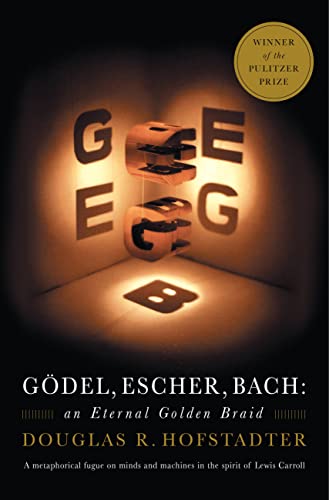
Like Nederpelt's work, this masterpiece explores the formal structures of logic and mathematics, but weaves them into a broader philosophical inquiry about consciousness and self-reference. It shares the same rigorous intellectual depth and fascination with the underlying rules of systems.

Russell provides a foundational look at the limits and nature of human knowledge, mirroring the analytical precision found in formal logic texts. Readers who appreciate the methodical breakdown of reasoning will find Russell's clarity and structure deeply satisfying.

This is a classic textbook that serves as a direct companion to the themes in Nederpelt's work, offering a rigorous, step-by-step approach to formal systems. It is essential reading for anyone seeking to master the mechanics of logical proof and syntax.
by Apostolos Doxiadis and Christos H. Papadimitriou
This graphic novel dramatizes the history of the quest for the foundations of mathematics, making abstract logical concepts accessible and narrative-driven. It bridges the gap between Nederpelt's technical focus and a human-centered historical perspective.

Love to read on the go?
Explore Kindle e-readers and take your books with you.
As an Amazon Associate, we earn from qualifying purchases.

by Gilbert Ryle
Ryle's work is a seminal text in philosophy of mind that utilizes rigorous logical analysis to dismantle Cartesian dualism. Fans of Nederpelt will appreciate the sharp, logical deconstruction of arguments and the focus on linguistic precision.

by George S. Boolos, John P. Burgess, and Richard C. Jeffrey
This book is a standard reference for those interested in the theoretical limits of computation and logic, sharing the same technical rigor as Nederpelt. It is highly recommended for readers who enjoy exploring the intersection of logic, math, and computer science.
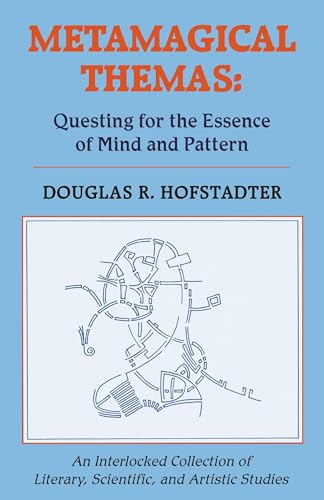
A collection of essays that delve into patterns, systems, and logical puzzles, echoing the inquisitive nature of Nederpelt's writing. It challenges the reader to think about thinking, providing a stimulating intellectual workout.

by Alfred North Whitehead and Bertrand Russell
For the reader who wants to go to the source of modern formal logic, this monumental work is the ultimate challenge. It shares the foundational, structural focus of Nederpelt's work and represents the pinnacle of logical formalization.

Penrose uses his expertise in physics and logic to argue about the nature of consciousness and the limits of AI, which will resonate with those interested in the logical underpinnings of computation. It is a dense, rewarding read for the logically inclined.

by Imre Lakatos
Presented as a dialogue, this book explores the logic of mathematical discovery and the evolution of proofs, mirroring the way Nederpelt treats logic as a dynamic process. It is a brilliant study in how logical reasoning actually develops in practice.

Not sure what they've already read?
Let them pick their next favorite with an Amazon Gift Card.
As an Amazon Associate, we earn from qualifying purchases.
As an Amazon Associate, we earn from qualifying purchases.