
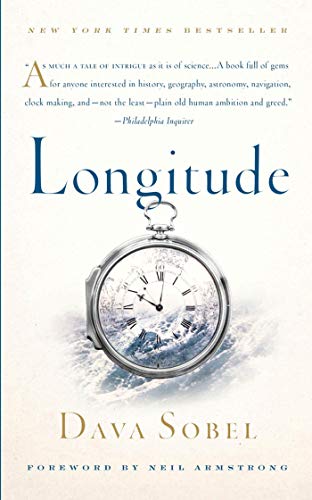
Based on your book
Longitude
by Dava Sobel
Dava Sobel's "Longitude" pulls you into one of the most pressing scientific challenges of the 18th century: how to accurately determine a ship's position at sea. For centuries, countless lives and fortunes were lost because sailors couldn't calculate their longitude. This book tells the compelling story of John Harrison, a self-taught clockmaker, who dedicated his life to solving this seemingly impossible problem. You'll feel the weight of the scientific establishment's skepticism and the political machinations arrayed against him, making his relentless quest a true underdog story. Sobel makes complex mechanics accessible, focusing on the sheer human will and ingenuity required to conquer such a monumental task. It's a concise, deeply satisfying read for anyone who loves tales of historical innovation, intellectual persistence, and the quiet heroism of those who change the world one precise tick at a time.
10 Books similar to 'Longitude'
If you found yourself utterly absorbed by the relentless ingenuity and sheer human will in "Longitude," you'll appreciate these next reads. We've curated a list that celebrates the spirit of overcoming immense historical challenges, often against formidable odds. Many of these books, like "Longitude," spotlight the compelling human stories behind pivotal scientific or historical breakthroughs, whether it's the perseverance of inventors, the resilience of explorers, or the quiet brilliance of unsung heroes. They all share that satisfying blend of deep historical insight and inspiring human drama.
As an Amazon Associate, we earn from qualifying purchases.

This book delves into the fascinating and ethical complexities surrounding the HeLa cells, taken without consent from Henrietta Lacks. Like "Longitude," it explores a pivotal scientific discovery, its vast implications, and the human story behind the breakthrough, revealing the often-overlooked individuals whose contributions shape scientific progress.

McCullough masterfully chronicles the perseverance and ingenuity of the Wright brothers as they tackled the seemingly impossible problem of flight. Fans of "Longitude" will appreciate the detailed historical account of a groundbreaking invention, the dedication of its creators, and the meticulous scientific process involved in overcoming immense challenges.

Kurlansky's "Cod" is a brilliant example of microhistory, tracing the profound impact of a single commodity on exploration, economics, and culture across centuries. Readers who enjoyed "Longitude"'s focused exploration of a specific subject's historical significance will be captivated by how a simple fish shaped civilizations and driven human endeavors.
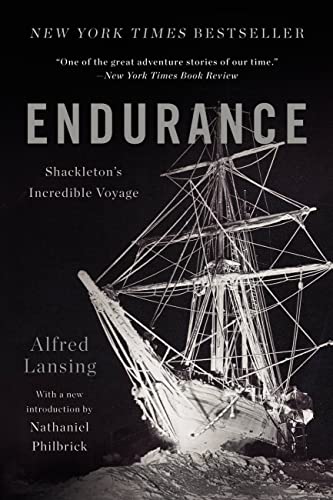
This gripping narrative recounts Ernest Shackleton's harrowing Antarctic expedition and his crew's miraculous survival against overwhelming odds. Like "Longitude," it celebrates human ingenuity and resilience in the face of nature's unforgiving power, focusing on a specific historical quest and the extraordinary determination required to overcome seemingly insurmountable challenges.

Love to read on the go?
Explore Kindle e-readers and take your books with you.
As an Amazon Associate, we earn from qualifying purchases.

by Erik Larson
Larson vividly reconstructs the 1900 Galveston hurricane, blending scientific detail with human drama and the limitations of early meteorological understanding. Fans of "Longitude" will appreciate the historical deep dive into a catastrophic event, the scientific challenges of the era, and the compelling narrative built around real-life figures and their struggle against an overwhelming force.

This book illuminates the crucial contributions of African American female mathematicians to NASA's early space missions, often against a backdrop of racial and gender discrimination. Like "Longitude," it highlights unsung heroes whose intellectual prowess and perseverance were vital to a grand scientific and national endeavor, revealing the human stories behind monumental achievements.

by Kate Moore
"The Radium Girls" tells the poignant and infuriating true story of women who fought for justice after being poisoned by radium in their workplaces. Similar to "Longitude" in its historical deep dive into a specific scientific and industrial context, this book reveals the human cost of scientific progress and the resilience of ordinary people challenging powerful institutions.

Diamond's Pulitzer Prize-winning work offers a sweeping, analytical look at why human societies developed differently across continents, focusing on environmental and geographical factors. While broader in scope than "Longitude," it shares a deep intellectual curiosity, a rigorous analytical approach, and a commitment to explaining complex historical phenomena in an accessible and thought-provoking manner.

Following in the vein of "Cod," Kurlansky explores the indispensable role of salt throughout human civilization, from ancient trade routes to modern industry. Readers who appreciated "Longitude"'s ability to elevate a specific, seemingly mundane subject into a compelling narrative of global historical significance will find "Salt" equally engaging and enlightening.

by Erik Larson
Larson intertwines the ambitious story of the 1893 Chicago World's Fair with the dark tale of a serial killer operating nearby. Like "Longitude," it offers a meticulously researched historical narrative, immersing readers in a specific era and showcasing human ingenuity and ambition, albeit with a darker undercurrent that adds suspense to the historical context.

Not sure what they've already read?
Let them pick their next favorite with an Amazon Gift Card.
As an Amazon Associate, we earn from qualifying purchases.
As an Amazon Associate, we earn from qualifying purchases.