

Based on your book
Mathematics for Elementary Teachers with Activities
by Beckmann, Sybilla
Sybilla Beckmann’s text is not a dry manual of formulas; it is a rigorous invitation to dismantle your own assumptions about how numbers work. The book focuses on the conceptual foundations of elementary mathematics, challenging readers to explain the why behind simple operations rather than just memorizing the how. As you work through the activities, the pacing is deliberate and reflective, pushing you to slow down and interrogate your own mathematical intuition. It is an intellectual exercise that feels less like a textbook and more like a training ground for deep pedagogical empathy. This is for the reader who values precision and wants to understand the architecture of mathematical thought. If you are a teacher looking to refine your craft or an adult who wants to finally grasp the logic behind basic arithmetic, this book offers a quiet, satisfying clarity.
10 Books similar to 'Mathematics for Elementary Teachers with Activities'
Since you appreciated the analytical rigor and hands-on philosophy of Beckmann, we have curated a list that deepens your understanding of numerical pedagogy. These selections bridge the gap between classroom strategy and pure mathematical beauty. We chose these titles because they echo the theme of student-centered growth, whether through the cognitive science of David Sousa or the aesthetic appreciation of G.H. Hardy. Each book provides a different lens on the same goal: transforming math from a series of abstract rules into a coherent, logical language that anyone can master.
As an Amazon Associate, we earn from qualifying purchases.

by Liping Ma
Like Beckmann's text, this foundational work explores the depth of understanding required to teach elementary math effectively. It offers a comparative study between Chinese and American teachers, providing the same analytical rigor and pedagogical insight that educators value.
This book bridges the gap between cognitive science and classroom practice, making it a perfect companion for those who appreciate Beckmann's focus on conceptual understanding. It provides actionable strategies that respect the way young minds process numerical information.

While it is a narrative, this book captures the same spirit of making complex mathematical concepts accessible and engaging. It serves as an imaginative counterpart to the structured activities found in Beckmann's work, perfect for anyone who wants to see math come alive.

This is a quintessential resource for pre-service teachers that mirrors the comprehensive scope of Beckmann's work. It breaks down mathematical concepts with clarity and precision, ensuring that the reader understands the underlying logic before teaching it to others.

Love to read on the go?
Explore Kindle e-readers and take your books with you.
As an Amazon Associate, we earn from qualifying purchases.

by G.H. Hardy
For readers who appreciate the beauty and philosophical underpinnings of mathematics, this classic offers a profound look at the aesthetic nature of the discipline. It provides a more reflective, high-level perspective that complements the practical, classroom-focused approach of Beckmann.

Widely considered the gold standard in teacher education, this book aligns perfectly with Beckmann's methodology of teaching through exploration and problem-solving. It is an essential, highly structured guide for anyone dedicated to the craft of teaching mathematics.
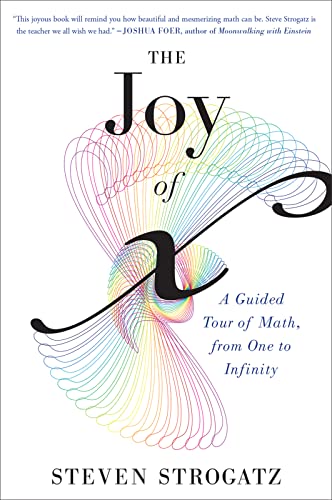
Strogatz excels at taking mathematical concepts and making them relatable and fascinating for a general audience. Readers who enjoy the 'why' behind the math in Beckmann's book will find this an engaging, lighter, yet equally insightful exploration of number theory and beyond.
This book is part of a series that deeply investigates the core concepts of mathematics, much like the targeted chapters in Beckmann's textbook. It is highly recommended for those who want to drill down into the specific pedagogical challenges of early childhood numeracy.

by Rob Eastaway
This book celebrates the practical, everyday application of mathematics, encouraging the same kind of 'active' engagement found in Beckmann's activities. It is a fun, accessible read that demystifies math and encourages readers to see the subject as a tool for solving real-world problems.

Focusing on student-centered learning, this text shares the same philosophy as Beckmann's work: that students learn best when they construct their own understanding. It provides a wealth of activities and strategies that are directly applicable to the elementary classroom.

Not sure what they've already read?
Let them pick their next favorite with an Amazon Gift Card.
As an Amazon Associate, we earn from qualifying purchases.
As an Amazon Associate, we earn from qualifying purchases.